/*Accordion Page Settings*/

IVF Lab

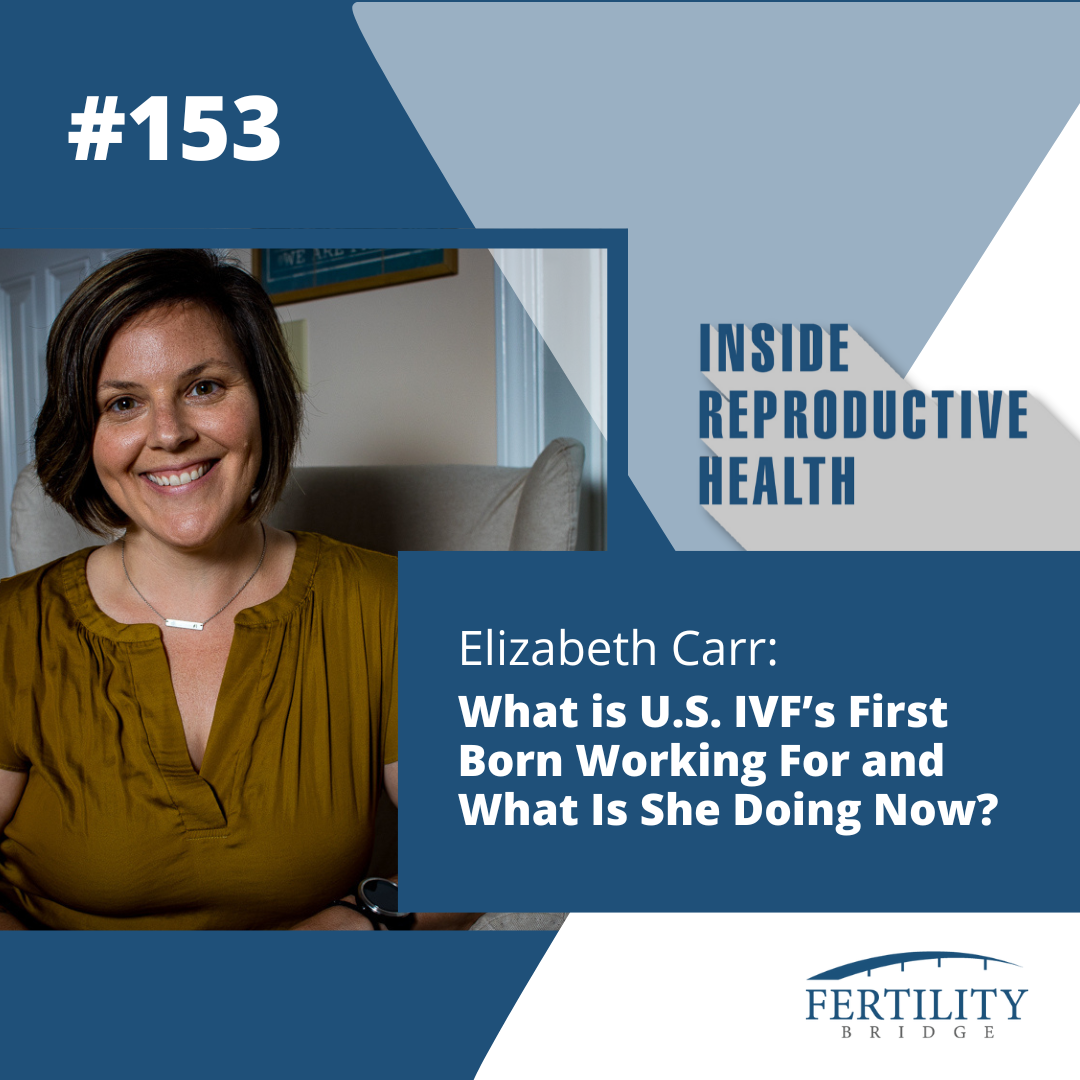
153 Elizabeth Carr: What is U.S. IVF’s First Born Working For and What Is She Doing Now?

 This week on Inside Reproductive Health, Elizabeth Carr shares her experience from birth to where she is today, at TMRW, and everywhere in between. Born quite literally into the industry and its spotlight, Elizabeth has chosen to be an advocate for IVF, working to change public education, and further ‘industry’ advancements. 

Tune in to hear:

  • What Elizabeth Carr is doing to give back to the community that made her existence possible.

  • How her relationship with Dr. Jones and his family contributed to her life and ultimate career path.

  • What she wishes people in the industry would push harder for. 

Elizabeth’s information:

LinkedIn:https://www.linkedin.com/in/elizabethc

Twitter: @ejordancarr

Website: www.ejordancarr.com


Transcript

Elizabeth Carr  00:04

My speaking up and out has always been kind of my love letter to the industry as a thank you and to all the patients. As a thank you for saying thanks for not giving up and making sure that I got here.

Griffin Jones  00:17

unlimited human potential Do you ever think about the line of work that you're in, in those terms, unlimited human potential. That's what I think about when I think about the in finite or at least in depth finite number of IVF babies that can be born or babies born from art in general, my guest is Elizabeth Carr, you know who she is because she was the first baby born from in vitro fertilization in the United States, through Dr. Howard Jones and his Institute. And we talk about what that was like to always be in the limelight. But I think the reason why you'll get an interest in or you'll take an interest in this episode is because partly the relationship that she talks about with her family and Dr. Jones and, and then what the other IVF babies that she knows from the institute, what their relationship was like, and their fondness and even the way she thinks of Dr. Jones's colleagues, and that weren't there at the institute, but But everywhere. And so I think as you think about what kind of legacy that you're having, maybe we take a little break from the private equity and the hiring and the marketing and the business development and all of the this stuff, the important stuff that we do have to do we take a break for a second, so that you all can reflect on the legacy that you're leaving from someone who had one is very good about speaking about it, but to at least in this country, has been living it for the longest. So now she's with TMRW Life Sciences. And I get to talk a little bit about that, and a little bit about advocacy and an opening up. But think about this episode with regard to your legacy. And enjoy this interview with Elizabeth Carr. Ms. Carr. Elizabeth, welcome to Inside reproductive health.

Elizabeth Carr  02:23

Thank you so much for having me. It's great to be here.

Griffin Jones  02:26

You are the United States of America's first baby to be born through in vitro fertilization. So does Louise Brown, like ever? Just Does she ever throw some nationalistic crap at you that the UK beat us to it? Or does the stet you know, does that Steptoe Jones legacy does it? Does it manifest itself as a rivalry decades later, or was it the whole world collaborating to? To try to do the right thing?

Elizabeth Carr  02:57

Yeah, no, no shade, definitely no shade from Louise. And yeah, my doctors Jones actually worked with Steptoe and Edwards to kind of understand what they had success with, and then tried to replicate. In the US, of course, my distinction versus Louise, where maybe I'm throwing a little shade is that I'm really the first IVF baby, that, you know, when we think of modern IVF, I'm it so Louise was a natural cycle, whereas I was the first baby born using all of the, like, hormone protocols that we're also familiar with now.

Griffin Jones  03:35

Wow. So well, that's another reason why whenever somebody says, and normally there's playing around, but our country did this first or our team, our university, whatever did this versus like, but yeah, they did that one step first. And then because you did that one step and you help somebody out, they figured out another step. And then the other guys and gals over here figured out another step and as much better to think collegially Exactly. So. So when did that start to become a part of your life? Because it was always a part of your parents life, but But for you, it definitely wasn't, you know, in the first couple years of your life, in terms of like you knowing that, you know, at least age two and three

Elizabeth Carr  04:25

you Well, I mean, yes and no. So I let me put it this way. My first press conference ever was at three days old. So while I may not have had the cognitive realization of what was going on, I have always known that I was not like all of my other peers, you know, other kindergarteners weren't going on Good Morning America, but I was, you know, think things like that. So I may not have realized until I was older. What this meant: But, but I knew that my parents went through something different in order to get me here. That was kind of like my understanding when I was very young.

Griffin Jones  05:10

My assumption was no, it would have taken a few years before some of the to be able to explain it to you. But you were just never out of the limelight is what you're saying.

Elizabeth Carr  05:19

Correct? No. I mean, it was a media firestorm from the day that it was announced that there was a pregnancy even before I was born, just even a pregnancy there and woman impregnated was the headline that my father recalls reading. And he was like, yep, that's my wife. So yeah, it's always been a subject of media spotlight and scrutiny.

Griffin Jones  05:45

And so how long did that last for? You said you went to? You went to kindergarten, and then

Elizabeth Carr  05:54

I made its last my whole life. Yeah, it still happens. It's lasted my whole life. Basically, every reproductive milestone, somebody will want to talk to me about what this means, or you want to check in and make sure I was developmentally just like everybody else, because this was, you know, had never posted, by the way. Yeah, I mean, you know, mostly abnormal, I

Griffin Jones  06:19

think, crazy as everybody else.

Elizabeth Carr  06:22

Exactly. I don't think there's any real normal out there. But yeah, so I mean, it's been a constant. limelight. I mean, I had a camera crew here last week at my house, and I'm, you know, I'm just living my life. So

Griffin Jones  06:37

were there. Were there points in your life where people were less aware the media was less interested, like, oh, 13 year olds are gross. Let's bother again, when she's old enough to vote? Like, Were there ever lows in? Were there? And, or maybe at least lows compared to the peaks?

Elizabeth Carr  06:58

Yeah, I think, yeah, the ages that were less exciting, right. So like, nine was not a big deal. But 10 was a huge deal. Because it had been a decade since I had been born. You know, when I turned 16, it was like sweet 16. Right? When I turned 20, when I got married, when I had my son, when, you know, it's like, all of these kinds of life milestones that people go through. Mine had an additional level of media interest that I don't think many people realize until we start talking about it.

Griffin Jones  07:29

Hey, are you gunning for centenarian status? triple digits, because

Elizabeth Carr  07:35

I know that the running joke is, you know, this year, I turned 40. And I was like, you know, I can't lie about my age. Everybody knows when my birthday is exactly how old I am forever. Never. That's, you know, that's what I'm stuck with. So yeah, it's, it's crazy.

Griffin Jones  07:52

So when did this notoriety start to get you involved with the fertility field, like the fertility field had always known about you? The doctors knew who you were, and they certainly knew our Jones was. But at what point? Did it start to get you involved with them?

Elizabeth Carr  08:22

Yeah, so I mean, aside from the media attention, and all the interviews that I've had, over the course of my life growing up, I, I've always had an interest in science, I'm not good at math. But I've always liked to explain the science. So I've always, and I always, I think I was probably 10, when I started really paying attention to the industry and seeing what was going on and developing. So I've always paid attention to the reproductive field. But I also started realizing that because I had this weird platform in life, that I could use my voice for good and for change. And so I've really, from a pretty young age, started speaking up about different reproductive options out there, and became kind of like a junior advocate, you know, Junior age, probably 1011, I really started paying attention to what was going on with insurance. And I'm still actively fighting those insurance battles and testifying in front of various committees and on state by state basis and paying attention to all the laws and, you know, looking into just helping people understand their options. So I started really paying attention to that stuff, probably when I was 10. And then I went on to be a journalist and wrote, not surprising to many I don't think primarily about health and science and again, stayed up on everything going on. And then I've worked for a few fertility startups and done a bunch of free then to writing and social media for various companies. And now I'm at TMRW Life Sciences as director of marketing.

Griffin Jones  10:07

So you started off as a journalist, were you ever kind of covering just a regular beat? Or was it always Health and Science?

Elizabeth Carr  10:16

Yeah, so I did a range of things. When that you, when I started out, I worked from age 18, at the Boston Globe. And I actually started out as an obituary writer, because you can't label a dead person, believe it or not, so they let you start there. And then I did a lot of general assignment. And then I went into health and wellness was a writer, then I became a health and wellness editor. And so I've done you name that you name it, it runs the gamut in terms of journalism,

Griffin Jones  10:47

what made the switch or the transition from journalism to marketing.

Elizabeth Carr  10:53

So I spent 15 years of my career at the Boston Globe. And I actually jumped from the editorial side of the business to the marketing side of the business, because I wanted to learn, you know, the dirty little secret of newspapers is that you don't make money selling a newspaper, you make it doing events, and marketing, and in house advertising, and all these other kinds of modalities that a newspaper has available to them. So I just wanted to learn soup to nuts, the business. And so that's why I jumped to the marketing side. And then I figured out that, you know, this was an important skill in the fertility world for, you know, anyone looking to grow their practice or understand the business of infertility services or reproductive technologies as well. And, you know, it's hard, it's, it's complicated, right? If you don't understand the reproductive field, it's hard to translate it into plain English for people sometimes. And I that's, that's a skill that I wanted to learn and adopt very early, that I wanted to be able to explain something very complex in a way that people could understand it.

Griffin Jones  12:05

So what areas of marketing did you experience both at the Boston Globe and then afterward?

Elizabeth Carr  12:12

So I was one of the first digital reporters, you know, back before anybody knew what a blogger was, I was blogging, doing social media, tweeting, you know, doing kind of the early days of podcasting, where, you know, we did audio over stills, it wasn't really movies back then. But audio over stills kind of storytelling. You know, things like that, basically anything I could get my hands on and play around with I was experimenting with.

Griffin Jones  12:46

And then and then what happens after the Boston Globe.

Elizabeth Carr  12:51

Let me see, after the Boston Globe, I actually went to work for Runner's World Magazine, I was an editor there because in my free time, I am an endurance runner, and I run marathons. And so again, kind of still in that health and wellness bent, was a was a writer and editor there. Then I went to work for over science for a very short period of time, I then I worked for genomic prediction, I've done nonprofit fundraising, and leads kind of all the way up to today, TMRW.

Griffin Jones  13:27

All the while that you're doing like that you're at the globe that you're Runner's World. Are you? Are you involved in the advocacy? You said? Yeah, surance passion never left you. So what were you doing during that time?

Elizabeth Carr  13:42

Yeah. So it's all the stuff that nobody sees, right? It's all the stuff behind the scenes that we all know, hopefully we all know is going on, of, you know, fighting to get insurance mandates in various states where there aren't mandates and coverage, as well as making sure that bills that are being proposed have language that is protective of all, not just some seeking reproductive options. So all of the nitty gritty stuff that's behind the scenes that nobody really, you know, it's not visible, but it's critical work. So I've kind of always been doing that, since I was very young. It's just not something that people see.

Griffin Jones  14:23

So then how did you when did the logical or now seemingly logical conclusion of starting to work with startups in the IVF space? When did that happen? And how did it happen?

Elizabeth Carr  14:38

Probably. I don't I'm trying to think how many years ago probably 10 years ago, I think is when I started. Sorry, my dog is drinking water loudly off camera. Miracle. Thank you. So probably about 10 years ago, is when I started working in the infertility slash startup space in a in a professional capacity as opposed to just in a patient advocacy capacity? And how did it happen? You know, I'm not really sure I've just always kind of known a lot of people in the space. And I happen to have this like weird digital tool set to or skill set in my tool belt of various things I was good at. And I understood the needs of patients as well as the needs of clinics or providers as well. And so it was kind of marrying all of these various skills from journalism, marketing, patient advocacy, kind of all into one. You know, one multi tool, I guess you would call it,

Griffin Jones  15:47

as you've established, we all know how old you are. This took place about 30. Why not? Until then was was it? Was it just because you were just another person doing other things in your career? Or was it because there weren't as many startups in the fertility space at that? I think,

Elizabeth Carr  16:05

yeah, I think it was both to be honest with you, I think I was just kind of still, I felt like I still had a lot of growth to go at when i i left the globe, and I was 33. So I still kind of had this mini city of people to learn from and that was, I was really grateful that I spent a majority of my career there because I have learned so many different skills from so many different people. And then yeah, I think also, yes, we have seen more and more fertility startups survive those early days, to be honest with you. I think it's there's there's many, many out there, but not many of them become known until after they survived that first few bumpy like six months to a year. Right. And so that's kind of when I feel like people rise to bubble up to the surface.

Griffin Jones  17:02

What was it? What were people working on at that time that you found interesting in the fertility space?

Elizabeth Carr  17:09

I mean, back then, you know, it was a lot of the early days of pre Implantation Genetic testing, which is fascinating to me, because it was not even in the realm of possibility. And when I was born, I mean, this is really dating me, but they had a statement written, or my doctors had a statement written in their pocket about how it was a sad day for infertility that they had on backup, just because ultrasound was showing that I was really, really small and they were worried I was going to come out with birth defects because I was only five pounds 12 ounces. And ultrasound was so bad back then. Right. So people forget that, like the things that we take for granted now. vitrification I remember when vitrification became possible, and that was like, the catalyst and game changer in the field. You know, egg freezing was I remember being probably my late teens and touring a facility that had done the first egg freezing for fertility preservation for cancer patients, because that was it was very niche back then. And it was like groundbreaking that they figured out that, you know, we can freeze eggs and and they can still go on to become viable pregnancies. People didn't know that that was possible. So it's kind of like all of these milestone moments that I remember growing up with industry really in, in my view.

Griffin Jones  18:37

And then what, what landed you TMRW, and how long have you been there for?

Elizabeth Carr  18:44

So I'm trying to think I think I've been here six months now. I saw TMW at ASRM, actually. And I just thought, wow, this is the kind of safety and transparency that I hear from a daily basis that patients really are kind of clamoring for that they want, you know, they want more information. I know that we we all think it can be information overload because it can be right we didn't my my mother always jokes that she was kind of grateful that there was no Dr. Google back then when she was going through IVF. Because it is so overwhelming the amount of options and information out there. But I hear from people you know, I really wish there was a way I could just stay up to date on all of my eggs, embryos, health information, everything I needed to know and not wonder where things are or what the status of them is, in in the moment really, to know that everything is safe and I've worked so hard to you know, get these eggs or embryos that I want to protect them at all costs. And I think that you know, TMRW unique digital chain of custody and patented technology is just It's just, you know, so interesting in kind of leveling up that transparency and peace of mind for patients.

Griffin Jones  20:08

I don't know exactly when a startup becomes not a startup is.

Elizabeth Carr  20:13

I don't either.

Griffin Jones  20:16

Do we still call TMRW a startup?

Elizabeth Carr  20:18

I mean, I don't know. That's a very good question.

Griffin Jones  20:22

A lot of money, a lot of people.

Elizabeth Carr  20:25

We're all working very hard roster

Griffin Jones  20:27

at this point. So yeah. So in your director of marketing,

Elizabeth Carr  20:34

that's your director of product and clinic marketing,

Griffin Jones  20:37

clinic market? So do they pull you out like a dog and pony show? Yours? Which is, which is partly the role of marketing director anyway. But given your status, how was that used?

Elizabeth Carr  20:55

No, I mean, it's really kind of, I'm always the one saying like, Oh, I know them, or or, you know, like, let me I want to help or, you know, I'm really the one who kind of said, I want to help move the needle in whatever way I can for the industry. That is kind of my that is my, like, personal stake in the ground aside from TMRW, or any other company I've ever worked with? It's really how can I personally move the needle? For the better in the industry at for patients? That is, that is my end game. And so everything I do is kind of with that mindset, you know, moving forward? And no, it's really my job to kind of, again, translate all of the complex things about the about this technology that we have, and explain it to people in a way that makes sense. And let people know, you know, why it matters.

Griffin Jones  21:50

So our director of clinic and Product Marketing means of what TMRW is marketing to clinics, yeah, helping

Elizabeth Carr  21:59

helping clinics so that they can level up their practices in terms of having our cutting edge technology at their practice. And then as well as explaining the product itself, like soup to nuts, nuts and bolts in a very, you know, non technical way to understand.

Griffin Jones  22:16

So what are you doing to, to talk to practices now?

Elizabeth Carr  22:22

Yeah, so essentially, you know, my job now is to interface with all of our current partners, and help them explain to their patients, you know, this is the TMRW platform, this is why we're using it, this is what it means, you know, that kind of stuff. So I help them explain to their own patient populations, why this is important, and it matters as well. And then again, explaining the product to the clinic so that the clinic can then explain the product to their patients as well.

Griffin Jones  22:49

We're talking about lessons learned in owning a practice or owning a business in the fertility field and things that you may want to learn how to do or learn about before you go and start your own venture. Another thing is some of the systems that are used, and oh, people that can give really good recommendations on the different EMRs. They've shopped in the depth and scope of functions. But I would ask someone that you know, that uses engaged MD, if you're not already, if you don't use engage MD, and you're CISM, you're thinking I want to open my own office within my own group, or I want to open my own practice, I want to go join somebody else, and I want to be able to add something to it, engage them D is one of the surest bets that you can do, but you don't take my word for it. Ask someone that you know, because more than half of your colleagues are using engaged MD and more than half of your colleagues are extremely delighted with engaged and be because they got real informed consent. They don't have stacks of papers that people have to sign in then account for and then keep an eye out file cabinet somewhere. They have true informed consent from patients that have a module at their convenience, so that the staff isn't overburdened with questions that they don't need to be getting that they can help the patient with the attention that needs to be devoted to that patient's case. Because the elementary the rudimentary is covered, and now it's just what that patient is stuck on or what's unique to their case that the care team can focus their care on. That's what personalized care is. And more than half of your colleagues have seen the benefit from engaged MD that way so just reach out to any of them Hey, guys do use engage in the people you want to fellowship with people that you see it ASRM Hey, do you use engage them D What do you think I hear Griff talk about it. But he doesn't want to practice. What do you guys think? And see what they say but if you want At every workflow assessment want to see what other practices are doing, you want those insights that engage them D has, and you want to see how your practice stacks against that ideal workflow, then you go to engage them. the.com/griffin. And you mentioned that you heard them on the show, you mentioned that you heard them from me, and then you're gonna get that free workflow assessment. So ask somebody else, don't take my word for it, but go to engage md.com/griffin Or say you're on the show. So you heard from me, so that you can get that free work assessment for you. That's one of the biggest system wins that you could have right off the bat. And you can verify that just by asking people you already know, I hope you enjoy the rest of this episode about things you need to know for the fertility business you might start. When you're at SRM, especially like if you're either talking or you're involved with a session, or somebody invites you to be the guest. They're the guest of honor at their party, and you meet fertility doctors, what do they say to you?

Elizabeth Carr  26:05

Oh, it runs the gamut.

Griffin Jones  26:08

I want to hear the game I want to hear all the time, I want to hear

Elizabeth Carr  26:12

all of the games. I mean, I've heard everything from the very young embryologist who are like you're in all my textbooks, which makes me feel really old and weird, but in a good way. versus you know, some of the older physicians who remember by doctors, Dr. Howard and Dr. Georgiana Jones, and comparing notes to like, what it was like back then versus what it's like now. I've had people ask me really odd questions such as, Do I have a belly button? Spoiler? Yes, I do. I was born just like everybody else.

Griffin Jones  26:48

Doctors are asking that question. And doctors and patients have asked

Elizabeth Carr  26:51

me that question. I kid you not which it's always shocking when a clinician asks me that question. Mostly OBGYN so I have to be honest.

Griffin Jones  27:02

I wonder if there's what the reason that they're asking that question because

Elizabeth Carr  27:05

there's because in the early days of IVF, the slang term was test tube baby, right. And so the, the image in everybody's head was that I was grown in a test tube, which is just wildly inaccurate. Also, fertilization happened in a petri dish. And there were no test tubes involved in any way, shape, or form. So I always found that very amusing. And I've always hated that nickname.

Griffin Jones  27:30

But I thought there might have been like, but they didn't know that you that you went through gestation in utero, they didn't know that. They are a lot of people. A lot of people vitro fertilization also means grown

Elizabeth Carr  27:43

in a lab, like literally. Yeah. And I have to, I often have to remind people that that, honestly, the only difference was that fertilization happened in in a petri dish. And then I was placed back in my mother's womb. And nine months later, I came out just like everybody else does.

Griffin Jones  28:01

I mean, a lot of people think that, you know, like, Alaska is a country or that. Queen Elizabeth lives in Brazil. So like, it could, it could be, you know, I could see a lot of people thinking anything about that. But it surprise surprises me that OBGYN ins have

Elizabeth Carr  28:23

not awesome just to fit. You know, I'm just not I'm not saying everybody. But yeah, I mean, it's I think that's the one thing that surprises me still to this day, is that I have to do so much still basic education on what IVF? You know, I only primarily speak about IVF, because it's what what got me here, so I know it intimately well. But in terms of education on what exactly IVF is, there's still a lot of baseline education that needs to happen on a on a general level for a lot of people, many people have maybe heard about it, and think they understand what it is. But a lot of people there are still misconceptions about it. Yeah.

Griffin Jones  29:05

Unfortunately, it doesn't happen to me as much now that that generation is mostly gone. But I used to meet people that that knew my grandparents, I would meet older people that knew my grandparents, and they would talk about how they, how they knew my grandpa's. I guess that happens with my parents generation, too. But I guess I know more about my parents generation. So I'm just Yeah, a couple years ago, my brother and I were at a neighborhood bar in the neighborhood that were for the working class outside of Buffalo neighborhood for generation two, and we're at a neighborhood bar where like, all of the Irish working class stereotypes are coming together like our second cousin is our attending that we don't know that was oh, yeah, I know. And then there's this older couple there and that oh, and I know who your who your family where they were the Burns is and they were like telling me about my grant. parents and their family and great grandparents. I wonder, do you ever get that vibe from from older physicians like, who were maybe just behind the Steptoe Jones generation? And, like, do they want to tell you about Dr. Jones or duck, maybe even Dr. Steptoe, even though he wasn't in this country, like do they want to tell you about them in the same way that your grandparents friends would want to tell you about your grandparents?

Elizabeth Carr  30:33

Absolutely. And the grandparent analogy actually is a very good one, because that's how I've always referred to the Jones is my second set of grandparents. Our relationship for my whole life until they died was very, very close. Phone calls, emails, writing all sorts of correspondence. When I had my son, Dr. Howard wanted to make sure that I was going to a hospital with a level two NICU just in case, you know, all these kinds of things. So, yeah, people definitely want to share their stories with me of Oh, I was a fellow I was a Jones fellow or I went through the program, or, you know, I learned from so and so who was on the original team, or, you know, all those kinds of things, I actually really appreciate when people share those stories with me, because, you know, those were, those were kind of the Wild West days back then. Right? They were trying to figure out what was going to work, I don't think people realize that my parents you know, they didn't realize they were going to be the first until my mother got pregnant. And then the Jones were like, by the way, you're the first. And my parents, I think, naively assumed that there had been success, like it didn't dawn on them that there wasn't success. beforehand. And they weren't the only couple going through this. There were a group of other people going through this process at the same time, my parents were, but all the couples had a different protocol. And so none of the couples knew like, are we going to be the ones that the protocol works? Or is it going to be somebody else? And they weren't really allowed to share notes or talk about, you know, how their protocols were different. So it was kind of like, you'd pass in the hallway and wave and but you didn't know like, are they? Are they pregnant? Are we pregnant? What's going on? So yeah, it as I said, it was a wild west. So it's always interesting to hear those stories from from the very early group.

Griffin Jones  32:33

And so Dr. Jones passed away, like when I got into the fertility business, I started working with that, our first fertility client in 2014, but moved back to the US in June of 2015. And he passed away that summer. And how much correspondence did you have with Dr. Jones throughout your life?

Elizabeth Carr  33:00

Oh, as I said, so much correspondence. I mean, when I was little, we had a Mother's Day reunion every year at the Jones Institute in Norfolk, for the first 100 Babies essentially. And when it got to be 1000, and 1001 babies, that was our last reunion, because it just got to be too many people. And that was just from the one, you know, clinic. So throughout my life, you know, he would come to the airport and pick us up, or he would you know, I've got Birthday, birthday cards and phone calls every Christmas and on my birthday from them. I when I interned as a writer at The Virginian pilot newspaper, Dr. Howard actually helped me figure out my housing and I stayed with one of his fellows. And he and I had a standing lunch date every Wednesday. Well, I was there for the entire summer. He was one of the first people I told when I was pregnant with my son. He was invited to my wedding, you know, they were invited to my wedding. You know, anytime I had a newspaper article that made the front page or something like that, he would send me a note. So if people I think don't realize that we had such a close relationship, and they really were like a second set of grandparents, as I said,

Griffin Jones  34:23

so I just had a client asked me today, they were like, because we're doing a photo shoot for them. And we have a part of that where we we have just like an open period where people can come in and they can take their pick, they can bring their kids and they can take a picture and and they asked me what's the age limit because we just had someone in their early 20s who reached out to Dr. Toe and toe and said that they're now beginning medical school and as like there's no age like Yeah, that's great. That's incredible lady Yeah, like, that's it's not just a cute chubby cheeks that that is the whole story like, and you could argue that that's like, that's the story like, you know this, more broadly speaking this unlimited human potential you don't know what the human potential is, but we know that it wouldn't have existed if not for. Right. And so you like you were a part of of of that growing up. So I want to ask this question that has to do with the infertility community. If you think it's personal to me, I'll edit it out. I think it's, I think it's germane to the conversation. So sure. Did you go through infertility treatment

Elizabeth Carr  35:44

for everybody asks me that, no. So that was the other the other interesting thing about my mother's fertility journey to have me, she actually didn't have traditional infertility. She like where it was unexplained, or, you know, something was going on like that. It was scar tissue from a botched appendix surgery when she was in her teens. And she actually had three ectopic pregnancies before having me and so her fallopian tubes were removed, which, then that's where her fertility issues really came in. Because you, you know, back then you couldn't have a child unless you had fallopian tubes. So ironically, my mother could get could always get pregnant, she couldn't stay pregnant, the reason she couldn't stay pregnant was because of that scar tissue. So she was kind of the ideal candidate for this IVF program. And then No, I had no fertility issues at all. And I had my son at the same age actually, that my mother had me I was 28 when I had my son.

Griffin Jones  36:46

The reason why I asked is because I wonder what that's like the fertility community is such a tribe in many, in many cases, partly because they have at least some, some similar roots to draw upon. Like, even though the journeys are different, there's, there's some common threads, and sometimes those common threads are so distinct from the rest of society, that's where they form their bond. And, and you don't have that with them, you have a different kind of bond with them. It's like it's, it's as though they're, it's like their kids, you know, the the ones that have gone through treatment and been successful, are gone through time. Fast forward to be a grown up and now are with them in that community. So what what is that like, like to be to be not one of them at all, in one sense, and to them? And to be like, the most proud I know, there's so yeah, right, and product and and others? What's that? Like?

Elizabeth Carr  37:49

Yeah, so I mean, that's where, to me, I've always been very cognizant of that. There's like, I cannot speak to what it is like to exactly experience infertile infertility or trouble with your family building, right? I'm very aware of that. So I never speak to what that is like, what I can say is I can relate to what my, my parents went through, in their very unique situation. And that is where it has become my goal, that I am very humbled and privileged to be here. And I realized that I am very humbled and privileged to be here. And so my work as a patient advocate, or, as somebody who can be a resource or connector for somebody else going through this, my goal has always been for people to know what their options are before they need them. Because my parents really, you know, we're kind of given this option in a moment of crisis of like, Oh, my God, what do we do we have, we can have a child of her own, what are we going to do, and I never want anyone to feel like they don't know where to turn. And so my speaking up and out has always been kind of my love letter to the industry as a thank you and to all the patients. As a as a thank you for saying like, Thanks for not giving up and making sure that I got here. Because it took everybody it took all of my parents willpower of fighting. It took all of the scientists and lab technicians and embryologist and nurses, and even receptionists answering the phone and all the billing folks, it took so many people just for me to be here talking to you today. And so that's where I'm going to keep keep using my unique platform and voice to keep moving the needle ahead in this industry. And it's it's just it's it's honestly my only way of saying thank you because the words thank you seem wildly inadequate.

Griffin Jones  39:48

How old were you when you started meeting other adults that well, maybe now I won't even ask the question adults. How often How old were you? You when other people started introducing them to themselves, do you say I'm an IVF? Baby, too?

Elizabeth Carr  40:08

I mean, I think I'm a bad person to ask that question only because I have a magnet right at the end. And, you know, we had those reunions from from when I was very little with a Mother's Day stuff. So, so I always had other IVF babies around me, always. The only difference was, you know, when I was little, we would all introduce ourselves using our numbers. And so, you know, a friend of mine would be like, I'm never 10 and be like, I'm number one. You know, so nice to meet you. Where's number five? We don't know, like. So but then, you know, to have friends of mine. Now my age saying, Oh, I'm going through IVF or I'm having an IVF. Baby, myself. And they often say thank you. And I'm like, you know, I appreciate that sentiment so much. But like, honestly, I my, my joke is that I didn't really do anything I just showed up. It was really everybody else did the hard work, you know, I had no control. And whether I was here or not, it was everybody else.

Griffin Jones  41:06

Because you've got this passion, because you got this unique perspective. Are you ever asked to? Or do you take it upon yourself to be a public relations force when something bad happens, like when there is the the rare tank leak or embryo mix up? Or some sociopath in some, like OB GYN clinic from 30 years ago that fathers, how many embryos like when that stuff happens, and people are looking at the fertility field? Like, wait, what like, is that witchcraft? What's going on over there? And we know how rare that is, we know how much of a sliver it is to, in comparison to the good in the hundreds of 1000s of lives now over a million IVF babies that have been born from the treatment. But like, do you see yourself in in a unique position? Like do you feel an obligation to to be a counter voice when that stuff starts to get a larger share of voice in the public sphere?

Elizabeth Carr  42:23

I mean, yes and no. So obviously, especially with with my role TMRW, we're always trying to move the needle ahead for safety and you know, best practices and upping the standard of care, right? And so on, on that kind of mission level, I'm always saying like, this is why this technology is so desperately needed, so that in the rare circumstance or whatever that it happens, this is this is not a possibility, or the risk is mitigated to, you know, such a degree. On the other hand, I also know, because I grew up in this industry, how deeply IVF clinicians and lab techs and embryologist and everybody care about what they're doing. And, you know, I come at it from a very different lens of like, nobody would ever do anything on purpose, right? Like this is, as you said, like, these are catastrophic mix ups that I don't think anybody obviously ever wants to have happen. And so therefore, like, let's come together, link arms, let's talk about best practices, let's make sure that we're all doing everything in our power to make sure that this never happens, right, that this this is, this is the one thing we all collectively have agreed that we want to avoid from happening. So let's figure out how to do that together. And it is not from a place of, you know, fear mongering, it's, you know, we had a practice in place that was the best at the time. Now there's a new option, you know, let's let's go forward with the new option. Because it's new, it's a new standard. And it's just like, you know, kind of same thing with how the industry itself has grown up, right? We used to use certain hormones in the early days of IVF that now we don't really like my mom was on personnel, they don't make personnel anymore. There's now a new version out there. That's the next best, latest, greatest right? So we're always iterating we're always moving the needle. Again, even vitrification wasn't it was a moment in time where they were we were moving the needle, right? We went from fresh transfer to now we know we can vitrify and we can flash free. So what does that mean for moving the needle? And so that's where I always am kind of coming from like, what do we have to do now to move the needle? From an advocacy standpoint, from a safety and technology standpoint? What can we do together?

Griffin Jones  44:53

I'm curious a little bit while we're talking about that, I do want to conclude with you sharing what you think the field should be paying attention to. But I want to ask with regard to the extent that you're able to talk about what, what is TMRW’s vision or potential outside of just the IVF space? Like, I got to believe that this company is, is also going to do other things with this technology. So what's on the horizon?

Elizabeth Carr  45:25

Yeah. So I mean, I'm actually a terrible person to ask. Because I am so ingrained in this in this particular field and this particular dish that I'm like only, like a horse with blinders on that this is our goal right now, this is our mission, this is our drive. I'm, I'm the wrong person to talk about future looking, because at this point, it's we just want everybody to understand what we have going on. Right now. That's in the marketplace for patients and clinics to move forward. But I am excited about where where the potential of this could go. Although I don't necessarily I'm not the person that's necessarily involved in those discussions. But I am excited about yours, knowing about the person perceived benefits of this technology in, you know, potentially other fields. Who knows?

Griffin Jones  46:20

Well, let's talk then about what you think that the field should be paying attention to. And so let's maybe start this conclusion with what do you think that people aren't paying attention to enough of that, that you see, from your vantage point from having worked for all these different startups from our comfort mile from having talked to so many doctors and been involved in the institutional structure? What do you think that people just aren't paying attention to enough of right now?

Elizabeth Carr  46:55

I mean, that is such a hard question. For me, I think it's always the coverage and insurance landscape. We have known for many, many years that, you know, in many ways, reproductive technologies are cost prohibitive for so many people. And that continues to be a really tough nut to crack to make it more accessible to more people, and, and that is something that I know, we're all striving to change, but it's so hard, and it's so slow, that I think that that, you know, in this Roe v Wade overturned landscape, it's really come to the forefront even more, you know, as as a, as a worry that, you know, it will become less accessible, as opposed to more accessible. So I think, for me, personally, that's always one that I'm like, you know, if everybody can really pay attention, not just to the technology and best practices going on in the world, because we know that's going to continue to march forward. But really the landscape itself and, and making sure that everybody has access, and, and that is so key, and I don't think we can ever stop paying attention to it. Truthfully, like, if we take our eyes off that ball for one minute. I think it can be really harmful in the long run.

Griffin Jones  48:32

Well, then I'll let you conclude, however you want to clean our audience of practice owners and Doc's and fertility execs. Maybe it's it's a call for how you'd like them to get involved with that. But how would you like to conclude?

Elizabeth Carr  48:46

Yeah, I mean, I think, you know, for me, it's always, it always comes down to what do we think we need? And how do we think we need to get there. And I grew up in an industry where everything was highly collaborative, right? That was what everybody that talks about the Jones remarks how collegial and academic and collaborative they were, back then, that they, you know, wanted to share the latest and greatest research, they wanted to share best practices. And I think we all still need to kind of especially in this current landscape, continue to link arms and and kind of look around and say like, Yes, I know, we're competing, maybe for customer acquisition and those kinds of things. But let's make sure that we all agree that we want to provide the best care that we can to our ability, period, full stop, and whatever that looks like in the current day, landscape, technology, whatever it is, if we can all say that we're all driving towards the utmost best patient care. That's really all that matters to me. And I think that that's really all that matters to patients as well as they all want to know that we are marching in the same direction, you know, towards the best care and I think wholesale, you know, all of the practitioners that I've come into contact with, you know, embody that, which is a lovely thing. And it's very rare to have a whole industry care so deeply about, you know, their patients on it on a very human level. So I just hope that we continue that, and that we don't let any political landscapes or law changes kind of derail us from from really providing the best that we can.

Griffin Jones  50:34

And then we'll have a few more million Elizabeth cars. Oh, God. I'll be guests on the show. Maybe not me. But we'll, we'll do like every every million dollars or maybe 100,000. That can can be a guest.

Elizabeth Carr  50:50

That's that's the running joke of why my parents never had another they were like we were good with you. We decided to stop after you,

Griffin Jones  50:58

Elizabeth. Karen, thank you very much for coming on inside reproductive health.

Elizabeth Carr  51:02

Thanks so much for having me.

51:03

You've been listening to the inside reproductive health podcast with Griffin Jones. If you're ready to take action to make sure that your practice thrives beyond the revolutionary changes that are happening in our field and in society. Visit fertility bridge.com To begin the first piece of the fertility marketing system, the goal and competitive diagnostic. Thank you for listening to inside reproductive health

125: How to Attract Per Diem Embryologists

On this episode, Griffin Jones and Giles Palmer, the executive director of a group called the International IVF Initiative, discuss  what’s happening in the lab and why clinicians, managers, and other folks should pay attention. Giles holds webinars for embryologists and other fertility professionals, attracting over 800 people each session. Tune in to this episode to hear more on the shortage of embryologists and how automation could be one key to increasing your embryologists’ capacity and quality of life. 


Listen to the full episode to hear: 

  • Giles perspective on hiring young embryologists

  • How automation will affect lab efficiency

  • Giles viewpoint on corporate IVF

  • How Giles is able to attract large crowds of embryologists 


Giles Palmer: 


Company name: International IVF Initiative

LinkedIn Handle: https://www.linkedin.com/in/giles-palmer-52461531/ 

Twitter Handle: @IVFLIFE

Facebook: https://www.facebook.com/giles.a.palmer 

Website URL: https://www.kosmogonia.net/ 


Want to make your company irresistible to new talent? Let’s start the conversation at fertilitybridge.com


Transcript

[00:00:00] Griffin Jones: So I think what I'm saying is the cycle of life is continuing, but yes, it seems to me that the trajectory of most things is consolidation and fragmentation happens with countries, happens with businesses. And so we're seeing consolidation right now, but I also think we're seeing fragmentation and, and niching as well. 


[00:01:00] Griffin Jones: On today's episode and back in the lab and I'm across the pond. I haven't had too many guests from the UK or from Europe and on today's show, I have an embryologist, someone with lab experience, someone running an initiative, that they'll talk about from the UK who has also worked many years in Europe.

This is Giles Palmer. He is based in Cardiff Wales at the moment. And now he's the executive director of a group called the International IVF Initiative that he formed with some other lab folks in the start of the pandemic. And now they have audience. Like several hundred people, not just embryologist and lab staff, but also clinicians.

And in this episode, we talk about what clinicians, managers and other folks who aren't in the lab have to worry about what's happening in the lab because it's coming for them so enjoy this show with Giles.

Mr. Palmer Giles. Welcome the Insider Reproductive Health. 

[00:01:57] Giles Palmer: Thank you very much. We meet at last, I think we occupied the same you know, virtual university, if you like, but it's good to see you, you know, So it's great to be on the show. Thank you very much.

[00:02:09] Griffin Jones: Well, I like to give you the ability to decipher some of my audience. I'd like some exposure to yours because I got to confess. I have not had too many guests from the UK on the show of 125. You might be number three, maybe number four. And so that's fine. We are having to recruit a, too many guests. And so I felt we need more representation across the Anglosphere and here you are. 

[00:02:37] Giles Palmer: Well, thank you very much. I shouldn't be offended at all. I mean, I only moved to the UK only about six years ago. Yes. I was born in Britain, but I've worked most of my life in Europe. Okay. And I came back to the UK, you know, only a short time ago, so although we're out of your work. I still like to think of myself as European. But certainly from across the pond. So yeah, perhaps I can give a different perspective in things in the IVF world, in that respect. 

[00:03:02] Griffin Jones: So having worked in Europe for a number of years now, working in the UK and the initiative that you're involved in that we'll talk about.

That sounds like you have a good exposure to both the UK and Europe. And I want you to give us just a little bit of state of the union of what's happening over there. So here in the US and Canada last year and a half is you're probably aware most centers have just been slammed. Some have not. If they're in competitive markets or they haven't updated their business in a long time, but I would say 75% centers have been slammed.

I might be starting to change now. We'll talk about that in a little bit, if that might be the case, but what's been happening in Europe and the UK post covid.

[00:03:43] Giles Palmer: Oh sure but what's the word you use slammed was that? 

[00:03:47] Griffin Jones: Very busy. It means very busy. 

[00:03:49] Giles Palmer: Very busy. Okay. 

[00:03:49] Griffin Jones: To be at or exceeding capacity. 

[00:03:52] Giles Palmer: Well, thank you very much to clarify that marvelous. Yes. It is incredibly busy.

Both in Europe and in the UK. And you can see this from the posts, you know, everyone is hiring, and that's from the countries that I've worked for and in the UK. But yeah. But why is that? It's not just that there's been like a bottleneck, you know, and people haven't been treated over there pandemic.

First of all from the patient point of view, I think that people have thought, you know, they're like reassess their live and they say, yes, I want to have IVF. So yes, there's been a small amount of people that couldn't be treated and now they're being treated, but there's a lot of people that are thinking, yes, you know, I want to start a family.

So I think there's been an increased demand. Also, you know, the life of the embryologist has changed dramatically over the past few years. I mean there's more free cycles. Okay. Which means you have to have a devoted person to do that in the lab, it's not so much, you know, like full rounded, like, in the IVF lab, you'll have an egg collection, you'll fertilize, and some days later you'll then have the transfer, you know a lot of people are freezing the embryos and transferring them in a further cycle.

So that means that there's a lot of you know, force to be done as well. Which means as well for like the dynamics of a clinic as well. And I don't know if you've touched on this in some of your programs, but you get a higher throughput through your theater. If people are just having egg collections, when people are having egg collections you know, egg retrievals, but also embryo transfers, then there's going to be some time that you've got to sort of a lot for that, but I think the dynamics have changed in the clinic. And even within the inner workings, people are working a lot more and continuing on for that, of course you know, PGT and biopsy. You know, other techniques are being used as well. So I just think in a way it's a great time to be an embryologist, but it's a very tiring time to be an embryologist. 

[00:05:45] Griffin Jones: Is batching common in the UK and in Europe?

[00:05:51] Giles Palmer: Not so much, no in your Europe and especially where I was like in the Mediterranean which is quite shocking for people in the states. I know that like using summer, we wind down and there's a reason for that. Like, you know, for example, I was in Greece and there was no treatments in August, okay,, but that meant that, you know, the whole staff could be taken you know, could take a holiday.

You know, the clinic could be shut down. It could be just, you know, like maintenance done on that period of time. And then, you know, back up again after August or so that was like in that sense, patching, but in the UK, you know, there's no distinction between, you know, summer and winter there, mainly because of the weather, I think, but there's none of that that goes on, obviously in large air, you know, larger countries like India, there is a lot of batching just because it's such a wide expanse and the such a demand for embryologists that they cannot be treated in that sense.

So there'll be a clinic which will open in like a remote area for, you know, for a certain amount of weeks, but I wouldn't say batching has done. No, no. The only time it may be done, I think is in clinics that treat HIV patients. And then we sort of have a certain time where they'll treat HIV patients you know, for risk of contamination and whatever they like bachelor in that sense. But now it's, work all around the year. I think a few days of in holidays, but it's busier than ever. 

[00:07:09] Griffin Jones: So what are people doing to meet the increased volume? You said everybody's hiring, which means that there are not enough people coming in and filling those positions as quickly as possible as it is here. And so what are people doing?

[00:07:23] Giles Palmer: I mean, the desperately trying to find staff, and it's not always the solution that you can find a trained staff, okay, there was effect, I was giving a talk in Arizona, that was the start of January this year. And I've talked about mental health, which was a study we did which was the international study. We did actually with the group that I worked with and we looked at burnout. So ita lot of embryologist who are suffering or on the verge of burnout.

There's so much work that's going on. But that said it's very difficult to recruit younger people that have the skills, now it takes investment to train people. And the ideal thing is of course, to find someone who's like pretty well-trained or at least knows the basics. Now there's a lot of masters courses all around the world going on teaching at various stages, some are treating practical aspects.

Some are treating just theoretical. So there is quite a large pool of young embryologists, but it's being accepted to sort of join a team because as I said, there is an investment that needs to be done plus, and we're sort of changing tack a little bit. There's a growing workforce, especially in the states.

There's a lot of embryologists who have worked in clinics for over 20 years or more. This again was a finding from our study and these people will be retiring soon. Okay. And leaving the workforce. So there is I think a crisis coming perhaps when we have to find the men, you know, the members of staff to actually fill in this space.

Again, you mentioned, what are people doing to alleviate this? Two things I'd like to mention one is that there seems to be more and more what I called locum, but you call per diem embryologist,. okay. And it's a supply in need. I mean there are many more that are coming out and they can actually move from clinic to clinic and give their skills to a clinic who for many reasons needs to have more staff.

Okay. They have to be mobile. They have to be very well trained to sort of go to another lab. In fact cook in another kitchen, if you like, okay. They have to know all the equipment, they have to know all the protocols and they have to assimilate very quickly into a lab. So there's many more per diems coming into the fray, if you like.

And one thing which is changing is that now that the clinics are sometimes in chains, you know, the corporate companies which are coming out the advantage of those is that they can in fact relocate or they can move around their staff. So now I'm terrible at the geography of the states.

But you know, let's say that it's spread across the nation. If there's a shortcoming in one of the clinics, okay. In some kind of conglomerate, then they can effect, you know, move around people to sort of care for that. So that I think answers, that's my long answer to your, the question, but there are ways around everything again it's a good time to be an embryologist because there are many jobs out there.

[00:10:15] Griffin Jones: That's right. It's a seller's market at the embryologist, the seller in this context, though, people are, they're recruiting, they're using per diem folks. Is there any acquiescence to the burnout in, from the side of the clinic and the lab in that? Okay. Well, we just can't hire enough per diem folks, or we can't replace the folks that are being burnt out.

Our current staff are telling us they're burns out and we're so afraid of we lose even one that will, our problem will be compounded that much more. Is anyone saying, okay, well, our waitlist for patients might be two months to start IVF. Well, sorry. We're going to have to make it three or two and a half because otherwise we're going to burn out our embryologist.

Is anyone acquiescing as far as you? 

[00:11:02] Giles Palmer: I know of one example that slowed down there are treatments and that's a clinic in the UK actually who through staffing reasons they just had to. Okay. And. It's all power to them to be able to do that because you kind of went to clinic, you know, on a shoe string and you kind of when a clinic, you know if there's not an adequate number of staff.

So I think that has been the case. But it has been the case, even with the pandemic. If you think about it, the way that they've had to slow down in the UK, they couldn't have had to stop completely. I know in the states that wasn't the case. In every single state in North America. But you know, there has been this like management of staff just sort of keeps them furloughed if you like.

Okay. And sort of like gear them up again to be done. What has happened in the pandemic is that there's been a lot of like a, transfer's a bit like football. There's been a lot of you know, key players that have moved from clinic to clinic. And that's been the case, not just in the IVF world, but also in any kind of industry.

We've found people have reevaluated their values and their job. And if they haven't happened, if they haven't been happy in their in a particular job and feel a bit disgruntled with that company, then they had a great opportunity to change. We see a lot of fluidity over the last few months.

But then if you've noticed as well, there's been a lot of changes going on. And of course that goes fuels. Why people have been advertising so much. So there has been more change going on in that market, you said it's a sellers market. Well, I kind of took about salaries. You know there are clinics which are offering, like sign up bonuses for that, which I think is a great incentive.

But salary isn't everything and that's very easy for me to say, but you know, there are various things in your working life, you can look at as opposed to just salary being the reason why you leave. We know the embryologist are, are the greatest asset to a clinic, but if they're so good then you always have the danger that they're going to leave.

Now I was in lab management, I'm an embryologist, but I've been in lab management for, many years over 30 years. And some of your staff maybe like headhunted, you know, maybe taken away. Well, that's Inevitable, you have to be gracious when that happens. There are wheels within wheels.

We're still a very small community embryologist. I don't know how many thousands we are worldwide, but we are quite sociable and we all meet up, you know, even more so virtually, so is to be gracious. And if they have to go, they have to go. But there are many ways that you can keep an embryologist and it can be an, and you refer to burnout.

It can be just a flat fact that you, you give more amicable working hours or flexible hours. 

[00:13:36] Griffin Jones: I was having this conversation with Dr. Tony Anderson from Texas, and he was saying the exact same. You said, but I pushed back and said, well, how do you give people better working hours or fewer hours? When the queue of patients is figuratively around the corner and if you do that, then you're either pushing back treatment for people or you are putting the workload onto another embryologist. Say how do you do that when the demand is so high? 

[00:14:09] Giles Palmer: Well, I'm sure there's no company that's going to give someone, you know, extra time off if that's at the detriment of their lab staff.

Okay. But it's all part of management, you know, it's all part of lab manager. You have to have redundancy anyway. Okay. that is a day-to-day thing that a lab manager has to cope with. There's always going to be, there's always going to be someone in your large chain of clinics that, you know, you're going to be ill for one day. I'm going to have to take time off for like personal reasons. So you should always find that you can fit people to their abilities. You have to have younger staff. I'm not saying you can't and you have to train them and you have to train them on the job. Like I said, there are many training colleges around.

Okay. Especially in North America that, you have someone who has the competencies to sort of start with a less learning curve. Okay. When they join the lab, it is a commitment to the lab manager to actually see that everyone is competent and everyone starts off. But you know, it has to be done in the UK in fact, there's a new sort of subset of embryologists. Think they're called lab practitioners. I could be wrong, but they just do egg collections and semen analysis. So they do, let's say You know, limited workload, but it can be like a job which would take an embryologist, you know, hours away from doing other work while the other more experienced people will do.

You know, the embryo biopsies, the ICSI, makeup the culture medium. So, you know, there are ways around that.

[00:15:33] Griffin Jones: What do you think should be eliminated Giles and in any workloads, there's priority is eliminate, automate, delegate. And when you're getting so busy, you have to be extra scrutinous. What do you think could be eliminated or automated readily that you still see many labs not doing?

[00:15:56] Giles Palmer: I think you know, a lot of it is the paperwork. Okay. Now you don't have to be paper free, but you can be paper light in a lot of the clinics. A cornerstone of clinical embryology is of course quality control. Okay. But you still see people walking around the lab with, you know, pieces of paper you know, with a little tick box.

 Okay. There are now electronic means reflections where it's an outweighed and just electronically typing all these numbers you have to do. And they're forgotten about in a way until you want to actually retrieve them and reflect on them for any number of reasons. Okay. There's lots of things that can be done around the lab, which again, can be automated.

You do in fact, have these alarm systems on most of the critical pieces of equipment, but you still have to visually check them every day. Okay. I'm not saying that you shouldn't. But there's a lot of paperwork that goes on now, embryology as well. And we've spoken about this many times between the peers is there's a lot of admin work that is done with embryology.

Now that is a root of great concern because when an embryologist is trained, he doesn't realize that he's got to do another quality control assessments and he's got to do stocktaking and the, and the inventory to look after the, you know, quiet back. Okay. Even speak to patients. A lot of people are unaware that they have to do that when they train to be an embryologist.

And it could be that the embryologist wants to spend time on the bench work. So, you know, automating all this interaction with the patients, if you don't want to, or the admin, it could be done and there's not an efficient EMR at the moment, which can help with that. You've got to take yourself out of your working routine and type things in.

But you know, that will change. We often speak on our initiative about, you know, like smart devices now in the future, there'll be, you know, like perhaps smart dishes where you haven't got to use a sticky labels and there'll be voice to action certain ways that you can witness things in that sense.

But technology is coming just to take all the admin away from the embryologist. So that will be a good thing. 

[00:18:01] Griffin Jones: Well, there are some life sciences companies out there now. With replace a lot of the manual systems and both with storage and managing if they're not cleaning up right now on the heels of labs needing to become more efficient because they can't fill enough embryologists, then they don't have a very good sales platform.

I think there are some solutions out there I'm not qualified necessarily to speak right now. The pros and cons of each, but are these, some of the things that you talk about in your initiative that you call Ifree, which is the international IVF initiative. Tell us more about that. What do you do there?

[00:18:41] Giles Palmer: Sure. Well to answer your question about, does it, does it fill the void? Well, it's certainly a space which has been filled up by many companies. So, obviously you know, there is work for everyone to do making things automated and one is with the, you know, like quite a storage. It's a no brainer just because why should we have to check ourselves visually every year that we've put something in the right place, if it can be done automatically, then it should be done. You know, once AI of course has perhaps been overused these past few years. I mean, you know, everything is AI at the moment. But it's like tangible benchtop AI, which is going to come out and actually help us.

It'll rank things first it'll help us choose embryos a little bit better, but we'll still have to have embryologists that will actually look over the results. You know, it's like, a driverless car, will we allow complete control over it? You know, like a driverless car, we'll still have to look at this you know, this data to help us. That will be an improvement because now, you know, you'll know about time-lapse and time-lapse imaging, which is a fantastic way forward is a better way to incubate, it's undisturbed, but to choose an embryo, an embryologist may spend, you know, a much longer time if they have time looking over these images and trying to choose, which is the best embryo, it may call over one of his colleagues and have a debate purely because you have the luxury of seeing the video of that sense. So all these new technologies we talk about in our initiative. But it, talks about so much more it's really addressed to clinic staff We have a slight majority of embryologists, but also clinicians and lab managers follow this initiative.

We usually have them once a week. It's become very popular, but we do the whole gamma of the IVF industry. So we do like the cutting science. Okay. What's happening with new articles and practices. We can then do about new innovations. So again, we do about what's new on the market, but we've also touched on the field of embryology and looked at things that concern them, like quiet governance which is of course affecting everyone with a recent or failures, which are happening, everyone's paranoid to say the least about getting things right. We've looked at staffing levels. We've done a survey which was awarded which has been awarded at the fertility 2022 for its work.

We looked at mental health in an international survey, which I think I sort of touched on beforehand, but there's a lot of data in there. There's a lot of data that we know now about the psyche of the clinical embryologist. And then of course we've done a few webinars as well, which have looked at animal reproduction.

Okay, cloning stuff, which you know, is interested people. I think they do our job, which can, if can add that to your daily speaking with the patient, giving you a weird and wonderful, explanations from nature, then that's quite good, really. And we've even gone off piece and had people from NASA that had spoken to us because as you know, every five minutes people are popping into space nowadays and there will be productive houses with that.

There's micro gravity. There's a radiation problems and it's not been discussed. So people are doing experiments on sperm and embryogenesis in space which I think are interesting, not just as an embryologist, but the lessons they learn can she help some of the medicine here on earth as well.

 So we've done about everything cause you can see.

[00:22:02] Griffin Jones: When did you start? 

[00:22:04] Giles Palmer: We started just as the pandemic hit, actually the start of 2020. And it was Dr. JacquesCohen who got us all together. He felt, you know, and is a great visionary. So he thought that embryologist would need someone to talk and and to discuss things, especially as you know, there were like furloughed in, at home and in this uncertainty.

And he got together with Thomas Elliot of ivf.net. Who's a bit of a it wizard and he set up a website and they had the idea to have these like webinars. And of course, everyone has been doing webinars, but I think we've done something a little bit special. They've been very popular and to go with those two, Dr. Zsolt Peter Nagy.

Okay. And they look at like the scientific content of everything. And then we've had Mary Ann who's been with us in the IVF industry for a long time. Shaista Sadruddin as well. She helps out and Colin Howles, of course, who's quite a well-known figure in the pharmacy world.

So that's the core band, if you like, but we've been helped with, you know, so many people in the IVF industry, so many people have wanted to help us.Dr. Liesl Nel-Themaat has helped us out, Dara Berger, Alison Campbell, another person from the UK. And two others, Alison Bartolucci and Kelly Ketterson have all sort of helped behind the scenes to make these things a success.

[00:23:24] Griffin Jones: You mentioned that you have it's embryologist heavy, but you have a number of clinicians and physicians and lab managers, what kind of crowds are you? Are you getting now that the pandemic is now that people are on zoom every second of the day, like they were in March and April of 2020 about what's a average crowd for you?

[00:23:45] Giles Palmer: Well, we got about an average 600 to 800 people, every webinar I'm told is pretty good, especially as like companies that hold webinars you know, don't do very well at all, but it's because it's because it entertaining, you know, yourself and then your interview skills are fantastic.

You have to make people buy into the time that you want to give them, you know, they're working hard, it's their own personal time. Okay. You know, it's gotta be something that they want to listen to. And you know, and we have topics where I think people want to listen to, you know it's got the scientific core but it's also entertaining as well.

You know, no one wants to finish you know, like a long day and listen to like a commercial yeah. You know, on a certain project, you know at the start of the pandemic, of course it wasn't much higher. We were having over a thousand people attend but it's like leveled off to the numbers, which I've said.

And then of course it's put on the website afterwards and then many thousands watch it on demand as they say. Yeah. 

[00:24:40] Griffin Jones: Are they mostly coming from the UK and Europe? What's your distribution? 

[00:24:45] Giles Palmer: I'd say it's over half from North America. Okay. And then after that it sort of pretty similar numbers, but I wouldn't say that you know, too many people from the UK, watch it shame on them, but I say it's like north America and then the rest are all very similar.

You know, we've got UK as well, obviously. We've got a great following from. And now in India, usually the tone that we show these webinars, it's like 11, 12 o'clock at night, but thankfully that, you know, they stay up to listen to it as well. We do have them on other times if you never time to time, but the time we usually have them, which is 3:00 PM Eastern it's sort of our slot.

So we're quite pleased that we've got, you know, like a global following. 

[00:25:24] Griffin Jones: So, what are some of the insights that you've gleaned in the last few months? Because on this show, I talk about the business side of the field. And when I have lab folks on and talk about the business side of the lab, but I'm not having any sort of topics on about the latest techniques on ongoing to date by her beyond glasses.

And I'm not, you know, I'm not covering hatching. 

[00:25:47] Giles Palmer: Yeah, I'm not sure, but you know what it is though, but you know what it is you see, and that's the thing. And we'd still have people who own a clinic who we may want to dip into you know, webinars, just because it's much more practical experience. So you'd have someone talking perhaps about hatching blastocysts isn't it, you know, as you said, but it will say, it may be in a. terrible discussion where you've got people from, you know, leading clinics all over the world and they're talking about, well, I do like this and I do like that. So it'll perhaps, you know, help them sort of manage either their workload or their sort of plan about how they want their clinic to go.

 So that's what they gleaned from it, you know, that, you know and we have a large, we have a very large, let's say following, we have over 18,000 members, but that doesn't mean that they watch it every week. Of course, you're going to have like a subset of people that are going to be interested in, you know sperm and similarities.

Now, even if. 20% of those watching it, then that's a very, that's a really big number. You know, other people who are interested in like the tech side of it are going to be that and other people, which are medicine are going to fall from that field. So, you know, by having a large net, if you like and being global, we can get the numbers, which are quite envious in anyone's book I think.

[00:27:00] Griffin Jones: Especially for people that want to talk to embryologists right now. So who can join? Is this, is this a membership that people have to sign up for?

[00:27:08] Giles Palmer: Anyone can join. It's completely free and heal and it will always be free. We have an electronic membership card, which is quite good that you can put it on your phone.

So we've noticed that you know, that Evan has email overload and sometimes, especially with webinars. So we have a lucky little app if you like, but it's, but it's a membership card which will tell you where the next session is coming up and there'll be various offers on. And you'll be first to know about certain things.

So that's what we do and that's how they hear about it. We've got the website, which is IVFmeeting.com, which has the back lobby of all the talks. And we don't just have the, like the whole webinar. We also have them sort of cut up into each single lecture. So we're finding that even like master's students or I should say in a master's course, the teachers is telling the master's students to actually, you know, go and watch session 66 or go and watch you know, the topic on this.

So, you know, it's quite an archive of like, current topics there. And we do delve into, you know, the, you know, the business side of things sometimes, you know, the management side, as you said, within a very successful. 

[00:28:14] Griffin Jones: Yeah, but session coming up it by the time this episode is out, your session may have aren't fast, but I see you have a session coming up on corporate IVF.

[00:28:23] Giles Palmer: Yeah, I think it's very exciting. It's a very exciting time that we live in and you know, the clinics are just the preserve of like a single doctor or a group of doctors anymore. You know, these, you know, this is big business and to be quite honest, I think it does need to go into the biotech arena.

So we're getting these large companies more so in North America, but most centers in the UK now are, there's only about three or four, you know, like groups, if you like small in comparison, perhaps to ones in the states. 

[00:28:52] Griffin Jones: Is that across the board of Giles? Now there's three or four major groups, but are there still boutique centers in different markets or it's almost everyone owned by those three or four groups?

[00:29:04] Giles Palmer: There's still a boutique. There's still boutique in Europe. There are very much boutique markets now. Okay. Save a few, you know, like IVI, and Eugin still, they are the, you know, the end of the preserve of like a group of doctors. But I think the writing on the wall, you know, I think it's a good model.

It's a good business model. It's good for quality. It's good for results. It's also good because you know, all the research nowadays is going to come from private companies in the states. There's no money, which is given to embryo research at all. Okay. Although there is funding, you know, for other forms of medicine.

So it's going to be the antidote is going to be the conglomerates that are going to have the mic to do this, you know, and that again is going to be like a coward that is going to attract, you know, like embryologists that want to do that work, big data, large number of patients. That's where the, you know, that's where the research is going to come from now a days.

[00:30:03] Griffin Jones: That's the argument for corporate IVF. There's also arguments against it. And I have both perspectives come on my show. are you going to have a debate in your topic on corporate IVF or what are you going to cover? 

[00:30:18] Giles Palmer: We don't usually have the format of a debate now, you know, there were many other webinars and even, you know, the courses conferences, which do have like a debate.

[00:30:28] Griffin Jones: Neither do I, by the way sorry to interrupt because I want to sidetrack on this because so many, I would love to have a debate on my show because so many people will email me after a certain topic. And they'll say, I can't believe so-and-so said that when I think they're full of it. And I said, well, why don't you come on and share your perspective. No, you know, I can't, well, it would be great if people would.

[00:30:55] Giles Palmer: Well, I mean, I want to hear the, what are the arguments against it now? I'm sure they are, and I can guess that, you know, people think it's not gonna be personalized and whatever. But I just see the writings on the wall, you know, That's the way it's going to be.

[00:31:09] Griffin Jones: So this is the way it's happening over here. And I actually don't know if these metaphors work. Europe or the UK, but in the United States for a hundred years ago, you have a brewery in every city, in town, in America. There was Goebbels in Detroit, there's Genesee and Rochester. There's old style in Chicago and, and some of them are still around and some of them aren't, but every city had its own brewery or a couple.

And then as the century progressed, you had MillerCoors Anheuser-Busch merges the three conglomerates. Then you had south African brewing by Miller and then they walked coolers together. And then, so then you have SAB MillerCoors. Actually, I do think this analogy works in Europe because InBev comes from Europe and then merged with Anheuser-Busch. So now you've really just got two conglomerates that control most of the group, but what did we start seeing in the mid two thousands? The emergence of craft breweries, again in just about every city in America, and then some of them grow and they get bought by the bigger guys and then the middle of the new middle guys are buying the smaller guy.

And then people are starting brand new breweries. And it happens with breweries that happens with local and regional banks. And we also see some of it with fertility centers that this doc was a partner over here, or they worked in an REI division and they got bought and then they went off and they started their own thing.

And now they're growing again. It gobbled up.

[00:32:33] Giles Palmer: So what's the answer. Yeah. So, yeah. So what's the answer, no, I mean you know, you could say if there are these conglomerates. And with your beer analogy, you know, is their choice. But of course there's choice because there's market forces. That's what I think.

And you know, someone's going to offer these things. And you mentioned about like the emergence of these microbreweries. Well, you know, that'll happen again, maybe with IVF, so, you know, all that we are seeing.

[00:32:57] Griffin Jones: We are seeingg it. So I think what I'm saying is the cycle of life is continuing, but yes, it seems to me that the trajectory of most things is consolidation and fragmentation happens with countries, happens with businesses. And so we're seeing consolidation right now, but I also think we're seeing fragmentation and, and niching as well. 

[00:33:18] Giles Palmer: Yeah. But like, while these companies are big, then they get super efficient and they get this big data and that can help the smaller ones in the long run afterwards, you know, it gives them the opportunity to faction out if you like.

[00:33:29] Griffin Jones: If they provide efficiencies. And so come on my show and say, they're not so good at biting efficiency. I've gotten accused of being both. I'm neither. I do think there are pros and cons and I let people say which they think is.

So we've covered a lot. How would you like to conclude most of our audience right now comes from North America, about 75%. But there are some folks outside, I think after the US and Canada, India is our biggest listenership, but we've had listeners from Australia and central Europe.

You speak far more to the lab side, whereas our audience has some lab folks reach out I, how we got connected. But a lot more on the clinician side and the business side. How would you want to conclude with our audience either about what you see happening in the field and what like see, or what you'd like people to know about?

[00:34:22] Giles Palmer: I have to take a moment to think about that. I would just think about saying that what you've said to me now is you know, that you think that you are catering for an audience, which is just mainly north America, perhaps, and many conditions. And I think that we cater for people from the lab side of things, but as our hashtag is, it's like hashtag share the knowledge.

And that's what we did. You know, first of all, and people are watching it because whether it's legal aspects or it's business aspects, as you mentioned yourself, it is coming their way. And you know, we've got 180 countries that follow us and I'm sure you have as well, because they're going to learn something from what you're saying, and they're going to learn something from what we say as well now, maybe they've got different laws and a thing that we have seen. Not just with my, with my day juggles with is that every clinic works differently. Okay. They may have similar protocols, but every clinic works slightly differently, but they have these common problems in each country and each region has a way to solve that.

But you know, the issue of, you know, quiet governance. So what are you going to do with your non-compliant embryos, for example, what are you gonna do about safety? What you know about quality control, what are the legal aspects? What are you going to do about staffing levels? As we mentioned whatever it is, it's coming their way.

We've had some sessions on Treatment of same-sex couples. We've had successes on trans folk, which applies to perhaps my country, UK and yours, more where it is more open and it's more accepted, but as a service towards that many other countries in the world that's an opportunity for many of these people, but it's coming their way.

You know, this globalization is happening and they can learn from you know, like reaching out and having programs like yours, like mine and like others, where they can just see the writing that is on the wall and what is coming up in the future. 

[00:36:11] Griffin Jones: Well, I thank you for coming on to share some of that with this audience.

I hope our audience will come and check out your initiative the international IVF initiative at IVFmeeting.com and we'll link to that in the show notes and hope that they benefit from the insights of the things that are coming their way. Thank you very much for coming on  the show, Giles. 

[00:36:35] Giles Palmer: Thank you very much.


IVF Conversion Strategy

IVF Conversion Strategy

Fertility centers often set new patient appointments and IVF retrieval goals without examining their relationship together. When we ask practice owners to state growth goals for new patient appointments and IVF retrievals, the difference almost always equates to a decrease in current IVF conversion rate.

90 - The Best of 2020

As we head into a new (and hopefully better) year, we wanted to take a look back on all the wonderful, inspiring guests we had on Inside Reproductive Health throughout the year. We talked about affordable care, mentoring new staff in the clinic and the lab. We learned about independent clinics and how they thrive despite heavy network competition, networks and how they continue to provide personalized care even after becoming publicly-owned. We talked about reducing physician burnout and increasing patient communication. And so much more.

On this episode of Inside Reproductive Health, we highlighted your favorite episodes and compiled the best clips into one episode for you to enjoy as 2020 wraps up.

86 - Embryo Disposition: Implications and How to Protect Your Clinic, an interview with Igor Brusil

The disposing of embryos has long been a controversial topic in the world of IVF. Clinics can’t afford to keep embryos around when patients have stopped paying their bills. But the ethical and legal implications keep embryo disposition from being a simple decision. Plus, patients aren’t really properly educated on what the limitations of cryopreservation are and clinics aren’t always fully prepared with proper consents and contracts when the time comes to freeze embryos.

On this episode of Inside Reproductive Health, Griffin spoke to Igor Brusil, attorney-at-law and per diem embryologist and legal counsel for the American College of Embryology in Houston, Texas. After working as an embryologist, Igor became interested in the ethical and legal implications of lab procedures, specifically embryo disposition. This led him to pursuing a legal degree and working as counsel for a variety of clients, but his focus remained in healthcare law, risk management, and professional liability.

He brought his unique experience to the show, sharing his thoughts on what clinics can do to protect themselves when it comes to the issue of embryo disposition.

55 - Easing the Strain of Embryo Disposition on Patients and Clinics, An Interview with Andy Gairani

Embryo disposition is a sensitive topic for patients even long after they’ve left a clinic. However, there can also be a burden placed on clinics when it comes to making space and cryopreserving embryo, eggs, or sperm for an extended period of time. On this episode of Inside Reproductive Health, we learn more about how one company is working to alleviate the burden for both the patient and the clinic. Listen to Griffin talk to Andrew Gairani of Embryo Options, a web-based application that provides patients with disposition education and resources, along with other features that make storage easier for everyone.

53 - Has Mentorship in the IVF Lab Suffered Due to Strained Staff? Interview with Bill Venier

Are you struggling to retain your lab employees? You are not alone. Retention is a commonly-discussed issue across the field of reproductive medicine, but no one is hurting more than the lab. On this episode of Inside Reproductive Health, Griffin talks to Bill Venier, IVF Lab Director at San Diego Fertility Center. Together, they discuss what SDFC is doing to keep their employees in for the long haul, as well as some ideas to ease the training process of new reproductive biologists.

51 - All About the Sperm: Testing Standards, Accessibility, and Anonymity - An Interview with Dennis Marchesi

Donor gametes are a crucial pillar of the field of fertility, but what happens behind the scenes? On this episode of Inside Reproductive Health, Griffin talks to Dennis Marchesi, Director of Laboratory Operations at Xytex, a sperm bank located in Georgia. Together, they talk about the nuances of different labs working together, how Xytex is dealing with cultural changes that are affecting anonymity of donors, and the impact mail-away testing kits are having on the lab.

48 - David Wolf, Do Regulatory Restrictions Hinder or Help Innovation in the Fertility Field?

“...I think fighting consolidation is not going to be a winning strategy in the long run. That being said, I think there's still lots of room for creative, innovative, entrepreneurial operators whether they’re at the clinic level or the supplier level and... as the field gets bigger and gets more interesting from a public capital markets perspective, there's going to be a lot more opportunity for funding those exciting innovations.”

Consolidation, IPO, publicly-owned...all words that weren’t a part of the fertility world vocabulary 10 years ago. Now, they are becoming more and more common, which can be both exciting and nerve-wracking to entrepreneurs in the field. On this episode of Inside Reproductive Health, Griffin Jones, founder of Fertility Bridge, talks to David Wolf, President and CEO of Hamilton Thorne. They discuss the implications of consolidation coming into the fertility world as well as the pros and cons of both publicly- and privately-owned clinics and suppliers.

Click here to learn more about David Wolf and Hamilton Thorne.

To get started on a marketing plan for your company, complete the Goal and Competitive Diagnostic at FertilityBridge.com.

46 - Can Innovative Practice Culture Drive Patient Satisfaction? An Interview with Dr. Alan Copperman

Building and growing an IVF practice can have numerous benefits for both the owners and the patients they serve. But growth can sometimes lead to loss of patient-focused care. On this episode, Griffin Jones, CEO of Fertility Bridge and host of Inside Reproductive Health, talks to Dr. Alan Copperman, Co-Founder and Medical Director of RMA of New York, one of the nation’s largest IVF centers. Together, they discuss how RMA of New York was able to retain their patient-focused culture while exponentially growing the practice. Their approach to delegating important tasks, understanding the “new” patient, and finding the right, compassionate employees has greatly contributed to their success today.

To learn more about Dr. Copperman and Reproductive Medicine Associates of New York, visit their website at https://www.rmany.com/.

Visit fertilitybridge.com to learn more about what Griffin and his team can do for your fertility clinic and take the first step in building your marketing system with the Goal and Competitive Diagnostic.

42 - Insights from a Futurist: Genetic Engineering, An Interview with Jamie Metzl

Preimplantation genetic testing has opened up a world of helping families have successful pregnancies. But when does the testing and selection of embryos go too far? In this episode of Inside Reproductive Health, Griffin talks to Dr. Jamie Metzl, author of Hacking Darwin: Genetic Engineering and the Future of Humanity. They discuss the implications of advanced technologies such as the future of embryo screening and gene-editing. More importantly, Dr. Metzl discusses the significance of understanding the coming technologies and how those in the fertility field can help prepare their patients and the rest of the world for these changes.

26 - Passing the IVF Lab Torch: Is the Reluctance to Do So Causing Scarcity? An Interview with Shaun Reed

In this episode, host Griffin Jones chats with embryologist Shaun Reed. As the Embryology Technical Supervisor at Utah Fertility Center, Reed offers a unique perspective on one of the more mysterious parts of any fertility clinic: the lab. Jones and Reed discuss the future of embryology, the differences between millennials and the generations that came before, and Reed’s concerns about the lack of interest in innovation.