/*Accordion Page Settings*/

Fertility Practice Management

129: The Biggest Shifts in Fertility Patient Demographics with Dr. Janet Bruno-Gaston

Technology is changing how we look at fertility and family planning. On this episode of Inside Reproductive Health, Dr. Janet Bruno-Gaston (Director of Fertility Preservation at Center of Reproductive Medicine, soon to become Shady Grove Fertility Houston) joined Griffin Jones to talk about how the latest technology in fertility preservation affects decisions of families today. 

Listen to the full episode to hear: 

  • The current state of artificial intelligence for fertility doctors.

  • How technology in fertility preservation is changing couples' family planning decision process and what that means for you. 

  • Easy ways to increase referrals from physicians in your area.

  • Griffin’s rant about the metaverse and how it could change the landscape of how you treat patients. 

Dr. Janet Bruno-Gaston:

Website: https://infertilitytexas.com/meet-the-team/

Linkedin: https://www.linkedin.com/in/janet-bruno-gaston-1bb6a014b/ 

Inside Reproductive Health is sponsored by EngagedMD. For technology that educates your patients with true informed consent, visit engagedmd.com/IRH for 25% off your implementation fee.


Transcript

[00:00:00] Griffin Jones: This is just crazy old Griff, throwing out a fastball for everybody.

I was talking with a friend at the Association Reproductive Managers meeting last week and. She has a child in early teens and I said do you think so so's. generation will, do you think more than 50% of them will have children? She said no. And I said, I totally agree again, speculation.

[00:01:02] Griffin Jones: The future of fertility preservation, artificial intelligence, practice areas, the metaverse. These are some of the things that I talk about with Dr. Bruno-Gaston in my episode today. But before we get to that, a little shout out for Dr. Susan Davies from Chicago, sometimes I get really lovely messages from you all, and they don't always have to be out business. So sometimes. You can send me a personal note because you thought of me from hearing the podcast. And I love that. So shout out to Dr. Susan Davies for making my day one time and all the people at her practice, including but not limit to Aanal and Shannon and hope everyone there as well.

Okay. In today's episode with Dr. Janet Bruno-Gaston from the center of reproductive medicine, or by the time you are hearing this Shady Grove Houston. She is someone that has dedicated a practice area to fertility preservation. She did her medical school at Morehouse. She did residency at USC, did her fellowship while getting master clinical investigation at Baylor.

And she's presented at many conferences and written on number of topics, including non-invasive markers of gammetes and embryo viability, PCOS, a number of different things. But what we're talking about today is her practice area in fertility preservation. What the future of it is the technologies that will disrupt or increase it.

And what it's like for younger doctors to go on that kind of career track. So I hope you enjoy today's Inside Reproductive Health with Dr. Janet Bruno Gaston.

Dr. Bruno Gaston Janet, welcome to Inside Reproductive Health.

[00:02:44] Dr. Janet Bruno-Gaston: Thank you so much. I'm super excited to be here this afternoon.

[00:02:48] Griffin Jones: I'm excited to have you and to talk about fertility preservation. I'm interested in a few different areas. One, because I think it's gonna be the it is one of the fastest growing segments of our field.

I still think that that is going to increase. Maybe some people thought it was gonna grow a lot faster than it did. Maybe some people think it's done growing I still think it is going to be one of the, the fastest growing areas, but I wanna start with just, how did you decide it? This was a particular area of interest for your practice, because there are a lot of young docs listening or there's people at docs at groups that maybe they were a two doctor group now, but now they're at a 7, 10, 12 doctor group and there's areas for different people to carve out their little niche. And so how did you decide that this was something that you wanted to pursue?

[00:03:41] Dr. Janet Bruno-Gaston: Yeah, I think for me I'm a little biased by my training experience. I trained at Baylor college of medicine and got an opportunity to work with Dr. Woodard at MD Anderson. So we have a strong exposure, to fertility during our training. And for me it was a niche that didn't allow me to abandon kind of the basic reproductive physiology and the breadth of reproductive pathology that you would see practicing general REI, but added the complexity of cancer diagnosis and working around that.

So it was challenging. It was a very interesting patient population. They're extremely vulnerable and it's a very humbling position to be able to step in, in the midst of everything they're going through and talk about building a family and what future family planning looks like for them. So I really enjoyed that exposure.

During fellowship and went into private practice. And in my group ,there was no one really championing that cause. So it became a very smooth transition for me to help recruit patients, improve access to care and really Kate for more educational awareness about options for fertility preservation, because as you alluded to this field is continuing to grow.

The options are becoming unlimited and it is not only for medically in patients, but as obviously elective as well.

[00:05:14] Griffin Jones: So your interest was peaked by the medically indicated by oncofertility. And then at around this time was, was social egg freezing as they were calling it or elective fertility preservation.

Was that starting to blow up in the public sphere or was it already kind of being talked about on social media? How did your interest from the medically called foresight meet with that.

[00:05:39] Dr. Janet Bruno-Gaston: So I think I was just at the cus where we were starting to see fertility preservation and specifically oocyte cryo preservation being talked about in public platform.

So you'd see it on a good morning America, or a talk show in the afternoon. It was something that people started talking about. And I think with the shift in society of how people are building their career and thinking about family planning. It was just very intuitive that this, this was something that needed to follow that shift.

And while as an infertility specialist, I am not promoting an intentional delay in family planning, but what I am strong and passionate about is providing patients options. And each patient has a different family planning goal. They have a different outlook on where their life is going.

And so providing them options is really important for them to help navigate that process.

[00:06:40] Griffin Jones: So you're physically in Houston to Houston area, right? I am. And I remember in 2015, 2014, 2016, when egg freezing really started to. I wouldn't even say it really took off, but really started to get buzz in New York, LA San Fran was like, okay, it's here now in just a handful of years, it's gonna be in Atlanta, Dallas, Houston.

And then after that probably your Cleveland's Buffalo, Detroit, I could say that I'm from one of those areas. And so did that happen in that way? Did you see a big increase and then start to flatten off. Did you see a continuing maybe not a hockey stick, but an upward into the right curve?

What has growth been like or not been like since you've, you've been practicing in this area?

[00:07:28] Dr. Janet Bruno-Gaston: Yeah, I think that's interesting. I can't say if it's been growth from a geographical standpoint, but certainly what I am seeing is different iterations of fertility preservation. Right now I'll say there is a huge push or advocacy mission to extend fertility preservation to the trans community.

And even having discussions about that and what that looks like as people are performing gender reassignment, surgeries hormonal therapy. And I think as a REI we have to now embed ourself in that conversation because a lot of that is happening with Pediatricians or primary care physicians, depending on where they are in life when they decide to make that transition.

But I think an important part of that conversation and something that was missing from that dialogue is whether or not they want. Children or how they want to build a family. Because for a long time, I think the assumption was a part of making that transition was letting that goal go. And certainly fertility preservation does not require that.

And it provides very unique options for that particular patient population to consider family planning.

[00:08:40] Griffin Jones: So that's one demographic that is increasing in utilization of fertility preservation. I wonder if you're seeing it this way, where we think of fertility preservation is for those that want to extend their family building window and they it's like an extension of their plans.

And I wonder if as the generation's grown a more useful way of thinking about it is maybe not even an extension of plans, but an option for people to change their mind. Right. Like, I really wonder if the, if the birth rate just continues to decline and doesn't stop. So I think part of what we're seeing in REI right now, part of the reason why everyone is so busy is because the median age of childbirth has gone up.

Right. And so I wonder if, that's just, okay, it's gone up until it's gotten to the point where the trend just continues, that people don't want to have children, but fertility preservation is an opportunity to say well, but if you change your mind, do you think people are starting to think, do you think about it that way or do you think it's very much the extension of a plan?

[00:09:57] Dr. Janet Bruno-Gaston: I see both and I'm smiling because as you were describing that maybe I might change my mind. I mean, I've been across the room, had a patient say that to me. Hey, I don't even know if I want kids. This is something my job is covering and I hadn't thought about it before. And maybe I will in the future.

So that's why I'm here today. So certainly patients are starting to look at and think about their reproductive years and say, Hey, what do I want to accomplish here? And if family planning is not a part of that immediate goal. Certainly fertility preservation can be an option to say, Hey, I may be interested in this later on.

So yes, I do agree that there is a subset of patients that strictly want to not close the door on that option of building a family in the future.

[00:10:55] Griffin Jones: I wonder if it just like becomes what we do as a field. Like I really believe this is total speculation. I have no data to support. This is just crazy old Griff, throwing out a fastball for everybody.

I was talking with a friend at the association reproductive managers meeting last week and. She has a child in early teens and I said do you think so generation will, do you think more than 50% of them will have children? She said no. And I said, I totally agree again, speculation.

And I was like, well, what percentage do you think? And we're like, ah, I don't know, 25% again. No, no to data whatsoever, but it's seems to me that this is the direction that we're going in. And so we're what we offer part of. Of what you all offer as the clinicians in this field is the opportunity for someone to not lock that in.

[00:11:50] Dr. Janet Bruno-Gaston: Mm-hmm mm-hmm

Yeah. I mean, I completely agree. And while we don't have data to look at that long term regrets, things like that, those studies are just kind of gathering information because as you said REI in general is in its infancy still when you compare it to other disciplines of medicine and certainly fertility preservation is so we're still gathering data on what that looks like in terms of utilization regret in terms of what, or they did not, or did not did, or did not use fertility preservation.

I don't know if I think there will be a huge paradigm shift in terms of the decision to build families certainly finances and, and just the structure of our society have changed the way people look at the amount of children they want in their household. And when they decide to start their family but I do agree that having fertility preservation does change the sense of urgency particularly for women obviously in that they can and consider other things in life and when they start considering other things in life differently, I, I think.

There will be a shift in value system. I don't know how long that will take and if we're just seeing that evolve. But yeah, those are my thoughts.

[00:13:12] Griffin Jones: Well, I just think for all the people listening that have like preteens and teenagers, it's like, I doubt the ability. I doubt the ability of that cohort to be able to raise children.

It'd be nice to be wrong, but I really, but I they're gonna have the metaverse. I say that somewhat in tongue and cheek, but, but honestly, Janet, you say that kind of joking, I'm dead serious about the metaverse and we look at in this, I think the metaverse is at now. I'm really gonna go off on it too.

She's gonna be like, why did I go on this guy's podcast? I came to talk about fertility preservation and I got him down a rabbit hole of the metaverse. I think it's as possible of a paradigm shifter as genetic testing and CRISPR for childbirth that it could. So if the value prop behind CRISPR and genetic testing is.

Look at all of these awful diseases and traits that could be avoided. Well, doesn't the metaverse have that to offer at least once it gets to a point where it feels as viscerally real as the world that you and I are in today. And at that point it's like, well well in the metaverse I don't have to be short.

I don't have to be chubby or scrawny. I can be ripped. I could be six, five. I can change my eye, color, hair, color, skin color, whenever I want.

[00:14:30] Dr. Janet Bruno-Gaston: Yeah.

[00:14:30] Griffin Jones: And I don't even need to maintain this physical form. I can go to another one. I could have children in the metaverse and so.

[00:14:38] Dr. Janet Bruno-Gaston: It's scary.

[00:14:39] Griffin Jones: I don't have a question there. I don't, I just. You can respond to my.

[00:14:43] Dr. Janet Bruno-Gaston: You can go, you know, AI is infiltrating every, every aspect of our society. We're not gonna be able to evade that. It's interesting to see it in medicine and that's changing our field as well.

But I mean, you're right. I don't even think we can fathom right now, what that's gonna look like. For, for the younger generation growing up, it's just gonna be so foreign. But I imagine as the technology improves, like you said, and they can address all senses so that you truly feel like are existing in this virtual world then yeah.

[00:15:22] Griffin Jones: Well, let's get back on solid ground and you gave me a good segue. You set me up well, which is that artificial intelligence is changing every aspect of everything much, certainly our field. How about fertility preservation in particular? How has AI changed it in the last three or four years or are most of the changes still to come?

And if they are mostly still to come, what do you see on the horizon?

[00:15:47] Dr. Janet Bruno-Gaston: I think most of the changes are still to come. I don't know if it's specific to fertility preservation, but I will say that there's a, a lot utility. And research going into the use of AI in the lab. And that's because a lot of what we do, a lot of what the embryologists do to their credit is monitoring and picking up and looking for non-invasive markers of embryo viability.

And I think AI just as it has done in radiology and pathology has been shown to be more active, obviously we need to program it. So the system only works based on what you put in, but I think over time a lot of what happens in the lab will be taken care of by AI. And it may lead to better surveillance of embryos.

It may lead to new markers of embryo viability, new ways for us to assess viability to your point about a specific example in fertility preservation, one of the things that's difficult in counseling patients is. What is a good number and yes, we have studies looking at the outcomes from women who do oocyte cryo preservation, but at the time of a cryo, we really know very little about the health of the egg outside of morphology and maturity level.

Well, there are a lot of studies looking at metabolic competence. Right. So what is happening from a developmental standpoint to suggest that this egg is healthier than the other, and they're using microscopy and fluorescence imaging, and all of that can be streamlined with AI to kind of help better counsel patients on what this means at the time of cryo preservation and preparation for future family planning.

So I do see a lot of work there.

[00:17:37] Griffin Jones: Is it mostly to come because the technology's not there yet, or the business model isn't there yet? Or is it because clinics and labs are slammed and they might not be as adopting the newest possible technology as quickly as possible because they're so busy.

Which of those is it?

[00:18:00] Dr. Janet Bruno-Gaston: I think a little bit of both. I do think the technology is there it's being used in other fields. I think we have been slow to adapt a little behind in that sense and, and part of it and to their credit embryo ologists, they are very particular, there's a very type a personality and there's ownership in, in what they do.

And obviously as a clinician in debt, because I can only do so much what happens in the lab impacts my patient's outcomes profoundly. And so I think that would be a bit of a culture shift for them taking away what they have been doing primarily for, since the inception of this field.

So I think that may be a little bit. Uncomfortable for them and perhaps for us too. So I think the technology is there. There's not enough data to support it yet. But it's coming.

[00:18:52] Griffin Jones: It's coming well, embryologists are so busy right now that even if they're, even if they became the case manager of more cases, but their own, or at least that part of their workload is reduced.

I don't see them going out of work in the next 10 or 20 years. I think we're we're, I believe David Sable when he says we're only doing. 200 to 250,000 cycles of the 2 million that we should be doing in the United States. And for years it really seemed like the clinic was the bottleneck.

And it was like, okay, well, we can't a lot of, at least maybe since 20 17, 20 18, a lot of clinics were busy, but they could still do more cycles in the lab, if they could convert more patients to treatment. Now it's probably three quarters of labs are slammed too. And so I don't see that going out of, out of work and I wonder what what I wanna talk more about the oh, LA and artificial intelligence are adopting it from your vantage point, because probably a couple times a month, Janet, I get.

Hit up from startups in the IVF space that are in AI mm-hmm and some of them have way too much homework to do. It's like, go prove your concept first and then gimme a, but some of them it's like, this is legit. And they're having as hard of a time as anyone getting their product to market.

And seems to me like this could solve a big problem. So can you talk a little bit more about I don't know if you can think of any examples or Or just maybe why we haven't included AI in fertility preservation as much as perhaps it should be.

[00:20:28] Dr. Janet Bruno-Gaston: I think there's still a, a bit of fear of not about how this will replace me. But just some fear about trusting that what we do and the stakes that we take with patients as much as possible, we strive for perfection. And so committing a patient to a, that you're not comfortable to. It's a very difficult transition for both clinicians, theologists and researchers, and we should be critical and we should be hesitant to adopt things. Because our field, all of the iterations of that with developmental and how that impacts offering in generations, like we have to be steadfast and holding to a certain standard because we are the gatekeepers that ultimately this technology could impact an entire generation. So I think a bit of it is fear. A bit of is anxiety with change and not feeling comfortable yet. And I think the data is still lack.

I think, I think there's still room for us to have more robust. Data to support that science, but the technology is certainly there. The technology is certainly there and it's being used in other fields. And I think it will just take time before we feel. Comfortable with that. I mean, even onsite cryo preservation was experimental until 20 12, 20 13.

We've had the technology of, of how to do that and it's evolved and improved, but it still took some time. It still took some time for us to be comfortable with that.

[00:22:02] Griffin Jones: So you were, you were talking about Using AI for embryos a little bit earlier. Is there bigger opportunity for oocytes? And I know someone who's doing that, I don't know that I can, or that I will, I won't say their name right now, but if people are interested, they can email me privately.

But one what , the value they purport to bring proposed to bring is that there isn't a way of being able to grade oocytes other than just theologist, examining EEG, but that there's an opportunity for artificial intelligence simply by compounding all of the possible learning that it can do.

Is that an area that you've seen or, or is most of the AI that you've seen been geared toward the embryo?

[00:22:46] Dr. Janet Bruno-Gaston: Most has been geared towards the embryo. But I brought up just the fluorescence imaging because I did a lot of research with PCOS and looking at mitochondria and mitochondrial health and how that translates into embryo health.

And one of the things we came across in partnering with the core microscopy at Baylor is just that they have a lot of fluorescent imaging techniques to look at without getting too scientific, but redox potentials and just markers of metabolic competence. And that could be potentially something that is another marker of oocyte viability and does, and can be used at the time of cryo preservation to more objectively counsel patients about what they have at the time of freezing. And that's something that can be trained through AI, once you start to figure out algorithms and track outcomes so.

[00:23:46] Griffin Jones: When do you feel like we became ready for prime time or do some people still have a way to go?

Does it depend on the lab? Does it depend on the clinic becoming ready for prime time for fertility preservation in the field? Because I'm not a clinician sometimes that makes me ask dumb questions, but sometimes, it gives me a perspective of looking at this from someone who is not educated about it, which is the majority of patients, their first.

Go around and one concern had been that, well, we, we know how well these eggs freeze, but we don't know how well they thaw and so when do you feel like we became ready for prime time for fertility preservation to market it, to offer it to the majority of patients who could benefit it from it?

Or does it still depend on the lab? Are there still people who aren't ready for prime time?

[00:24:37] I just got back from the Association of Reproductive Managers Meeting in Atlanta. And you know what everyone was talking about? Every embryologist, every nurse, every manager, every practice owner that was there was talking about burnout. That's what everybody's talking about everywhere, by the way. And every aspect of the workforce. Everyone's talking about burnout and we can keep trying to replace people who also seem to be burnt out. The people that we're bringing in are burnt out from something else. So that's one solution. We can also do things to make the log lighter because when you take 10 people, on a log and you take four of them off those six people are burnt out.

So if you can't put four more people back on the log, or you can't put six more people back on the log, you have to make that load lighter. And one way of doing that is using Engaged MD. And I'm at a point now where I feel like it could be a real disservice to your staff, to not be using Engaged MD at the point where so many of your staffs are overworked.

So many of your labs are slammed, but also your managers, your nurses, your billing team. That anything that we can do to take things off of any of their plates, especially we're not just taking something off their plate in the moment, but we're also using that to make their interactions and lives with patients easier and better beyond those tasks, we should be using it. And that's what Engaged MD does.

Your nurses and your care staff should not be doing things like telling the same thing to the same patients over and over again, when the patient has too much information to absorb, but time anyway, when they could be talking to really educated patients, meaning that you've educated them by using Engaged MD's platform ahead of time having a, a smaller window where they're repeating things and not having to do things like track down consents because Engaged MD does all of that for you.

Burnout is it's the worst that I've seen since I've been in the field. If you can replace all of your people and, and overstaff, 'em great. Most of us can't. And so when we have to use technological solutions. And for those of you that are listening, Engaged MD is already in more than half of practices out there.

And if you are not there, you're now on the wrong side of the bell and it could be at the expense of your staff. And so I hope that you'll use the opportunity to go to engagedmd.com/irh. They'll give you 25% off your implementation fee. If you use my name or you use Inside Reproductive Health mentioned that you heard it on the podcast, but don't do it for me.

Do it for your staff, engaged md.com/irh. Now back to my conversation with Dr. Janet Bruno.

So when do you feel like we became ready for prime time for fertility preservation to market it, to offer it to the majority of patients who could benefit it from it?

Or does it still depend on the lab? Are there still people who aren't ready for prime time?

[00:27:51] Dr. Janet Bruno-Gaston: I don't think so. I think most people are very comfortable fertility preservation, I think once ASRM removed the experimental label. And we had all of the studies looking at long-term outcomes, most people were very comfortable.

Now I will say that there's certainly an increase in to see, because you have a lot more celebrities talking about fertility preservation. It has infiltrated social media. And so it has a bigger platform primarily through the work of the patients. They have been advertising this more for us than we have.

If I wanna be honest about that and through that need, I think is what has drawn our attention to say, Hey, this is something that they value. This is something that's important to them. And so, because it's important to them, it has to become important to me.

[00:28:39] Griffin Jones: I was gonna ask about the, the advertising part coming from the people are seeing celebrities talk about it and, and.

And following them on social media of their journeys. Is this an area that is still under referred from other provi even before let's even before we get to the elective side, even on just the ENCO side, is this still under referred from other providers?

[00:29:03] Dr. Janet Bruno-Gaston: I'm so glad you said that I embarrassingly so, embarrassingly so, it is difficult to create a network that geographically spans a large region outside of a metropolitan hub, like Houston or big cities that you mentioned. So that really creates a disparity for patients on what they're able to be offered. If they're offered in what they're able to receive it in a timely manner.

And to me, that's just uncomfortable. Because this is a standard part of REI that, , any group should be able to perform for patients. And the fact that there are these disparities that exist one city outside of here is, is just very disheartening. But to your point, this is not even entering into the elective space.

This is speaking in just medically indicated. I can't tell you how many patients I see after chemotherapy and they say to me, well, No one told me, they said that I should kind of check it out after, or they mentioned it briefly, but in the midst of everything that was happening, that was difficult.

So I really tried to prevent myself as a resource. I reserve spots so that if patients need to be seen immediately, they can come in. I've assembled a team that we kind of get things started in a very streamlined way. I partner with local pharmacies to be able to get medications delivered within 48 to 72 hours, if we need to do random starts.

So those are things that I put in place, so that if I can make this process easier for them, both their provider and the patient, then they will be more receptive to referring to me and allowing their patients to go through a treatment before they come back.

[00:30:56] Griffin Jones: It seems to me again, this is coming from a non-clinician, but it seems to me almost negligent to not refer to an REI as if, especially if someone was about to go through chemo. And I probably wouldn't have believed that happened at any kind of scale, but I was in my home city. I was talking to an oncologist at a social event, had nothing to do with work, told her about what I do for a living.

She had no idea of the REI's in our town. She had never referred out and she said, oh, maybe, yeah, I should start doing that. It's like, yeah, maybe you should.

Why don't you go ahead and do that. So is it because, I mean, do they think that they just have, so, I mean, they do, they cancer of course is life and death in many instances.

And so maybe I'm asking you to speculate, but I'm asking you to speculate why do you think that It's not as broadly toted of a message.

[00:31:55] Dr. Janet Bruno-Gaston: Yeah. I mean in their defense, there is a lot going on. There is a lot going on even emotionally for the patient and the provider. And so in the midst of this long discussion that they have to talk about, they then have to remember also bring up fertility preservation.

And so I think in the long list of things that are a priority for them to get through with the patient, fertility preservation may be somewhere on the bottom or doesn't exist. I also think that there is an assumption as providers we have our own bias as much as we try to ,exclude them that one, this process is expensive.

It's timely. You may not be able to afford it. So what is the purpose of going through all these hoops just to say, well, I'm not gonna do it anyway. And so I've had patients come back and say, well, providers said, Hey it's expensive. It's out of pocket. You're probably not gonna wanna do it.

And when you present the option like that that really isn't counseling the patient in a very neutral way. And so I think a lot of what I try to do is even if it's just a quick fact sheet that I'm like, Hey, you can pick this up and take in your office so that they can save their visit to do their counseling.

And the patient can then read about this and contact the clinic as they need to is a compromise between us both. I'm just really too trying to make their job easy without taking up much time from the primary counseling that they wanna do.

[00:33:26] Griffin Jones: Is it the same with elective fertility, press for OB GYNs. Do you suppose that they're not doing, and maybe this is an assumption, but from what I'm gathering, they're not doing a whole lot of family building counseling. They're treating people who need to be treated. They're referring to REI's once they, once they encounter infertility or once they encounter something like endo or, or P C O S.

But just from a oh, you're 32 and this is what you want next in life. I don't know that's happening. What education needs to be bridged for the fertility preservation side for referring providers?

[00:34:04] Dr. Janet Bruno-Gaston: So to your point with generalists, I actually do think they do quite a bit of family planning and family planning in our world is always expansion, growth, wanting kids, but family planning in their world also includes contraception.

So they do have very clear conversations with patients about what are their family planning go OS and what I will say for the elective for fertility preservation. I would say the patient leads that referral. So most times when I get patients coming in for elective, fertility preservation, it's truly something that they advocated for themselves.

They said, Hey, I heard about this. I wanna know this can I see someone? And that's how they come 'em to me. Or if they come on their own accord directly to REI. They come in, well read about, about the process and, and kind of have an idea of what it looks like. So it's interesting. There there's a little more initiative there because they have a very clear goal versus from the uncle fertility perspective, this may not have been something you were even ready to think about.

And now I have to pose this question to you. So the that's my thought there. And then in terms of just how do we improve referrals from, from, from providers across disciplines? I think like you said education making them aware that this is accessible, this can be done in a timely manner.

We're welcome to collaborate, to help coordinate care with patients so that we don't create treatment delays and that compromise their cancer diagnosis or their treatment outcomes. So a lot of what I do is just education and lending myself as a resource. And like I said, creating as simple as a.

A patient fact sheet with your card and your clinic's information is an easy way to walk into an oncology office. Maybe it's Heon or , surge on. And you just come in and you're like, Hey, I'm an REI in the area, I have a strong interest in fertility preservation. If you come across patient patients feel free to refer them.

This is a patient fact sheet. They can read this in the waiting room while they're waiting to see you. And if they have any follow up questions, they can contact me directly. That makes their job easy. I haven't taken up counseling time from what they need to, to get across to the patient so for them that works.

[00:36:32] Griffin Jones: So we talked about referral patterns. We talked about referral tactics. We talked about some Terminator, two stuff. We talked about your interest in fertility preservation as a practice area. I wanna go more into practice areas in general, because there are younger docs listening and thinking of, of what that will be.

So how do you delineate those duties among a group of so I think we can say now that you're, you're part of the center of Reproductive Medicine in Houston, which was a, a six, seven doc group.

[00:37:03] Dr. Janet Bruno-Gaston: It was prior to me joining, there was four. I replaced one physician and one retired. So there's four of us now, but we're kind of like acquiring more.

So we're getting there.

[00:37:14] Griffin Jones: You got some more docs coming and I even know one of them. And then you also have a big announcement as joining one of our bigger groups, the Shady Grove group and so when one's doing that, and in your case, we're talking about fertility preservation, but for other people it's gonna be recurring pregnancy loss.

It might be, and might be endometriosis. It might. How does that work within a practice? Or how could it work? Because I imagine the way it works varies differently from practice to practice at some places, it's probably just a title at other places, it really is a practice area. And so what does it mean to actually have that practice area?

[00:37:51] Dr. Janet Bruno-Gaston: Yeah. So I definitely agree that can manifest differently depending on the business model and practice you join for me, I knew that I wanted fertility preservation to be a part of my practice. And so I made that very clear on my interview. So for the fellows and recent grads, if there are something that you want to continue to pursue, perhaps it was in line with your research, your thesis from fellowship.

Be clear about that on your interview, because oftentimes the practice is excited about that because that becomes an area that they can then advertise and market and tap into that they probably are doing a few fertility preservation cycles here and there, but if you're, you're passionate enough about it, and you're thinking about becoming a center for that I think that's actually a selling point on, on an interview for you.

And so I talked very candidly about my interests on my interview and set some for myself and I'm happy. To be able to be achieving those goals and creating partnerships that improve access and more importantly coverage for fertility preservation. And from a business side, those partnerships are important because that becomes another pipeline for you to get referrals for patients.

So that has been helpful for me. And that has been my approach in, in kind of carving a niche for myself and getting to know clinicians in the area that you work. I mean, medicine is always a small community, but it can be joining local societies going to meetings just so that they have a face with the name.

And that could be the way that you start getting referrals from an office persistently. So I say definitely network make sure that you partner that you're partnering in line with your career goals and, and be consistent with that.

[00:39:50] Griffin Jones: So I see the selling point for you, Dr. Bruno guest honored you, the physician, you, the fellow whoever's listening as a different differentiator and a way to build your practice pretty quickly.

What about though, making sure that you are not sold by the clinic, by the practice owner, by whoever fellows are scarce right now, Janet, there's 44 of 'em. They're always scarce, but maybe only maybe only 20% of people would've hired 10 years ago. I don't know. But now it's like anybody is trying to get a doc right now. And so oh yeah, you wanna have a fertility preservation pregnant? Of course. Sure. We'll name it the Janet Bruno guest on fertility preservation consult room. You have any deceased grandparents? We'll name the garden for them. So like, most people, I believe in our field, I do believe the vast majority of people in our field are ethical. Really good people. There's probably a couple that aren't, but it, but they're they're I do believe they're the exception. Most people are here with great hearts very often though even the people with great hearts. Sometimes they just want to, they just wanna get the deal done. Not cuz they're bad people, but they're just like, oh yeah, Jan

sure. Yeah. That's what you wanna do because they don't really have a clear picture of it. In their mind and they're willing to put whatever placeholder there without firmly checking it against the, what, the picture that the candidate has in their mind so.

[00:41:14] Dr. Janet Bruno-Gaston: Yes.

[00:41:15] Griffin Jones: So I'm cautioning people right now. This is advice that I may or may not be qualified to give, but for the people listening if they have a practice area in mind and what that entails that they should be getting that clear picture from the hiring group mm-hmm and, and making sure they're in accordance and, and probably making sure that it's in writing simply because again, not because most people are unethical, but because writing just helps to really firm up X expectations.

Yeah. And so what did that have to look like for you or, and what does it have to look like for someone that's really serious about a practice area?

[00:41:49] Dr. Janet Bruno-Gaston: No I definitely agree with you. You wanna know that they're gonna be able to support that, that they respect that and they understand that that's something that is a part of your career goal.

For me, I kind of laid out a plan. I said, this is what I want to achieve by year one, I had a goal of working with some specific organizations. The mission is a nonprofit that provides grants to fund fertility preservation cycles. They do require a contract with the clinic. And so I told them very candidly, Hey, this is an organization that I would profit with partner with, how do you feel about that?

Have you done that in the past? They very receptive to that. And I kind of, because I worked one of my mentors, Dr. Woodard at MB Anderson, I had a sense logistically of how she had things set up. And so meeting with my nurse, I said, Hey, , what's my nurse's experience. ? Who would she be open to, I mean, I met everyone during the interview process you can take as many visits as you want.

That's something like, I didn't know either. I had a lot of people that said, Hey, I went back to the practice and like kind of just shadowed a day to work with them, to get a feel for the culture. So when your interview and considering practices. Yes, reviewing the contract and, and having a lawyer look over that is important, but there's also just a sense of culture that you want to assess.

And that's hard to get that from just reading black and white. And so a lot of times, I just came back up there and was like, Hey, I'm gonna kind of shadow today. I wanna see, the feel, the flow of clinic and those things. And I was asking the nurse would you be open to that?

What are your thoughts about that? Just getting a sense of how hard was this gonna be for me to build? Yeah.

[00:43:31] Griffin Jones: You could see how is she fighting? Yeah, because they'll say whatever, but the nurse, if the nurse is like, yeah, yeah. Then I'm doing that. You can get a little bit of an indicator.

That's a good idea. It's really good idea.

[00:43:41] Dr. Janet Bruno-Gaston: We talk to them, the people, the support staff around you like everyone from the front desk to the ma, because you really get a sense of perspective from everyone's everyone's job. So that to me, made a difference. I'm someone that has a strong instinct. And that means more to me than a lot of things.

[00:44:01] Griffin Jones: I'll let you have the final thought, whether you want it to be on fertility preservation on building a practice area within a practice there aren't dystopian futures would, how would you like to. On the better coating remarks on the metaphor.

Yeah.

[00:44:17] Dr. Janet Bruno-Gaston: No, I mean, thank you for having me on, I mean, this is a great afternoon for me to, to talk about fertility preservation.

It is something I am extremely passionate about, and as you can see it. The fact that we are not getting appropriate access to care, the healthcare disparities that exist across so many different communities. It is important for us as Reis to really champion that cause and make sure that we are constantly trying to advocate for those patients and provide betters opportunities for future family planning.

Because that is really important both for medically indicated patients. And for those who decide to choose fertility preservation, electively there are great organizations out there who are invested in, in helping practices, improve access. So for those of youngs musicians or anyone who decides, Hey, this may be an interest of, of, of mine.

Please check out the chicks mission, Baby Quest Foundation. These are great nonprofits that are strictly looking for clinics to partner with, and they are on the ground. They are lobbying for legislation to improve access and coverage to care. And they're just looking for REI clinics to partner with so that they can and have patients come through so.

[00:45:40] Griffin Jones: We'll link to those organizations in the show notes, Dr. Janet Bruno Gaston. Thank you so much for coming on Inside Reproductive Health.

[00:45:48] Dr. Janet Bruno-Gaston: Thank you.

Thank you.

The Fertility Website Rip Off: 6 Tips to Protect Doctors

By Shaina Vojtko and Griffin Jones

Let’s just hope fertility doctors aren’t paying attention

Most fertility practice owners redesigned or built a new website in the last decade, and they might be getting hosed.

The website development-marketing problem isn’t unique to fertility doctors. If you’re the executive of a fertility company or any business for that matter, these tips are equally relevant to you. There’s just an established category of marketing companies that takes advantage of physicians and some of them have concentrations of fertility doctors.

The problem: paying for website maintenance with a big marketing markup

Your new website project is finally complete and search engines are starting to reap the fruits of your labor.

Now, regular updates and maintenance are crucial to keeping your site running at full capacity. In most cases, the first touchpoint a prospective fertility patient has with their provider is their website.

Security is the primary reason that website maintenance is so important. When you don’t make website maintenance a priority, it’s easy for hackers to find vulnerabilities. With a few clicks, they can easily target an outdated site.

As a marketing tool, your website was designed to provide information and turn visitors into new fertility patient inquiries. An up-to-date site and content management system (CMS) demonstrates credibility and communicates that it is safe for visitors to submit their information to you.

And because security and maintenance are such a need, some marketing companies take advantage. They bundle in low return marketing services and mark up what should be a low cost expense.

We’re not talking about small firms with good hearts that struggle with keeping the mission (scope) from drifting, while not being so rigid that they fail to help the client when they could meaningfully do so. That’s a natural tension that all client services firms face.

No, we’re talking about large medical marketing agencies whose business model is undeserving doctors by scaling their overpriced packages, including arbitrary blog and social posts, or ambiguous ongoing Search Engine Optimization (SEO).

Make investments, pay expenses, and know which is which.

Remember a $10,000 expense that generates nothing is more expensive than a $2 million investment that generates $5 million. Return is more important than cost, though the higher cost the bigger the problem if there’s no return.

The best way to keep your fertility company’s website updated and protected from hackers, while not overpaying for it, is to have a website maintenance package that is separate from hosting and from your marketing investment.

Here are six tips to help you:

1. Your marketing agency can hire a developer, but don’t hire a development agency to do your marketing

Digital marketing agencies and website development agencies were usually one in the same in the early days of the internet. Because each has become so specialized, it’s far more effective for them to partner than to try to do it all.

Fertility Bridge, for example, has done, and will do, plenty of website builds and redesigns…but we are not a dev firm.

For the convenience of our clients and for the continuity of branding and messaging, we have preferred developers on our contract team with whom we’ve partnered on many successful fertility websites. We can use them and include the cost of development in a one time project. Or we can use the client’s developer while we provide project management and design.

2. Quote maintenance separate from build

Ask for the cost of ongoing website maintenance, including security and routine updates to be quoted separately from the site build.

You may need continuous improvement in marketing and business development but keep those separate from the maintenance of a new site. Again using Fertility Bridge as an example, after we redesign or build a new website, the minimal maintenance agreement is between the developer and the client, completely untethered from the client’s engagement with us.

3. Budget for both website hosting and website maintenance

While both have associated costs, web hosting and web maintenance are two separate functions. Both are necessary for the health and existence of your website. The main purpose of web hosting is to get your website live on the internet so people can access it.

4. Keep the hosting cost the smallest

When budgeting annually for maintenance fees, don’t forget to budget for hosting costs, too. You can expect to pay anywhere from $25-75 per month for hosting with an annual contract from WP Engine.

In order to keep your website online, you’ll need a reliable web host. While there are plenty of options for hosting providers, make sure to pick one that is designed for speed. A fast loading website is key to a strong user experience and good Google rankings. We recommend WP Engine or DreamHost but strongly encourage you to take the advice of your developer as they are well versed in the specific needs of your website.

5. Use this checklist to select a good maintenance plan

A good maintenance plan covers security but should also take into consideration routine content updates and changes to website pages.

  • WordPress Core Updates

  • Theme and Plugin Updates

  • Security, Uptime Monitoring, and Hack Clean-up

  • Regular Back-ups

  • Access to Support Resources

  • Content Management*

  • Performance Optimizations

While package costs can vary significantly based on the level of customization and care needed to handle your individual site, it is reasonable and typical to see costs that range from $500 annually for lean updates to $5,000 or more annually for robust updates.

6. *Have someone on your team that can update content

Minor content updates are a tension point between fertility companies and their agencies. Minor updates are those like

  • Adding office hours for satellite office on location page

  • Removing staff member from about us page

  • Changing PGD to PGT-M on old blog post

  • Deleting Zika pregnancy warning from home page

Sporadic requests like these are not a good use of the developer’s time to receive, nor yours to send.

You don’t need an employee to create major pieces of content, a marketing agency can do that. You need someone inside your organization who can make content updates to your website. If you’re a giant fertility company you may have a whole team, but even a small REI practice needs at least one person who can access your website’s CMS.

*Being able to make content updates is not the same as having the relevant skills to properly maintain a website. If your team member causes an error while updating a page, you need to have someone retained that can fix it.

INVEST FOR RETURN, KEEP FEES SEPARATE

Sometimes fertility companies have to invest a lot in marketing, but it should be for the return of future value. Don’t buy services you don’t need because they’re bundled with something you do need. Keep website maintenance separate from build, hosting, and marketing. Train someone in your organization to make minor updates to your website. Follow these six tips instead.

If you think your fertility website is preventing you from reaching your business goals, consider Fertility Bridge’s strategic guidance to determine how it plays into a greater market or brand strategy.

Start your business assessment with our Goal and Competitive Diagnostic for just $597 here.

Good and Bad First Impressions: 6 Pillars of a New Fertility Patient Concierge Team

By Kathy Houser and Griffin Jones

“You only get one chance to make a first impression”

Think about how important it is to a fertility practice. You can invest everything you want in branding, advertising, and a nice building. But if your prospective patient's first interaction with your team betrays that first impression, the result may be even worse.

First impressions not only get people in the door, they set the expectations for the process in which fertility patients need to trust you all but implicitly. In order for the first points of contact with your clinic to be the gold standard of concierge service, their goals must be aligned with those of the practice and the patient.

That’s why we’re using the broad term of New Fertility Patient Concierge Team instead of separate terms like call center, digital chat team, or new patient navigators.

In other resources, we’ll talk about the structures of those roles, but in this article, we’re giving you the six pillars for aligning this team with the measured growth and improvement of your IVF center.

They are

  1. Practice Goals

  2. Team Outcomes

  3. Team Profile

  4. Education/Coaching

  5. Recognition/Evaluation

  6. Incentives

1. PRACTICE GOALS:

New patient concierges aren’t just people that answer your phone. They positively or negatively impact at least four major business goals of any fertility center.

  1. Patient satisfaction

  2. New patient visits

  3. Specific provider volume increase

  4. Targeted region/office volume increase

When the roles aren’t aligned with specific practice business goals, the systems for how they are evaluated, incentivized, and hired become expensive and counterproductive.


2. TEAM OUTCOMES

The New Patient Concierge Team doesn’t have total control over the business goals, but you can measure their impact by these key performance indicators (KPI):

  1. New patient appointments scheduled

    • Total

    • By team member

    • Relative to goal

    • Year over year

    • Month over month

  2. Conversion to appointment

  3. Cancellations rescheduled

3. TEAM PROFILE

To put the right person in a concierge seat, we are looking for someone who is lower (but not too low) in competitive drive and high in empathy and compassion. They take pride in being a resource.

To find the right candidate who does not mind repetitive actions and thrives on helping others

1. Use a personality assessment

Such as The Caliper Profile. For empathy, this test screens for “a combination of traits that can help you see how well a person reads a room” and “Are they flexible or rigid?” That’s extremely insightful when hiring someone who has to be responsive to customers or in our case, patients. Once an applicant or employee takes the Caliper Profile their results are measured against one or more validated job models. For this role, the candidate needs to score high in critical competencies such as “relationship building” and “composure and resilience”.

In Meyer Briggs for example, the perfect fit might be a Discoverer Advocate. The obligatory disclaimer on personality tests: They are a useful tool for seeing how likely someone is to be a good fit for their seat. One’s tested personality type does not universally qualify or disqualify them from a role.

2. Promote the mission

Promote the sense of pride of providing people struggling with infertility with hope.The life changing and highly personal service they provide is a motivator, for the right people in these seats.

3. Pay above customer service industry average

The cost of living index varies across markets, but the range for a concierge customer service person is between $20-$27 per hour.

If the range seems higher than what you would pay for someone who isn’t exceptionally money-motivated, consider two things. The first is the rate of inflation and the increase of resignations and wage expectations in 2022. The Great Resignation is occurring amid rising inflation, and as employers face the tightest labor market in recent history. The latest inflation reading from the Consumer Price Index (published 12/10/21) came in at 6.8%, the highest year-over-year increase since 1982.

The second is the outcomes for which these personnel are responsible for achieving. When their alignment with growth in business goals is measured by the aforementioned KPIs, they’re clearly worth the investment. We will further detail how to outline their incentives with the goals of the fertility practice.

4. EDUCATION/COACHING:

Your call center and new patient navigators must be experts in particular topics about the clinic and infertility. There can be no concierge level service without mastery of the material.

There are at least twelve elements in the syllabus that every call center and new patient concierge must know cold. If you’d like Fertility Bridge’s curriculum for new patient concierges, we provide full guidance for this in our Lead Conversion System.

Lastly, in the bucket of education and coaching, if you find that a particular team member is not performing to the level of the others, it is necessary to “coach up” or move them out of that role, as a negative attitude or lack of skill set frustrates and demotivates the rest.

5. RECOGNITION:

Methods of recognition create an atmosphere of team and individual accomplishment. They reinforce that all team members are striving for the same goals and success.

It is important to systemize recognition above other incentives to support the natural personality motivators of the concierge team.

Here are four ways of motivating your concierge team using their own internal drivers:

  1. Tally Board

  2. Practice-wide email

  3. Thank You Board

    • In which anyone can post a thank you to anyone else in the office.

    • Where staff and potentially patients can see it. Keeping it in staff only areas such as the kitchen won’t allow patients to appreciate your amazing culture of internal support.

  4. Patient Compliment Repository

    From social media, online reviews, patient satisfaction surveys

6. INCENTIVES:

You’ve intentionally selected people who are motivated by helping others and you’ve established a system of recognition to ensure they perceive that benefit of the job.

Because the tasks of an ongoing new patient welcome team are on-going, every day, endeavors, we have to be careful about additional incentives. We don’t want to book new patient visits at all costs. Hiring someone who is too high on competitive drive and gearing their compensation plan too much toward booked appointments is a recipe for pressuring new patients. We don’t want that.

We do want to help people who are struggling to build their family to be able to get expertise from a fertility specialist.

Using incentives for reaching goals should be limited and attainable, otherwise, you will do more harm than good.The incentives should:

  1. Connect to one of the desired outcomes whether it’s for the team or an individual

  2. Review and recognize weekly

  3. Reward monthly or quarterly

  4. Reference core values

Rewards for Achieving Goals

  • Gift cards

  • Customized gift baskets

  • Event tickets

  • Team lunch

  • Use of desirable parking spot for a week if employees are on site

Align Your New Patient Concierges’ Goals with Those of Practice and Patients

The folks you hire to answer your phones are so much more than just that. They are the first point of contact for potential patients, they set the tone and convey confidence and knowledge from the first interaction. Employ the six pillars to set your concierge team up for success. Use personality assessment tools, hire well, train and invest in the people who greet and attend to callers into your practice and you will see the benefits over and over again.

Fertility Bridge has a proven system and dedicated staff for improving and empowering new fertility patient concierge teams. If you’d like our help, enroll in the Goal Diagnostic here and we will be happy to discuss the framework with you.

127: Leadership vs. Delegation in Marketing

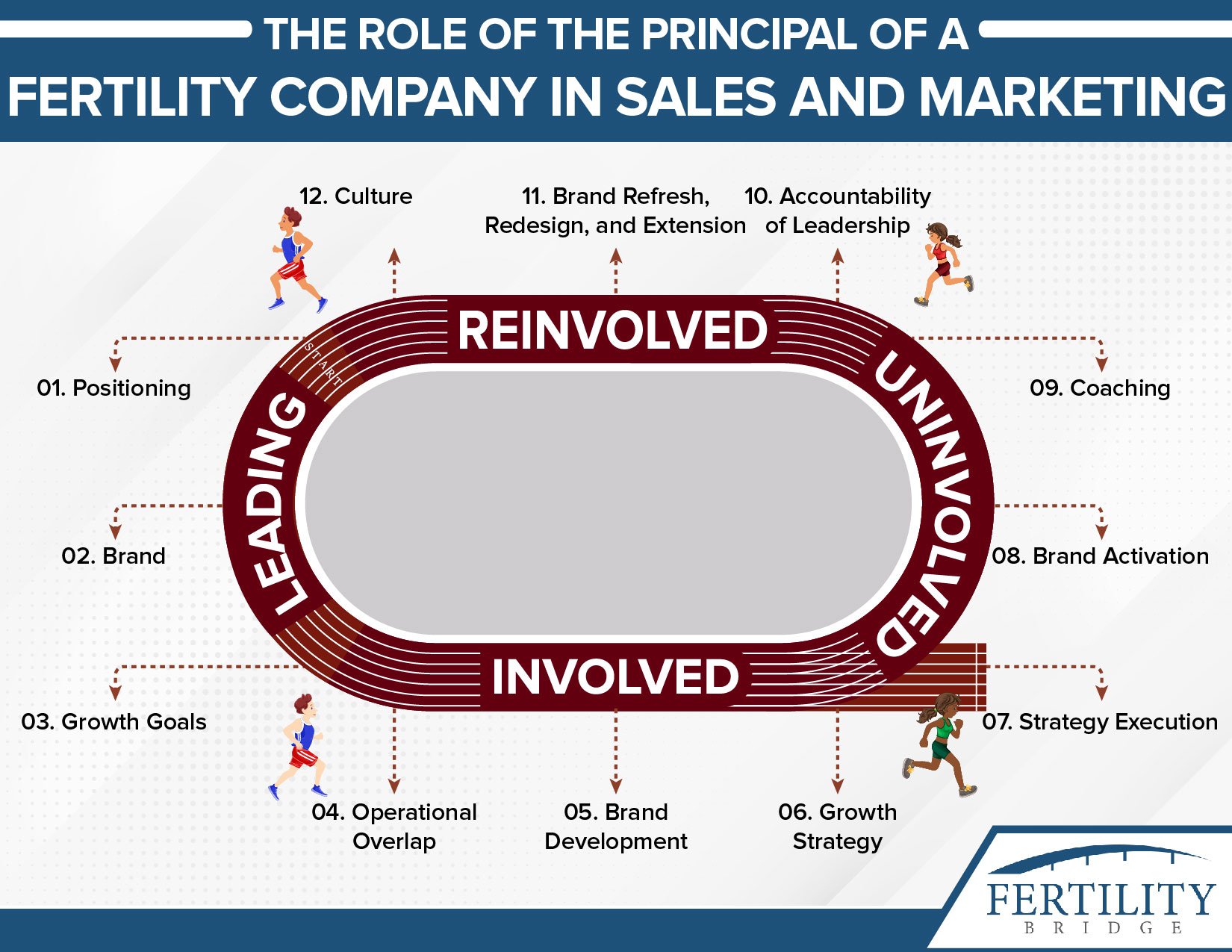
On this week of Inside Reproductive Health, Griffin Jones shines a light on what responsibilities should be handled by the principal of an organization and what should be delegated. This is something that all business owners struggle with but is especially unique in the fertility industry due to the nature of being a doctor and a business owner. 


Listen to the full episode to understand: 

  • What roles should principals not delegate.

  • How involved should the integrator role be in the core operations.

  • What do the best brands have in common. 

  • When to do a brand refresh

For all the details and visuals go to our blog

126: Increasing REI Productivity with Balance with Dr. Kutluk Oktay

Dr. Kutluk Oktay on Inside Reproductive Health

This week on Inside Reproductive Health, Griffin Jones and Dr. Kutluk Oktay go down the rabbit hole on the meaning of work-life balance. They discuss Dr. Oktay’s approach to limiting his patient load to spend more time on research and how that affects his motivation and quality of life. This conversation culminates in tips on how to be more productive and comments on developing leaders in your organization so you can get the balance you deserve. 

Listen to the full episode to hear our perspective on: 

  • How to fill your schedule

  • What makes good leadership

  • How does social media fit into ‘self-care’

  • How to approach work-life balance

Dr. Kutluk’s Information: 

Linkedin: https://www.linkedin.com/in/kutluk-oktay-md-phd-909b656a

Website: https://www.fertilitypreservation.org/


Sponsored by: 


Inside Reproductive Health is sponsored by EngagedMD. For technology that educates your patients with true informed consent, visit engagedmd.com/IRH for 25% off your implementation fee.

Mentioned in the Episode: 

Profit First by Mike Michalowicz: https://profitfirstbook.com/

Need help attracting the right people to make your practice great? Connect with us at fertilitybridge.com


Transcript

[00:00:00] Dr. Kutluk Oktay: I always think that our colleagues thought they were doing the best 25 years ago, but we look at what they've done.

We kind of roll our eyes, right, if we thought that it was today. So I always imagined myself looking at myself 20 years from now.


[00:01:01] Griffin Jones: The episode, I just recorded one a little bit differently than I thought it was going to go. I thought it was going to be about pursuing a career track in academic medicine. And it's a bit of that, but it talk more about what it means to have a meaningful and well-balanced career. My guest for today was Dr. Kutluk Oktay. He's at Yale. He's a professor of OB GYN and reproductive sciences. There is the director of the laboratory of fertility. The preservation and molecular reproduction there, he has published over 200 manuscripts and book chapters. His research has been funded by the NIH for almost 20 years.

And we talk about what it means to have a meaningful career for someone. Not that there's one path for anyone, but giving the listener an idea of what it's like to balance this and how you incorporate different interests, not just in the work part, but all of the things that happen when you're not working, you know, like your family, your health, your fitness, your hobbies, if you have those.

And that's what this episode explores in a way that's a bit more meaningful than just talking about self-care as a platitude, which I can't stand. And then talk a little bit about that in the conversation, but I'll let you decide. So I hope you enjoy.

Dr. Kutluk Oktay, welcome to Inside Reproductive Health. 

[00:02:22] Dr. Kutluk Oktay: Thank you. Thanks for having me. 

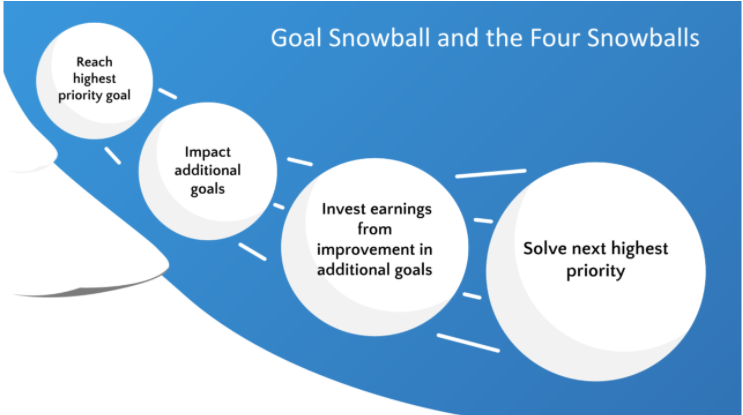
[00:02:25] Griffin Jones: I'm interested in the topic that you and I were snowballing, the idea that you had about the ability to have it all as an REI practitioner and specifically with regard to working in an academic setting.

And so before we go into how one is able to have it all, I believe that that the topic you had phrased as was having your cake and eating it too. So let's start before we talk about how to eat the cake, tell us what the cake looks like. 

[00:02:59] Dr. Kutluk Oktay: I'm not sure if there's a cake in this instance, but well, cake is I think hobby, the first trick is that, you know, you need to love what you're doing and if you're doing what you're doing as a job, you know, it's not a cake, right? So it's a cake because it tastes good, then you enjoy it. But even having too much of your favorite food would not be good for you even eventually get sick and tired of it.

So I think to me, cake is what you love doing. And the cake is one that's made with balanced ingredients and not one flavor's overpowering the others and a healthy cake a healthy cake. So you have to bake your own cake. You have to come up with your own recipe. If you have the wrong recipe for your cake you know, you may so soon throw up everything you had eaten so the speak.

[00:03:55] Griffin Jones: We talked about a balance of ingredients. What are some of those ingredients look like? 

[00:04:00] Dr. Kutluk Oktay: Well, you know, a little bit of flour and I'm just getting. 

[00:04:03] Griffin Jones: That's a different show. That's Inside Reproductive cooking. 

[00:04:07] Dr. Kutluk Oktay: I know I just want to make stuff, you know. During the time of COVID we are always disoriented and the wrong show. Okay. Because I do some cooking and that's part of the ingredients, right.

You need to balance your life as much as your work life. And you, we cannot be a single channel or a single ingredient cake. You know, if you just made it the flour, no sugar who's going to eat that cake. Number one is to have their idea of ingredients and not to build on one ingredients.

So maybe if you want to start diverging from the cooking analogy right. In my case, I'm curious, right, because I'm both a scientist and clinician, and I always question, I always question and say, there must be a better way of doing this. And I always think that our colleagues thought they were doing the best 25 years ago, but we look at what they've done.

We kind of roll our eyes, right, if we thought that it was today. So I always imagined myself looking at myself 20 years from now. And first of all, try to always improve things. And so that kind of makes it fun because to me, nothing is routine. Everything is a challenge, the challenge to do better, do better for your patients and do better for the field.

 Never stagnate. And so the ingredients for that reason is of course it's a good patient care, but innovation and always asking, you know, what can I do? What question can I ask? And how do I study that to take this current approach to the next level? 

[00:05:59] Griffin Jones: When you talk about a balance in work life, do you mean balancing life within work with life outside of work, you know, family and hobby balance?

Or do you mean balancing what you do within work? 

[00:06:14] Dr. Kutluk Oktay: Right. So in your life different index funds. One is the work index funds that you want to track the optimum rate of increase in your quality with balancing components of your work. And then you have your family life. Then you have your hobbies and then you have, you know, another balancing there.

And then together you balance all of these together. So you have balancing the compartments, but then you are so the life balance. So when I say work life, not work life, but your life at work. I'm talking about, I personally, if I just saw patients seven days a week, I would probably burn out in two weeks.

And because that's not how my brain functions. Right. And as I said, that, pausing and asking questions, how can I do better? And if you just constantly see patients, you cannot pause and ask that question. So for me action versus introspection in our case, introspection is we could say research because research is introspection to me, you know, asking questions about what you're doing, whether it's right or not.

And how can I just like, how can I be a better person? So for me, there has to be a balance between actually seeing patients doing surgery, administration research teaching, and doing yoga and during your breaks, whatever. If you're doing that to work you have to find the right balance for yourself.

You might be a warrior you know you see patients, seven days a week, I admire you. But I don't have that skill. I personally my approach is I focus on one patient at a time and I put a lot of energy and time in one case. And I probably can do, I don't know, certain number of cases like that in a given time.

And then I turned my energy to more academic questions who would, which would, I answered correctly, benefit those patients or the patients in the next generation. So I have to balance the work like that. And then, and then leave time for things that make you relax outside of the work and that's going to be different for everybody.

But to me family is important. Hobbies are very important, exercise, you know, well, if I don't exercise properly, I could be staring at my screen for five hours and producing nothing. But sometimes you take part in a health to hit that, you know, hard tennis session. And when you come back in three hours, you do work that you would normally do in three days in two to three hours.

So, I mean, time is a very expandable thing. Reality, we think five hours equals five hours. Now, you know, five hours could be 72 hours, or it could be three minutes depending on your mindset productivity energy level. So you have to do things to expand those three hours. Again, to buy your times for other things.

[00:09:22] Griffin Jones: So let's see how many different metaphors we can use on today's episode. I like the index fund. Let's stick with that because you have your total resource allocation in your portfolio. In this case portfolio is the total amount of time and you have a number of different index funds within that portfolio and then with in at specific index fund, you have allocations of shares to different different companies in one index under, or perhaps even across different fields. So let's stick with the work index fund and then we'll, and then we'll move on to the rest of the portfolio. You talked about saying, you know, seeing patients every day, you would burn out within two weeks.

So research helps you be introspective at all. Teaching helps you to improve. Why do you feel that the academic route has been best for you in, in, in serving those different areas? 

[00:10:23] Dr. Kutluk Oktay: Right? I think I have to think about, you know, an artist. Right. You know, why did being a you know, impressionist help me kind of why, you know it's just, I think part of it is you have certain tendencies, 

[00:10:35] Griffin Jones: Let me rephrase that because rather you have your tendencies, why do you feel that working at Yale was more accommodating to your tendencies than maybe if you had gone and worked for a private practice or a network, or maybe if you'd gone somewhere else in the country, why do you feel that working at an academic division suited your tendency better?

[00:10:56] Dr. Kutluk Oktay: I'm not necessarily advocating for or against any company or any setup or private practice and all that. I think you could have a private setting but you could affiliate yourself with an academic Institute and you could still follow by the same index fund so for me. 

[00:11:13] Griffin Jones: Would it be the exact same index fund though?

Or would it be like Fidelity's version of what Vanguard did? Well, you know, it's pretty much the same thing, but the expense ratio is different and there might be some fees that I don't know about. And can you do it the same way? 

[00:11:30] Dr. Kutluk Oktay: I dunno. Yeah, you're right. Their management fees could be different.

And so I, maybe there are different, you know, they may not be as broad based. But I think the key is to think creatively. I think we see examples of these major private enterprises. You know, turning starting fellowships doing you know, academic investments with their private money, et cetera.

So within that, somebody who's interested in boats can also find home. So it's not necessarily, you know, Yale versus some major and right for the private practice, but I think the formula, so in the end, yes, you are right. That not every enterprise would be accommodating right. To somebody who wants to spend time on research.

So first of all, you have to find that study for yourself. But second thing is you may have to create that same for yourself. And you know, if you're attracting research funding one more or the other, or you have some you know, you have some charity or something that's you can attract money and other different ways than you can set up your lab, even in a major commercial enterprise nevertheless in academics it's easier, but it used to be easier. Let's say because academic centers are also facing a lot of financial pressures. So I don't think there's one perfect solution in that sense.

[00:12:53] Griffin Jones: Why do you say used to be easier?

[00:12:56] Dr. Kutluk Oktay: Well, I think if you listen to people for before us and when NIH funding rate was something like 50%, every other grant submitted would be funded and the universities received a lot more government funding, state funding, they had more money to throw around for research and free up there faculty. So those resources have been over time restricted. So with the managed care managed care squeeze as well. So a lot of academic centers you know, they're pushing their faculty to work, you know, similar hours to sometimes, you know, privates centers. And I think in our field it has become a problem and a lot of good any centers have lost their REI divisions and because financially it didn't make sense to a lot of them.

 Must create it Yale in one sense that Yale department of OB GYN and reproductive sciences as always being a pro translational research always support it clinicians with scientific interests and always created time as much as possible or supported them so that they can get funding.

So there's still departments like that somehow, but not as mad as many of those. So I'm lucky to be where I am right now. 

[00:14:16] Griffin Jones: Yeah. Well that changes things for the people that go into work for those places. Don't they, if what they wanted out of an REI division was to spend perhaps less clinical office hours, more research hours if they are starting to see more of the push that, well, we need you at this clinical capacity, no matter what do they lose some of their recruiting edge? 

[00:14:45] Dr. Kutluk Oktay: I think so. I think academic centers especially at the more advanced level you know, junior colleagues, they still, I think are attracted academic centers because they need to pass their boards. Maybe build a little bit of name for themselves, but I think there's a difficulty in recruiting, more senior people and and losing a junior people when eventually they have acquired, you know, certain credentials and skills.

So yes, I think there's a brain drain in academia, especially in our specialty. You know, there are still mechanisms of supporting these like your productive scientist development program wore her, like Yale has this. So we have number of faculty who are on these tracks with protected time.

 And then we see that there are some, you know, rising stars because of that. You had one of our colleagues on your show and there is still opportunities, but you know, if you compare, academia in terms of salaries to a private practice you know, we are all aware of the differences but, you know, I think the medicine, or especially our subspecialty is not something that you want to pursue because you're only interested in the financial aspects.

I think in that case risk benefit ratio is not that great. You really have to love that the path you have chosen. So as I say, somebody who's likes to do a lot of introspection through research will not be happy in that continuous flow of academic clinical practice. 

[00:16:16] Griffin Jones: What advice would you give?

Because a lot of the people that listen to this show are fellows, and some of them might even want to come work for you. So the advice you give could be used against you, you got to remember that, but people are listening across the country. And in other places too, for that matter. And so what, what advice would you give them to investigate if the program they're interested in potentially working for really does meet. What they want in terms of research in terms of protected faculty time, or if it's just kind of a smoke screen, for lack of a better word though. I'd certainly don't mean to say it's so sinister for you're just going to be a workhorse clinician, like you would anywhere else.

What advice would you give fellows for sniffing that out as they determine what program they want to work for? 

[00:17:11] Dr. Kutluk Oktay: So going back to financial and knowledge, I would say invest early, you know, start putting in your 401k. Well, they were early, right? I think that should start when your residents, because if you are number one, you think you are interested in research.

I usually don't like to use term research to speak on cliche whether what it means, I mean so that's why I used introspection analogy, but you're more introspective, inquisitive. You want to approach more creative side of what we do. I mean, clinical creation is also important.

I think I have to start as a resident, maybe even a medical student building that those research skills. And so that, you know, when you hit fellowship, you are maybe a few steps ahead and you can do things and enduring fellowship that could prepare you to be more competitive for an academic job, which would enable you to, you know, get funding early.

And once you secure some funding, then you have more support from these institutions to have more time. So it's a self-fulfilling prophecy, you know, like you start with know to write, to propose, to think eventually you're not going to produce anything. So you have to preempt, I would say, you know, just decide on your career path, not first year of fellowship book.

Oh boy. Maybe when medical school or first year of residency and build those skills and portfolio. If you're interested in clinical research, start working with somebody to build have publications and understand the skills. If you're interested in basic research, same thing and hit the ground running.

And so that's number one. Number two is, you know, there may not be a lot of academic jobs that you can negotiate necessarily about. If the other alternative is working for an academic center and like working for a private practice, but every reduced salary, you may. If they give me this I'll work for academics.

If they don't, then I'll just stick with private practice. I think they need to have a good negotiation. Maybe allow them themselves three years of maybe protected research time in which time they can apply for various mechanisms for junior faculties. As I said, there's a productive scientist development program.

There's the Warhol from NIH and there could be other mechanisms. Most likely they get that on board and then they can build on that. Then start getting, you know, bigger grants, et cetera, if that's what they're interested in. So that would be my general guidance. 

[00:19:51] Griffin Jones: So that negotiation happens for the employment agreement.

This is the amount of protected time. You have this when you're negotiating the employment agreement? 

[00:20:01] Dr. Kutluk Oktay: Right, I mean, you know, some institutions are like, Very rigid, right. And say, okay, you're coming as an assistant professor, unless you get a grant, we'll give you, or, you know, .5 FTE for you to do whatever you want with that time.

Some institutions are more rigid. Some institutions maybe looking for they're missing that we've been talking about portfolios, et cetera. Maybe now let's go more towards smaller. I mean, building a department is like building a national soccer team, you know, like you have to put the people with different skills in different positions to lead, and maybe they have a lot of strong clinicians, but they need somebody who's promising who's going to move the field.

So if you can show them the portfolio like you've done in your residency, you published three key papers. It shows that you are a promising person. Okay. Going back to the investment. So this is a low risk investment for us looks like, but he or she has done during residency. Imagine if you give her time during as an attending faculty, what she could do.

I mean, it's going to depend on the job, but if you have already built some portfolio, it will be easier for you to negotiate.

[00:21:13] Griffin Jones: Okay. So let's move on to a couple of the other index funds in our portfolio. We've talked about what would the actual work-life the allocation of work.

Let's talk about the rest of the allocation of life. You could family as its own index fund. Hobbies would be its own index fund. Health and fitness would probably be its own index fund. And so of those other three things, which, which do you find sharpens the saw most for you? And by that, I mean, gets you back.

You mentioned if you play around a tennis that you can be exceptionally productive afterwards. So which do you find reenergizes you the most quickly?

[00:21:59] Dr. Kutluk Oktay: I don't think anyone matters individually because in the end this is the total amount of assets you retire with. Right. So I don't care which one built that fund.

I think it, again, it's balanced and it's also depends on the day. Right. But you know, I can have the same pleasure as going, picking up my daughter from school, let's say, during the lunchtime and bring her home and chatting whatever, as a you know playing a tennis match and kicking the rear end of a right.

You know, long-time rival in tennis or something like that. I think it also depends on your chemistry that day, too. Right. So so I don't think that there's a formula for one person, but whatever keeps you balanced. But I tried to keep these things going. I agree with you that exercise a regular exercise is important.

I also personally do yoga regularly. I've discovered this maybe three, four years ago. And it's a really, it balances you in some things. Some days you have 10 minutes, you do 10 minutes, some days you have more, you do more. So not only exercising of body at the same time, you're exercising your mind in a different way than when you're reading or doing experiments or seeing patients trying to solve a clinical dilemma.

I think your mind, your brain also needs stretching. So if you only stretch it in one direction, it's deformed. So you know, like seeing patients at stretch stretches this way, we will research stretches this way, but if I do yoga this way, you know, exercise this way, family that way. So you're going to have more space.

So for me, you know, it depending on how things are one may do better on day am. I may do better the other way. 

[00:23:43] Griffin Jones: I didn't think that I would do an Engaged MD sponsorship read for an episode on work-life balance. And then I got to the end of the episode and I'm like, no, this is the meat and potatoes of what you want from someone like Engaged MD. One of my guests and I are talking about the junk bonds of work that go into the work life allocation, the junk bonds are those things that are monotonous tasks that should be done at scale, should be done with software, should be done ahead of time, should be done at the convenience of the user, but aren't. Things like repeating the same information to patients to teach them things that are coming in their protocol.

The same legal forms, except you're tracking down one for this patient. And your staff is basically law clerks because they're tracking it down for another patient. All of these things that should be done at scale, that should be organized in a platform. And that's Engaged MD. That way you're spending your time with the most valuable minutes possible tailoring the experience to the patient's needs.

They know what you're talking about because they're well-educated and you're not acting like a darn paralegal go to engagedmd.com/irh, but only if you want 25% off the implementation fee, if you do, if you go to engagemd.com/irh and you select. You heard them on the show or you heard them from me, you'll get a few bucks off of your implementation fee and it helps us to create more content and give you more resources like this, but you'll also be getting time back to make life better for you, for your staff, for your patients, because that allocation is not infinite.

The junk bonds have to go. And the meaningful work and the meaningful things that we get out of life have to stay, go to engagedmd.com/irh and get some of your time back.

 When you said at the end of the day, it's the fund that helped get you rich was the most important. And in this context where we're talking about rich in life, as opposed to material wealth, but that can be a part of it.

And I think that the question people need to get to this allocation answer is what does it look like at the end of your life? And what, what do you think you'll regret? And I do believe that there are people like Jeff Bezos and like Elon Musk that I don't think they're going to regret, not spending time with their loved ones that much.

 I really believe that those are people that will regret if they haven't gotten to the absolute limit of their pursuit. So I do think that is possible for most of us though. I don't think we're going to look back and say, I wish I worked one more day. I wished that I had taken that meeting.

I wished that I had done that for most of us. I believe that we're going to either regret not having pursued something else that was meaningful or spending more time with our loved ones. But what we will regret if we just sit on the couch and do nothing and we don't, and we don't become better at our craft.

And so now you have more things competing for time. Potentially what I think has to go is the things that don't lead to any one of those things that have been decided as meaningful, meaning candy crush, video games and not to say that all of those things can never be meaningful, but I I'm talking about the things that don't fulfill our, our biggest interest in the form of hobbies that don't make us closer to our family.

That don't make us better at our craft. You know, the YouTube videos that I think those things are the things that have to go and if you want to have a balanced life, you really have to, you have to protect even more. Don't you, in terms of your time allocation. 

[00:27:44] Dr. Kutluk Oktay: Absolutely. You've got to get rid of the junk bonds, you know so penny stocks, whatever exactly.

I mean, I'm not saying I have an ideal situation here. Yeah. As you said, you know, watching TV, you know, Fantastic movies that you can watch and great sports events you can watch. But if you can, if you're consuming a TV three, four hours a day, the social media Instagrams and things like that you know, you're already, what is that time coming from a lot of those other components, right?

As you said if you think that you fulfilled everything else and you still have free time, congratulations to you and you must be in a different dimension, but go ahead and invest your time into other things. Perhaps one of the things that I do is, yeah, I rarely watch TV, for example, I'm never on social media.

I'm very selective. For example, I mainly use LinkedIn, but that's select, maybe I will post once a month. Maybe we'll our operation we'll do an Instagram post once a month. As you said that the social media could be poisonous in that sense. You know, obviously if you have a professional operation, I think this is more for private practices.

 They do all that stuff for you that can spare you, right. In terms of business marketing. 

[00:29:11] Griffin Jones: Well, a lot of people think that I am just ubiquitously pro social media and I approach life as a consumer and a business owner. Not always through the same exact lens. It's important to look through both lenses, but sometimes they are different as a business owner.

I can't get romantic about where my client's attention is. My perspective client's attention, or in the case of providers where their patient's attention is, I have to go where that attention is, and I have to speak to people where they are. But as a consumer, I don't need to be watching what my friends are having for breakfast or some political debate between two people that have no business commenting on policy one way or the other. And I think that has to do with the junk bonds that you were referencing. It's not for me to say this. This is exactly a junk bonds. Although I think generally I could speak to it and generally be right, but it's going to be different for people's allocation, but people do need to get rid of that first, because there's never going to be enough time for all of the other. 

[00:30:19] Dr. Kutluk Oktay: Right, I mean a social media. You're right. There's a business function of it. As I said, you know, you can use that, but otherwise it's designed to be addictive. I mean, it's a drug, so we just, the more we take it, the more you'll be evicted and it's a war text. You'll be socked in there. So, you know I was always scared of that.

[00:30:38] Griffin Jones: Did you think in these terms, when you were building your career outlook, what did you think as you took your first real job? Or did you think, well, this is how I want to build my life. Or did you start thinking about terms like work-life balance after, after your kids started growing up after millennials started talking about it all over the place?

Is this something that a focus that came to you later on? Or did youset out to build your career in a certain way?

[00:31:08] Dr. Kutluk Oktay: I think cliche, right, that's what they say life is what happens to you when you're busy planning. And so obviously, no, but I mean, my goal was always to have fun and that if something is not giving me fun, I'm not saying, you know, fun, meaning you know, I'm going to be playing cards all day or something, but there has to be fun.

Right? So when I followed my own principal, it just naturally happens. I try to do my allocation based on that, but of course, you know, the the more you live and see the more wrong steps and missteps you take, you realize that, oh, you know, I shouldn't have gotten that waste your next time. You're better trained the mouse.

You don't get into that trap. Yeah, I don't think that you can do that allocation at birth. 

[00:31:58] Griffin Jones: Well, maybe that's what we're starting to see more of maybe not at birth, but starting to see it younger and younger. And I wonder if that's the difference when we talk about millennials wanting work-life balance, one of the responses has been, well, all the generations have wanted work-life balance.

It would have been great to have, and surely millennials are not exceptional as humans in the sense that they are the only ones that want balance between their work and their hobbies and their health and their fitness.

[00:32:28] Dr. Kutluk Oktay: Well, I think there expectional, I admire millennials you know, like they're the homodeus.

[00:32:33] Griffin Jones: What's exceptional about them? 

[00:32:36] Dr. Kutluk Oktay: They've got all the skills, you know, like we didn't grow up with a giant life pop med, you know, the internet, right. We came into that. So they have this huge life, bob mitt on internet. They can, they can get their answers to everything. I mean, one question is now, how necessary is the classical schooling system?

And you know, you can get all the information. Of course, the skill we need to teach them is to objectively analyze what they see on the internet to scrutinize it. But my 15 year old has more wisdom than I had when I was at 35, because of all the giant global library that they have at their disposal.

 So they figure it out. When I figured it out at 35, they figured out that 15, of course they don't, you know, like, why am I going to be a doctor? I want something that offers me more balanced. I'm going to plan something so I can work from home or, you know I'm going to boost start-up I don't want to work for anybody else.

So I think that's where I'm saying that they have that kind of long view. They don't have the classic on the standing of her going to working for somebody it's still the right. Of course that's going to create some kind of anxiety in that generation because you know, there's so much competition for the independent space.

So it's an interesting experiment and I'm waiting to see how it's going to end. You know, like I lived there 15, 20 years, we'll figure it out. 

[00:33:57] Griffin Jones: So I think that's what makes them accept. It's not the desire to, because you yourself have talked about that desire, but it is exceptional that they are coming into the work force with a picture in mind of what work-life balance looks like.

And they are willing to prioritize it in terms of walking away from offers or quitting jobs or who they go to work for. And your point is interesting about how the accelerated learning from the digital age has been a part of the accelerated expectations, right. You hit on the accelerated learning what you knew at 35, your 15 year old knows.

I think that's all also true for expectations of, oh, if this is what a 35 year-old drives and what a 35 year old makes in salary. And this is what I want coming out of college too. 

[00:34:53] Dr. Kutluk Oktay: You know, I don't know if it's some kind of enumeration issue, but definitely they have I think you know, more global view on things and the priorities.

And so, you know, maybe you know, maybe they don't think that you need to sacrifice your life because life is the most, you know, most valuable commodity. To you know, have a luxury car, right. And I think they're so globally connected. They experienced the word globally and you know, they have other ways of enjoying life rather than traveling on a private jet.

So you know, it's not a hippie generation, right. But I look at it as you know, differently, less militaristic male generation. I don't know how I put it, but that they're less regimented to me more broad minded. And they don't want to be you know, put into cubicles to achieve what they want to achieve.

And I don't think there's any amount of money that can force them into the lifestyle that they detests. They think they have options, let's say.

[00:35:54] Griffin Jones: Well, I think one wrench in the works is that having junk bonds in the portfolio, I think they want the yield of the portfolio. And that is, it is possible to get a high yield from portfolio.

But I think that there's a lot of junk bonds in there. And that's one of the concerns that I have when I hear the word self-care and I hear it's, I am more than open to the idea of self-care it is necessary for being productive. If it's something that, that actually helps rejuvenate you, that if it actually helps you pursue a larger goal, but if it's just increasing media consumption or if it's just an excuse to differ from an obligation, then I don't see how we get to a place where we have 30 hour productive work weeks. If there are marbled with escapism. 

[00:36:54] Dr. Kutluk Oktay: Right. Escapism it's the right word. I mean, that's why it's a drug, right, alcohol, drugs, social media. You're constantly escaping from what you have to do or what you should really be thinking.

 That's kind of what the quick send for the next generation. So that's going to engulf some, some talents and bog them down but others will learn how to dance around it and hopefully do great things. And I think also being aware of what we are doing to environment is also very a lot of young generations are aware of that. And a lot of them are more worried about that then you know, filling up their coffers because you know what good it does if you don't have a good healthy planet to live with, what are you going to do with all that money? So I think that's the other reason, I think this generation will have a long view because they need to think about the entire planet with what they do. 

[00:37:54] Griffin Jones: Well, \ they do have a lot more to think about in terms of, you know, having to have a response for other things that are, that are happening. And so let's pretend that we, we have solved for the junk bond issue for the moment that we've gotten all the junk bonds out of our allocation.

We are left with high yield, low cost index funds that lead us to a good outcome. At the end of all this. But then there is this pestering concept that I hear from, and about physicians who look and I don't know that it's erroneous. It could very well be valid, but the, but the idea is that, well, physicians can never really be off.

They can never be totally unplugged because what if our patients need something from us.

[00:38:45] Dr. Kutluk Oktay: Well, I have to take a break now, so I'll see you in five minutes just getting right. I get to a point physicians can be off on the paper, but they can never be off here. Because I mean, at least personally, but I know a lot of other people, you know, and if we wouldn't, if I go away.

 I think about my patients. What happened to this? What happened to that? What happened to that? That's the nature of it. That's why you don't pick this field. If you're really not, you know, you don't like to have that kind of lifestyle. Right. But not necessarily your uncle, every movement of today, but when we are caring for people's future it's hard to completely detach yourself from that.

But if you're working in a good team situation and you have colleagues that you can trust maybe you can disconnect nicely when you're off, when you're doing your yoga, when you're like a week away with you know, doing the things you like. But if you're a one man show, yeah, that's very hard.

Maybe one of the advantages of being an academic sort of larger practice is that you can have other people take the burden off of you sometimes. 

[00:39:53] Griffin Jones: Can you do that if you're taking a two week vacation with your family and you just want to be alone with your family and a cabin in Europe, can you say I'm not taking any calls?

I trust my partners to be able to handle the case. Can a physician do that? 

[00:40:12] Dr. Kutluk Oktay: I can imagine a physician can do that. So I'm I can imagine that it happens in other practices. All I could say that, you know, academics and other places, I've been to several places and I've seen that happen. I don't necessarily see anything wrong.

That's an individual personality issue, I think And you can also set limits. I mean, I don't need to know these, but if something like this happened, yes, you can contact me. You know, we have patients that we make very personal personal relationships in terms of patient doctor relationships and that sometimes they just want to hear from you.

And so yeah, there will be situations, well you could be in on vacation, but there's some emergency, we'll have to answer that. But the key to that is to be able to switch on and switch off you make a phone call, you know, give instructions, and now you're back to as if it's never happened so it's matter of a.

[00:41:05] Griffin Jones: What about the doctors that say, I trust my partners, they're perfectly qualified, but my patients expect me and they have to be able to reach me. And I can never have a window where I'm unreachable. 

[00:41:20] Dr. Kutluk Oktay: Right. If you're complaining about that, that means that you need to change it. So you cannot say that I don't trust my colleagues.

I need to be reachable, but I'm never off. So that's like trying to have the cake and eat it right. Going back to that. But when it comes to patient care and when you're trying to be personal with your patient, provide personal, there's no formula for that other than cloning yourself. So either you trust your team or be available.

So I don't know if there's a formula for that. So I, for me, I set sort of criteria. Okay. You know, XYZ happens. Perfect. Good. Go ahead and map. But it hits, I dunno, let me cry. Then you have to call me and you know, that way, if you get a call, you know, that it was absolutely necessary or, you know, you clone yourself, there's exactly a personal like you and a fine great, go away to Mars on a mission or whatever.

Nobody can reach you. 

[00:42:21] Griffin Jones: I have somewhat of a formula. It doesn't totally address the limits that you would set in terms of, of what you can use of what people can contact you for or not. But it does give a formula for how much time one might want to protect. Have you ever heard of the book profit first? 

[00:42:41] Dr. Kutluk Oktay: Maybe I'm not sure.

[00:42:42] Griffin Jones: Well, link to it in the show notes. The author's last name. I can't pronounce, even if I remembered it, but it's the concept is a bit contrary to gap, generally accepted accounting principles, where revenue minus operating expenses equals profit and profit. First, it simply is revenue minus profit equals operating expenses.

So you're always allocating for profit, even from the infancy of a business. And if you're an infant business, you, you have almost nothing to allocate anyway. So, but you start with that current allocation percentage, and then you have a target allocation percentage. And so in the beginning, you might be saving a dollar, but the point is that you reserve profit from the very beginning and learn to manage operating expenses accordingly, as opposed to the reverse. And when I think of the needs that we have to have loving relationships with our families to have mental health and clarity breaks, there has to be some time and I'm not going to tell people how much time it is.

 But when I'm with my loved ones, that there's nothing that's going to interrupt that unless it is a grave emergency. And so I'm going to write this book someday, Kutluk called time first, where it, you start off with a current allocation percentage and maybe it's just, you know what, every Sunday evening, I'm gonna I'm tucking my daughter in, and I'm going to read her a book and nothing will threaten that.

And then a year from now, I want to be able to do this and five years from now, I want to be able to take three weeks in Europe. I believe that that has to happen. People have to have some allocation of percentage of uninterruptible time and then based on how that goes and how much they want, then they can have a different target to augment for the future.

[00:44:32] Dr. Kutluk Oktay: Right, I mean, you know, the vacation break, whatever is break, but I also think about you may have that time, but there is a situation. If you didn't respond that would create consequences that cost you more time in the future, which would come out of your family time. So even when you're on your off time, you have to be able to recognize the situation.

If you didn't respond at that time. That will cost you a lot more time in the future. So you can think about scenarios of, you know, the complication happens and you, you don't give the right instructions or whatever that, you know, them medications may take more time. So it's a bit tricky. We say that, but you know, as a physician as I said, you need to be able to have some kind of artificial intelligence in your system that will read that out.

Do that calculation for you before you're interrupted. It doesn't happen a lot if you have a good team. So that comes to building good teams. You good leaders are the ones who develop other leaders. Your leadership is measured by the index. Of how many leaders you can develop or how many people who would lead others.

But when you're building your team, you need to build people who can also independently think and function with you. Again, if you don't have a good team it's hard to have time off. 

[00:45:57] Griffin Jones: Well, in order to have an independent team, though, you also have to take some time off because how do you know if they're really independent or not?

If you're constantly there, they will ask you and you will stick your finger in the pudding jar. If, if that temptation is offered, I took two weeks last year in 2021. And my team didn't make every decision that I would have agreed with. It revealed to me. Oh, there's, there's one to three things here that are clearly missing from our core processes that I need to fix.

And I only knew that because I went away and they made a different decision that I wouldn't have made. and because of that, it's like, okay, well, I was gone for two weeks that the farm isn't going to burn down the practice, isn't going to burn down during a two-week period. But then I can make the, it could, I guess it could. 

Well, that's a good, that is a good point though, because I couldn't have done that six years ago, so that is a good point.

 But that's why you start with a day and then maybe it's a couple of days and then it's two weeks. And eventually I'd like to be able to go for big blocks at a time. So we've talked a lot about the different balances of work, not just what goes into work, but also the things that accompany it like health and fitness, family and hobby.

We're going to conclude the show and a lot of private practice owners listen, but there are a lot of division chiefs that listen to this show. And one of our biggest segments is fellows and it's younger associates that are thinking about what the next move next move is. So how would you want to conclude with them, Dr. Oktay? 

[00:47:34] Dr. Kutluk Oktay: Well, to fellows are the biggest, you know, very important part of the team, whether they're clinical fellows, research fellows, you know, observers, whatnot. And in my career, I always worked with fellows of again, either clinical fellows or fellows from various parts of the world.

 And their contributions are tremendous. So they are important part of the. And that's, you know, by working with a mentor prepares them well for the future. So my advice to them again, I said, you're a fellow now, but if you are planning to be a fellow, you're going to start early bit, but also find yourself a good mentor and which could help you with whatever you want to accomplish in your career and work with them. 

[00:48:18] Griffin Jones: And you said that you are active on LinkedIn, so that may have been a little subliminal nod if somebody can people reach out to you on LinkedIn, if they're interested in it.. 

[00:48:27] Dr. Kutluk Oktay: Oh yeah, absolutely.

All the time. So, you know, I decided to focus on one social media gadget. And I think LinkedIn works well because it's nicely filtered and more focused on professional topics and I think it's pretty efficient.

You know, I have through LinkedIn may have formed many alliances, solved many issues reached out to executives of insurance companies when we had problems with the patients, reimbursements, things like that. So I think LinkedIn is a really a good way to expand your network. 

[00:49:02] Griffin Jones: Well, before I let you go, I know that everybody listening to the audio and not watching the video is picturing you as a millennial with your artists in coffee and your beanie and a flannel, but Dr. Oktay is in a suit and tie today, and it's been a pleasure having you on Inside Reproductive Health. Thank you Dr. Kutluk Oktay for coming to IRH. 

[00:49:22] Dr. Kutluk Oktay: Thank you. Thank you. Next time, I'll put that digital outfit on. 

[00:49:27] Griffin Jones: Sounds great. 

123: 4 Steps to Fertility Business Goal Setting That Speed up Execution with Griffin Jones

123: 4 Steps to Fertility Business Goal Setting That Speed up Execution with Griffin Jones

This week Griffin Jones highlights four steps fertility businesses should use for goal setting to speed up execution. Sometimes you need to slow down to speed up. Griffin lays out goal setting from an unique perspective and talks about the goal snowball effect. Listen to this episode to gain a better understanding of how to evaluate your goals based on the investment of time and money they will take to achieve. 

This episode covers: 

  • How to set and attain goals

  • How to prioritize goals

  • What is the goal snowball

  • The 4 steps to goal setting to speed up execution

To learn more about our Goal and Competitive Diagnostic, visit us at FertilityBridge.com


Inside Reproductive Health is sponsored by EngagedMD. For technology that educates your patients with true informed consent, visit engagedmd.com/IRH for 25% off your implementation fee. 


Leadership vs. Delegation in Marketing: A 12 Point Spectrum for Fertility Business Owners

By Griffin Jones

Leadership is a delicate dance for any business owner in the fertility field. For REI practice owners, it might be the Tango.

Striking the balance between leaning in and stepping away can be a struggle for any fertility executive, and there is usually an added layer of complexity that’s unique to physician practice owners.

If we look at the Entrepreneurial Operating System (EOS) accountability chart, we see where a managing partner might find themselves occupying many seats.

Visionary, whether they’ve sorted that role out with their partners or not

  • Integrator, if a Chief Executive Officer or Executive Director doesn’t truly occupy the seat

  • Operations, if they are the Medical, Practice, or Lab Director

  • Physician, oh yeah. Remember your main job? The one for which you undertook fifteen years of higher education and training? That seat falls below the leadership seats under operations. 

Yes, executives of many companies, fertility or not, struggle to step out of many seats. Still, the functions of Medical, Practice, or Lab Director, and especially the role of physician, is a unique charge for physician practice owners.

The accountability chart for fertility practices is its own topic that merits its own article. In this article, we will attempt to get you out of the sales and marketing seat as much as possible.

Even when you properly delegate the sales and marketing seat, there are sales and marketing responsibilities that come with the visionary and integrator seats.

HOTEL SALES AND MARKETING: YOU CAN CHECK OUT ANYTIME YOU LIKE, BUT YOU CAN NEVER LEAVE

What do some of the world’s most iconic brands have in common? 

They had or have CEOs (Blakley, Jobs, Musk, ol’ Walt himself) that propagate the market position of the company in everything they do.

If you’re looking for a book on this topic, David Kincaid’s The Brand-Driven CEO: Embedding Brand Into Business Strategy provides plenty of real-world, current case studies from today’s biggest companies.

Leaders must be involved in positioning and branding because the marketing position of their companies is enforced or betrayed in every area of the businesses.

Because principals (the owner of an REI practice or chief executive of a fertility company) are no exception to the positioning requirement, it’s common to get bogged down in sales and marketing responsibilities that they should be able to delegate.

We don’t want that. If you’re struggling with the question of involvement versus delegation in your fertility company, you aren’t alone. 

We’ve broken sales and marketing responsibilities into a 12-point spectrum you can use to determine when you need to be involved in branding, sales, and marketing initiatives and when you can delegate.

12 POINTS FOR FERTILITY BUSINESS OWNERS

The external and internal presentation of your company is a relay race. You have to make sure the baton doesn’t get dropped as you run from one segment to the next. This means that you can’t go from leading your team to being completely uninvolved in one take. In business, a dropped baton leads to inefficiencies and expensive mistakes. In the fertility field it leads to patients feeling like they were baited and switched.

But, you can step out at certain points once the baton has been successfully passed. This spectrum allows you to ease off without sacrificing outcomes.

When you need to lead:

  1. Positioning

  2. Branding 

  3. Growth Goals

When you need to be somewhat involved:

  1. Brand Development

  2. Growth Strategy

  3. Operational Overlap

When it’s okay to be uninvolved:

  1. Coaching

  2. Brand Activation

  3. Strategy Execution

When it’s time to reinvolve yourself in the marketing process:

  1. Culture 

  2. Brand Refresh, Redesign, and Extension

  3. Accountability of Leadership

When the principal of a fertility practice needs to lead

1. Positioning

Positioning influences everything the business does. We’re talking about what differentiates your practice from the competition and what makes it unique. This includes your: 

  • Vision

  • Mission statement

  • Core values 

  • Core service areas and focus

  • 10 Year Target

  • 3 Year Picture

A marketing team can’t make these decisions for the company. They can only come from the top. 
However, it’s also important to note that if you have partners, everyone needs to be aligned before moving forward. Otherwise, the latter stages of the marketing process will become more expensive, more time-consuming, and less effective.

A fertility business can be in operation for decades. However, if they haven’t structured everything they do in a source of truth (that everyone in the company can point to), they haven’t outlined their unique positioning.

2. Brand

Part of the role as a leader of a company is chief brand ambassador (lowercase, let’s be modest here). Once you and your partners, if necessary, have decided on things like core values and which types of patient segments you especially want to serve, you can move on to branding. 

This includes the 

  • Name of the company

  • Unique value propositions

  • Overall brand look and feel

  • Key messages

Your marketing team will be a key player in this process (if they aren’t, something is wrong), but your leadership is still crucial. 

3. Growth Goals

Employees simply can’t decide growth goals because they don’t have the skin in the game that the principal does. As Gary Vaynerchuk bluntly puts it, “Your employees shouldn’t care about your business as much as you do.”

Unfortunately, marketing personnel are often not even incentivized to pursue growth goals. Worse, administrators and operations personnel are frequently disincentivized from pursuing growth goals because it means more work for them and they get nothing in return.

Your growth strategy is the measurable pursuit of your values, vision, and brand. It is the traction toward your vision put into numbers. Growth goals include:

  • Revenue goals

  • Net profit targets

  • What type of business they want the company to be (like a designated B-Corp, for example)

  • Patient satisfaction score targets

  • Number of new patients served

When the principal of a fertility company needs to be somewhat involved in sales and marketing 

During this next phase, you can begin to dial things back a few notches. You still have some involvement in the sales and marketing process, but now your team is starting to run and you begin to extend your arm to pass the baton.

4. Brand Development

At a minimum, every company should have a set of brand guidelines, also commonly called a brand book or a brand style guide. These documents guide every marketing campaign going forward and they provide the templates of your company’s look and feel.

Your marketing team will work on these guidelines, but the involvement of the principal ensures that the brand comes to life in a way that supports its core values and overall goals.

5. Launching Growth Strategy

The baton is almost passed.  The principal doesn’t need to be involved in every aspect of planning the fertility company’s growth strategy, but they need to be the one to commission it’s execution. 

The principal must see and approve the plan before execution begins. Even when your team is fully incentivized to move towards the company’s growth goals, the principal must ensure that execution of the plan is underway before she or he can step away.

6. Operational Overlap

When you look at the Four Phases of the Fertility Patient Marketing Journey, you’ll notice that the closer you get to the outcome of getting paid and improving patient satisfaction, the greater the operational overlap.

Without continuity across these areas, there is a sharp decrease in the likelihood of the marketing team being able to complete the desired results. These areas are run by other people, and your marketers are not their bosses.

The principal must remain active until operational, administrative, and financial teams accept their role in the strategy.

When a fertility business’s principal can be uninvolved in marketing

We’re finally at the point where you can pass the baton, take a break from the relay race, and let your team take care of the heavy lifting.

7. Coaching/Management

There’s no need for a fertility business’s principal to be involved in coaching your physician liaisons, call center, patient navigators, or marketers. Their managers are in charge of the day to day performance and outside companies can train your teams, or train your managers to train your teams.

If you participated and led at the points you needed to, you can trust your team to get to work. 

8. Brand Activation

As the principal of a fertility practice, you don’t need to direct the brand assets that engage patients with your company.

You’ve approved your brand book; this is a job for your marketing team — they’re the ones who should handle brand activation initiatives like website design, social media templates, and launch campaigns.

9. Strategy Execution (with one exception)

You don’t need to schedule video shoots, write social media posts, edit blog posts, oversee advertising campaigns, implement CRM or EMR sequences, monitor lead conversion, or report on post consult follow up.

There’s one exception, however. 

If you’re being featured in a piece of content, you need to be available as the star while your team produces, writes, directs, films, and edits.

When the principal of a fertility business should get reinvolved in marketing

Periodic reinvolvement keeps the foundation of the REI practice or fertility company solid and ensures long-term success. 

In marketing you can set it but not forget it. As the leader of your practice, it’s important to check in, reinforce accountability, and ensure that sales, marketing, and operations have stayed true to core values. 

10. Culture

In most cases, I hate calling a company's workforce a family. Employees are most certainly not children and they are not your children. In the specific instance of who models the company culture that everyone else imitates, however, this wisdom from Gabrielle Reese is apt.

“[Children] watch you, they don’t listen to you.”

You are the matriarch or patriarch of your fertility business’s family in this sense. The family follows your example.

Really, culture is the ongoing commitment to your positioning, and the critical element of commitment is action. If you’ve decided that your company is going to be more in tune with the needs of same-sex male patients than any other organization, for instance, your team can only live up to that culture to the extent that you champion it.

11. Brand refresh, redesign, extension

Many fertility companies need a brand refresh, periodically.

Fertility centers that built a brand for Baby Boomers or Gen X-ers need to update because Millennials and Gen Z patients now make most of the patient and donor populations. They respond to different types of marketing because they have different concerns

If you decide to extend your identity with a new brand for fertility preservation or third party IVF, the principal must be involved in the beginning stages of those initiatives. If you are changing the identity of your IVF center or fertility company, even moreso.

12. Accountability of Leadership

Entrepreneurial Operating System (EOS) Accountability Chart applied to fertility clinics

Finally, even trustworthy and capable sales, marketing, finance, and operations leaders need to be held accountable by the visionary and integrator of the organization.

As fertility experience consultant Lisa Duran says, “people do what their managers pay attention to”.

It’s not just about them. Periodic check-ins also demonstrate that you’re holding yourself accountable. Employees don’t need to be micromanaged with due dates and metrics. They should see that the principal is paying attention to the outcomes to which they contribute:

  • IVF cycles

  • Patient Satisfaction

  • Egg freezing retrievals

  • Third-party IVF recipients

  • Third-party IVF cycles

  • Tubal Ligation Reversals

  • Donor recruitment

  • New patients

  • Specific provider volume increase

  • Targeted region/office volume increase

Are you ready for a better relationship with your marketing team?

While you do need to be involved in many aspects of the marketing process, chief executives of fertility companies and REI partners like you also need to be able to free themselves of certain marketing responsibilities. 

Getting to the point where you can pass the baton only happens when someone else is completely in charge of the outcomes that grow the business. Pay attention to these twelve points to know when to lead, when to throttle down your involvement, and when to release.

Letting go can be difficult, though.

That’s where we can help. Get Fertility Bridge’s support in selecting marketing personnel, determining their responsibilities and outcomes, and more with our Goal and Competitive Diagnostic.

No More 'Hurry Up and Wait': 4 Steps to Fertility Business Goal Setting That Speed Up Execution

“Hurry up and wait.”

Far too many fertility companies, practice or not, rush into their goals… only to abandon them when they realize that the strategies required to reach those goals require more work and investment than expected.

Whether they like it or not, all fertility practices are entrepreneurial enterprises. Still, many independent centers don't approach growth like their corporate competitors, who actively set and pursue explicit market goals. Corporate fertility groups sometimes set goals but fail to align their efforts to achieve them.  

When an REI practice is in a hurry to catch up to what competitive fertility providers are doing, they may make hasty decisions that paradoxically waste more time (and money).

Some example requirements of different business development strategies include

  • Reserving provider availability for subject matter expertise for digital content or events

  • Creating content to support an advertising or public relations campaign

  • Scheduling staff to stay late or stop seeing patients early to shoot video

  • Restructuring your call center to fix the attrition of new patient inquiries to consult

These are only a few.  When centers face challenges like these without a committed goal in place, they are far more likely to abandon the pursuit having wasted time, money, and effort. 

Some fertility centers even hire marketing personnel only to fire them in a year when they aren’t seeing the results they expected. 

The way out of the cycle is for fertility businesses to set and commit to (or not) goals in four steps.

Slow down to speed up

While goal setting produces real value for any business, in these four steps, we use examples that companies in the fertility field have to consider.

Stop the dreaded “hurry up and wait” cycle once and for all because when you slow down goal setting, it’s easier to speed up the growth of your REI practice.

The four steps of goal setting for fertility businesses are: 

  1. Opportunity

  2. Priority

  3. Alignment

  4. Resource Allocation

1. Identifying opportunities for REI practice growth 

Fertility specialists have no shortage of ways to grow their businesses — there’s a virtually endless array of services you can provide and demographics you can serve. Growth opportunities you could pursue include

For each potential opportunity, you first need to benchmark your current volume, set a goal, and calculate profitability. 

A basic formula you can use is (Goal Volume-Current Volume)Profit = Opportunity Potential

Using IVF cycles as an example:

Goal of 1,000 IVF cycles with a profit of $4,000/cycle = $4 million

Currently at 500 IVF cycles with a profit of $4,000/cycle = $2 million 

(4,000,000) - (2,000,000) = $2 million opportunity

At this stage, many practice owners look at the numbers and think, “We have to do everything!” That’s a natural impulse. You want to care for as many people as possible and you don’t want your fertility business to lag behind its peers.  

We’re not making any decisions yet, though. Pump the brakes and slow down so that you can move much more quickly when it’s time for execution.

2. Prioritize the ‘infinite’ goals of a fertility practice

Research suggests that having too many goals leads to diminished outcomes. That’s why it’s critical to narrow focus and prioritize. If every goal is the priority, none of them are the priority.

The prioritization calculation has many moving parts. In order to effectively prioritize, your practice needs to:

  1. Rank opportunities by profit potential using the calculation above.

  2. Estimate effort--goal against current capacity Does the goal represent unmet capacity that the practice can easily meet? Or, will you need to add more doctors, staff, office space, or equipment to your business?

  3. Subtract effort from goal. You may be able to pursue a more profitable service, but how much effort will it take to reach that goal?Ex: a practice wants to pursue fertility preservation instead of IVF, because of a higher profit margin. If their practice isn’t positioned well, or in a challenging market for egg freezing, filling out IVF capacity may be the quicker win.In addition to helping you rank priorities, estimating the effort of achieving a goal reduces the likelihood of wasting time, money, and effort by abandoning it.

  4. Consider your mission. You are a clinician first and a business person second. If  your personal practice is about advancing fertility preservation, serving LGBTQ+ patients, or treating recurrent pregnancy loss, that has to impact which goals you prioritize.

  5. Weigh brand/market liabilities, particularly strengths and weaknesses in the marketplace. If your practice doesn’t make a move on a certain opportunity, will a competitor take it over and make it difficult for your business to get back in the game? Will it make your brand appear antiquated if you don’t pursue?

You might worry that other goals will be ignored if you choose a single priority to focus on first, but that isn’t necessarily the case. Other areas of the practice almost always benefit from a snowball effect.

Goal Snowball

Here’s an example of how prioritizing one goal can benefit others. Let’s say an REI practice has ten physicians with very different workloads:

  • Two or three REIs have a higher than normal capacity and they have met it. They each do more than 300 retrievals per year.

  • Five REIs are each at a normal capacity of 180 retrievals per year.

  • Two or three physicians are below 150 retrievals per year so they are a financial and access-to-care constraint.


This group has many goals, but they have ranked specific provider volume as their biggest priority. As a result, they:


  • Streamline their call center to balance waitlists. They achieve their highest priority of increasing the volumes of the lagging physicians

And

  • Progress toward their goal of increased patient satisfaction because they have improved the early interactions between practice and patient.

Prioritization doesn’t mean you’re ignoring the other goals of your fertility business because it maximizes the effectiveness of your resource allocation.

We’ll discuss resource allocation shortly. Before we get to that part, though, all of the practice’s partners must be aligned on the priorities.

3. Aligning your partners with the goal (and each other)

Even when the managing partner of the fertility practice or the chief executive of another fertility company has final say, alignment with the partners is crucial.

The fact that partners need to achieve alignment doesn’t mean they don’t already have a healthy relationship, though it can. It simply means that they must be explicit and clear about an initiative so that everyone can come to a mutual agreement.

When everyone is on the same page, it’s much easier to work through any obstacles and questions that arise in the process of reaching a goal.

When it comes to aligning a practice’s partners, third-party support is often the most effective and efficient way to reach a consensus. This isn’t about moderating for conflicts, necessarily — it’s about

  • Prompting necessary conversations that are easily put off when everyone is focused on a new goal.

  • Bringing new ideas for partners to consider.

  • Acting as an objective sounding board in discussions between partners.

4. Resource allocation: Time or money?

The goal snowball means that the strategies required to meet different goals often overlap. It doesn’t mean they’re completely imbricated.

The amount of overlap will vary based on your available resources:

  • With more money, you can plan and execute multiple strategies concurrently over less time.

  • With more time, you can sequentially plan and execute more strategies for less money.

The goal snowball allows for a progressive return on investment. That means you can continue to invest in your fertility business without decreasing your income.

How will you set goals for your REI practice or fertility business?

Before investing time and money on a plan to achieve a goal (not to mention the execution), slow down so you can speed up:

  1. Quantify opportunities

  2. Prioritize them

  3. Align the partners

  4. Allocate your resources accordingly

If you would like outside expertise and experience, we can help. This four-part methodology is part of how Fertility Bridge helps fertility practices and other fertility companies navigate their biggest business challenges.

If you’re ready to set and accomplish goals for your IVF center or fertility company, sign up for the Goal and Competitive Diagnostic here.


THE CATCH-22 OF OPENING A BRAND NEW FERTILITY CENTER AND THE 5 PHASES TO ESCAPE IT

Staffing. Construction. Leases.

Successfully opening a new fertility center takes months of meticulous planning. Then you actually have to launch it into the marketplace. But when? And what if you can't?

In the last three years, Fertility Bridge has advised seven aspiring fertility centers prior to market launch. Only one of them opened on time.

The other six faced delays of three months to two years, and some decided against the idea altogether.

Owners of brand new fertility centers struggle with an inherent Catch-22 in the timing of their go-to-market strategies.

Invest in strategy, content creation, customer service systems, and advertising only to have your opening date pushed back indefinitely

OR, equally bad

Have only days or a few weeks to create everything you need for a full pipeline of new fertility patients.

The Catch 22 is a result of a concentration of risk and investment. I’ve separated the operational sequence of opening a fertility center from the sequence of launching it in the marketplace. To solve the Catch 22, we have to be able to distribute the risk and investment across the sequence at the correct corresponding phase.

The 5 Operational Phases of Opening a Fertility Center

The operational phases aren’t my area of expertise, but as far as I can tell, IVF centers face opening challenges in this operative sequence:

  1. Market selection
    Choosing the geographic market, funding sources, and partners.

  2. Lease or purchase

    Real estate sales fall through right before closing. Landlords don’t include something in the lease agreement that was important in the discussion. A physical or zoning limitation is revealed at the last minute.

  3. Construction

    Even when you lease space in a ready-to-go medical office building, it’s likely that you will need to remodel the plan for your IVF center. You were going to put your collection room on the other side of the lab? Turns out there’s a multi-split HVAC system that connects to the outdoor unit from there. Call the architect. Again.

  4. Staffing

    You’re likely not opening a new center without a few saved numbers in your phone. But how many of them are certain to be the Renee Zelweger to your Jerry MacGuire? Lab Director, Nursing Manager, Office Manager? Then you have to negotiate their salaries, start dates, hire their direct reports, write their operating procedures and train them.

  5. Compliance

    You need insurance (malpractice, liability, worker’s compensation), tax certificates, a payroll executor, an IT/communications provider, EMR, billing software, scheduling software, practice management software, compliance training (OSHA, HIPAA, CLIA, Stark). Each of these requirements comes with the possibility of delay.

I can’t offer much insight into the operational phases of opening a fertility center. I can sequence the Fertility Center Market Launch into five phases to reduce your risk and progress your investment in a successful business in the fertility field.

Below I've outlined the Five Phases of the Fertility Center Market Launch — a tactical approach designed to help you circumvent the Catch-22 of opening a brand new fertility center.

The 5 Phases of Fertility Center Market Launch

  1. VIABILITY

    If you create a successful fertility business, you will spend millions of dollars in expenditures, maybe even in your first year. Before you do, spend a fraction of that investment assessing the total investment requirements of your plan.  The viability assessments come before you make your final decision to start your venture, but before you create a go-to-market strategy or secure a location.  

    At the time of writing, Fertility Bridge helps with part of the marketing analysis for just $597. You'll also want to hire good operations, finance, and compliance consultants. I can recommend a few of them. In total, you should expect to invest a couple of thousand dollars to make an informed decision about moving forward with your venture or not.

    You paid handsomely for a worthwhile education in medicine; consultants are sometimes your highest yield education in business. You can't lose here. Either you move forward with a more educated foundation, or you abort the idea, and you've saved yourself a fortune in time and money by making your decision at the right time with the right information.

  2. POSITIONING  

    While you assess the viability of your practice, you have to consider the positioning of your vision before you commit to bringing it to life. It’s called positioning because it sets your brand, company culture, and growth goals. These are the first steps in establishing your brand identity, so if your positioning doesn’t excite you more than the anxiety deters you, do not start the company. Decide your positioning while assessing market viability. Do this before developing the rest of your brand, creating a marketing strategy, and buying or leasing a location.

    •Core Values
    •Main Focus
    • Ten Year Target
    • Three Year Picture


3. BUSINESS DEVELOPMENT AND MARKETING STRATEGY

Congrats! Your vision for your practice is viable in the marketplace. You are excited about the position it will occupy, and you’ve made a down payment on the facility. Now that you’ve reached the point of no return, it’s the right time to craft the marketing and business development strategy for your first 18 months in business. Your strategy includes your systems for the various points of the Four Phases of the Fertility Marketing Journey. You begin creating your strategy as soon as you start construction or remodeling. If done correctly, it should take about two months to craft your marketing and business development strategy.

  1. If opening is delayed, you don’t have to invest in deploying the strategy. That comes later.

    What if remodeling is minimal and there are no delays? What if you’re already compliant and you have a burgeoning payroll, and you need to start seeing new patients within weeks or even days in order to meet your financial obligations?  

    The third and fourth phase of the Market Launch is where the Catch-22 is most acute. Under increasing financial pressure, many practice owners fall behind. That's when they get into trouble.

    4. IMMEDIATE MINIMUM IMPLEMENTATION

    Here, we break up the concentration of risk and investment to reduce your risk and maximize your long-term return: do not rush the formation of your strategy. Implement the bare minimum in the meantime.

    It doesn’t matter if construction is delayed. These processes, content outlines, advertising strategies, and brand development aren’t just for acquiring new patients. They convert inquiries to consult, consult to treatment, and measure and improve patient satisfaction. They inform who you hire, for which outcomes they’re accountable, and how you train them.

    Remember, three months is a liar’s six months. The timelines that agencies, marketers, and freelancers estimate are often half or a third of how long it really takes. Sure, a monkey can get a website up in a week. The site you really want, with your developed brand and content that represent your points of view, probably takes six months.

    So why not just be honest about that and separate what you need at this very moment from what you need for the foundational health of your fertility center?

    Open your patient acquisition pipeline without sacrificing the planning of the long-term productivity of your fertility practice by covering these four bases:

  1. Initial brand assets (name, logo, colors)

  2. Home page

    Let them know your positioning statement, method for scheduling new visits, and that you can’t wait to show them your new brand and website later in the year

  3. Digital real estate

    URL, social media accounts, and local listings of your brand name. You’re just claiming the real estate here. The only content you have to create at this time is a similar message to your homepage and the documentation of your opening journey if you so choose

  4. Google listings for providers and practice

Implement the minimum after you put a down payment on a facility, while you work on your strategy, but before you start seeing new patients.

5. DEPLOYMENT OF STRATEGY

Time to start delivering care according to the standard you’ve envisioned! 

When fertility centers rush to the fifth phase of Market Launch, they sometimes make errors that take them years to fix. The most common of those errors is hiring full-time marketing personnel. Depending on your growth goals, you may indeed need marketers on your staff. You don’t need them right away. In the beginning, your needs are too varied for one person, and it isn’t cost-effective to build an in-house agency. The time needed to build a new patient pipeline is shorter than the learning curve for someone who’s never done it for a fertility center before.

You deploy the rest of your marketing and business development strategy only after you are ready to see and treat new patients. This is when you film the videos, write the content, produce the referring provider assets, roll out a Customer Relationship Management software (CRM), and hire marketing staff.


ESCAPE THE CATCH 22 OF LAUNCHING A BRAND NEW REI PRACTICE

New fertility practice owners might think that their marketing strategy must be 100% in place on day one — or worse yet, they rush to create one and miss the foundational advantage of setting up their practice the right way. 

Separate the operational phases of opening a new fertility center from the five phases of the go-to-market launch. Break up the concentration of risk and investment by distributing them across the sequence at the right phase.

If you’re thinking about launching a new practice, you might consider our introductory engagement which is only $597. If you would like Fertility Bridge’s help with assessing the viability of your fertility center’s market launch, and our framework for your opening sequence, start here with our Goal and Competitive Diagnostic.  

114: Fostering Better Communication Standards in the Workplace with Lisa Duran

Lisa Duran on Inside Reproductive Health.png

In this week’s episode Griffin Jones and Lisa Duran talk about the challenges that leaders face in the ever-growing infertility field as their clinics’ needs change and develop. They discuss consistency and coaching methods that can help make a professional team stronger.


Lisa Duran is a consultant who has worked with a multitude of organizations with the focus of bringing teams and customers to the forefront of care. She has worked as the Chief Experience Officer for Inception, Reconceived,  the DiJulius Group, VP of Patient Experience with Vivere Health, and was Formerly Chair of the Association for Reproductive Managers through ASRM. She is an experienced public speaker that has spoken at a range of fertility and health conferences. 


Today’s Episode Focuses On:

  • Efficient Delegation Practices

  • Consistency in Behavioral Standards

  • Navigating Through Negativity in the Workplace

  • Utilizing Different Personality Types Effectively

  • Healthy Communication Strategies


Lisa’s Social Media Links:


Linkedin Handle: 

https://www.linkedin.com/in/lisa-d-4025494b/?trk=public_profile_browsemap_profile-result-card_result-card_full-click


Transcript

Griffin Jones: [00:00:40] On today's show of Inside Reproductive Health. I've got Lisa Duran back with me and we talk about leadership and the struggles that leaders are facing in the fertility field right now -  being so insanely busy, crying out for help. We talk about some of the things that they can do and the tools that they need for support. Before I get into today's show with Lisa. I know who I'm going to give today’s shout out to. It’s to  Terry and Ed Malanda from Mandell’s Pharmacy. And the reason why is because if you ever hear, when I welcome somebody onto the show and I say, Hey, Dr. Smith, welcome Joe. And I do it in that order. It's partly because of Ed Malanda. I did it like one time and Ed commented that he liked it, that it was the right mix of formal and familiar. And so because of that positive encouragement, that became the tradition for the show. So if you think that super annoying, you've got Ed to blame from it. But today’s  shout out is for Ed and Terry at Mandell’s Pharmacy.. Today's show with Lisa is about leadership. We talk about how sometimes there's mutual mystification between partners.

You know what I'm talking about  - sometimes there's negativity. People complaining that management level and that seeps through because somebody is allowed to get away with it and talk about change, not being enacted because sometimes it's just a conversation with no follow ups. So we talk about the resources for what leaders need to impact that positive change.

 Lisa has been in this field in different corners in solid stints for a while. She was the chief experience officer at Inception. She's been a consultant for the DiJulius Group, she was the chair of the association for reproductive managers, which is how I met her so many different years ago. She's been an individual consultant, so if you want her help, she has that experience and I recommend reaching out. And so I hope you really enjoy this episode with Lisa Duran.

Ms. Duran, Lisa, welcome back to Inside Reproductive Health. 

Lisa Duran: [00:02:47] Thank you. I'm so happy to be back.

Griffin Jones: [00:02:49] By the time this airs it’s going to be like episode 114, somewhere around there. And I looked just for giggles of when you were on last, and it was episode 24.

So you were on  90 episodes. It was pretty early on into the show. The audience has grown a lot since then.  Overdue to have you back and glad you're here again.

Lisa Duran: [00:03:11] Wow. Well, thanks so much for having me. What an honor it is to be back. And after so many episodes, you clearly are doing something right and something well, so thanks Griffin. 

Griffin Jones: [00:03:19] Well, you too, because you had different tenures around the field and not just like a short little stint here, but you've done good yeasts multi-year blocks in different roles as a consultant in house for a clinic at the executive level of a larger company. And so you've gotten into so many different clinics.

You've probably seen the insides of more than I have, and you have also done it in very different business models. So I'm curious as to, if you could even come across commonalities being that some of them are so different. What are some of the biggest challenges that you're seeing leaders face in fertility centers?

Lisa Duran: [00:04:05] Yeah. That is such a good question. And such an important question that we ask right now. It's interesting because when I started consulting again, I wasn't sure if I would be consulting more on the patient experience side or more on the team member experience side and and the consistent ask is for the leadership experience really, and equipping the leaders because what's happening is that pretty consistently across the board? What an amazing time it is to be in the field of infertility? What we're seeing across the board of course is great. And people are realizing that they want to have a family. And so we're seeing, you know, great growth in the industry and that is, gosh, just such a blessing and such a great thing.

What has happened in the clinics is with great growth, comes different challenges. And you know, the clinics are trying to ramp up their staff. They're trying to hire appropriately. They're trying to onboard and train while navigating, you know, the explosion of growth that they're seeing.

And what we're finding is leaders are just asking to be equipped. Equipped to lead and to go from doing to leading and, you know, the challenges are pretty universal out there. It's navigating the growth. And while keeping, you know, your team morale up and keeping the standard of care where it needs to be.

Griffin Jones: [00:05:26] What are the differences that you're seeing between things that are involved in building the patient experience versus building the team or leadership experience. What are the differences? 

Lisa Duran: [00:05:37] Well, you know, certainly in the leadership experience, you know, you're equipping them with leadership skills and we'll talk a little bit about those probably in a little while, you know, you really are trying to influence one to influence the many, right?

And then with patient experience, you know, you’re really pouring into everybody, you know, typically at one time, and then the leaders would follow up, you know, with the standards and coaching and rewarding recognizing, and then coaching for behavioral change. So it's really teaching the skills to the leaders to do all those things.

And I've been really enjoying it. I, most of my consulting lately has really been in leadership and I'm really enjoying it. 

Griffin Jones: [00:06:21] What are the skills that they need help with? 

Lisa Duran: [00:06:24] Yeah. So pretty universally, there are three things that they are asking for. They're asking to learn how to delegate well. And again, it's going from doing to leading.

That's not an easy transition. So how do they transition that and not make their team feel like they're trying to shove work on them. Right. And we can talk about that a little bit more in a bit, but the second one is coaching for behavioral change because what's happening is they are so afraid of losing good people and losing people because it's hard enough trying to hire the right fit, you know?

So they're so afraid of losing people, what happens is that at times - it’s natural - sometimes we let behavior slide that, that, you know, the behavior that doesn't exactly meet our standards. Sometimes we let it slide or we make allowances or where we give special attention or circumstances, we allow circumstances to dictate what the decisions are and sometimes we'll give people a little bit more. And then you know, and not stick to the standard. And so what happens.

Griffin Jones: [00:07:29] What you just said, Lisa is the reason why there is a crabby office lady or crabby office, man, in so many practices across the world because of what you just said well, but he's really good with the, you know, he's really good with balancing the books. She's really good with billing and or they're the only person that knows this darn EMR as a super user. So we'll let this behavior, I see it all the darn time. And I got to tell you, even as hard as this job market is, we have had some conversations with people that we, you know, we use something called the people analyzer and it's saying like, Hey, this is where you're being rated on. This is where I'm rating you. They give their input and ultimately letting them say, okay, maybe this isn't for me. And even in a hard job market like this, it's been so worth it, even being a bit understaffed because even when you're understaffed, if everybody else feels like everybody else has their back, they're willing to put through the grime of being understaffed. But if you have somebody that even if they're good at the technical aspects of their job, then it's, they're saying, well, why the heck am I going the extra mile? If this person gets away with it, I think that's what you were pointing out.

Lisa Duran: [00:08:53] Yeah, very much. And when there's lack of consistency, on what is okay and what is not, you know, what one person can do versus another and what one person can get away with versus another, that creates resentment. And then with resent, you know, when there's resentment in a team, right, that's not exactly a positive environment.

And then we're asking those teams to deliver a great patient experience. And so that consistency and adhering to the standards and making sure that you're not giving special allowances to people because you're afraid of losing them. So that coaching for behavior change in a very positive way is very important.

And you, people will respect the leader more. And when you know what's expected of you and that's very clear it, people perform better, right? 

Griffin Jones: [00:09:39] I want to zoom into the delegating part of that, you mentioned, what trouble are they having with delegation?  

Lisa Duran: [00:09:45] Yeah. So, you know, the biggest thing with delegating is first of all, the stigma and delegating people think that delegating is pawning off my work to somebody right. And then, so that, you know, it's letting go of responsibility, it's assigning work and forgetting about it and so. 

Griffin Jones: [00:10:01] For some people, it is some people that's it. That's an earned stereotype. 

Lisa Duran: [00:10:08] Yeah. I have to tell you that. Being in the centers and being with the leaders, there is not a group of harder working individuals that truly have a heart, not only for their patients, but for their teams and their heart is to keep morale up. Their heart is to deliver a great patient experience. Their intentions are in the right place and they want to learn how to lead. And this is part of it. And they're so afraid to delegate because they don't want their teams to feel like they're giving them more work when they're already feeling a little overwhelmed and you know, so that's really the heart of it. And so it's really changing the mindset that really delegation is sharing work and it's really sharing authority, which can be very exciting to somebody. Who's possibly, you know, who has thoughts and ideas on things or who may want to move up, it's sharing that authority.

And it's also providing team development, right? What a great opportunity to pour into people and develop and raise up that, you know, that next leader. And so it's really changing the mindset and then giving them tools on how to do that. 

Griffin Jones: [00:11:15] Where are they getting caught up then? Is it that? Well, my team's already overworked and I just don't want to add more to them, is that the only place they're getting hung up?  Where else? 

Lisa Duran: [00:11:25] That there's a, yeah, that's a great question. Another place is that they're afraid to give it to them because they are fearful that if that person drops the ball, it's going to affect patient care and that's a valid concern, but done in the right way.

Yeah. With, you know, checking it as a leader checks in on the progress and making sure that before it's, you know, delivered that things are going in the right direction. It won't go there, but that's a big fear they have, you know, “I know how to do it, I can do it”. Right. You know, and I don't know that this person can do it like I can do it. You know, they all have such high expectations and standards for themselves. And that's why they're in leadership positions. 

Griffin Jones: [00:12:05] Sounds like that might be in the tool set that they need. What are the tools that they need to delegate? 

Lisa Duran: [00:12:11] Well, and I actually take them through some very simple steps that helps them to do that and it would certainly identify the things that you need to let go of and making sure that they're getting the commitment and the buy-in from the team member, but teaching them the process, sitting down with them, you know, a 10 to 15 minute conversation of teaching them the processes, if they need to learn it will be beneficial in the long run.

And so teaching them the process and then having regular check-ins is essential to making sure that again, that it's not going to affect the outcome and accountability. And then also it's an opportunity to encourage that person you're delegating with and, you know, give them encouragement and that they're really doing well and that's, and the teams need that right now. 

Griffin Jones: [00:13:02] How often is it that you see positions not having outcomes because I can't speak to the rest of the clinic, but at least in the marketing sales biz dev side, I'm so often seeing no outcome for the position. I think that's a problem. I wrote an article called should I fire my fertility center’s marketing director.

So if you're looking for outcomes, I break it down at each level of marketing. This is what this marketing role can be responsible for. In outcomes because I'm seldom seeing these are the outcomes that I'm expected to fulfill as a marker, which makes delegation a lot harder. Is that how common is that in the rest of the practice?

Lisa Duran: [00:13:43] You know, it really just depends on what they're delegating, you know, they can deligate, things from patient care to administrative tasks. And that is, and that's part of what I teach them is how to discern what to delegate and how you discern that is really knowing that team member that you're delegating to knowing their strengths.

Knowing their sweet spot, understanding are they detailed, are the big picture, right? Are they thinkers? Are they feelers? You know, really knowing them and discerning what you can and can't delegate to. So yes, if you delegate, you know, something very administrative and detailed to somebody, who's a big picture person, the outcomes aren't going to be there and it's going to backfire right and so, that happens.

Griffin Jones: [00:14:26] It happens all the time on the marketing side, where people are given responsibilities and in the practice owner's mind, they're thinking I want profits to increase by X, but the person has no authority over influencing X.

They are given a responsibility or a set of responsibilities that may or may not contribute to X. At all, but they probably do partly, but there are probably other things that are necessary to actually influence the outcome, but their responsibilities are, if not entirely divorced from. They're not entirely unified with those outcomes.

And so can you talk a little bit about the relationship between outcome and authority to affect the outcome? 

Lisa Duran: [00:15:16] Yeah, well, and again, that goes back to the responsibility of that goes back to the leader and being very clear on expectations and getting mutual, understanding on expectations and those constant check-ins.

If those check-ins aren't happening, if it's not going the direction that it should have, you will see it along the way. If you're not checking in then and, and the outcome doesn't happen, right the way you expected it to really, it's kind of a shame on you. You haven't checked in and making sure that, you know, the needle was pointing up or, you know, things were moving along the way they should have been moving.

And then you know, As you work with that person and can trust that person more, the check-ins become less and less, but that's essential and making sure that the outcomes are exactly what you are expecting and making sure that the person is very clear on the outcomes. 

Griffin Jones: [00:16:06] I think that's a huge reason for, well, just a lot of conflict between leaders is one, the outcome isn't spelled out too, even when it is the person doesn't necessarily have the ability to impact it. And you have to give somebody that seat to own that outcome. 

Lisa Duran: [00:16:26] That's right. They've got to have the authority, but you know, it's I think when I talking about delegating probably more in the centers probably it's more of those things that a leader can let go of more probably administrative things. Those things that, that really. Bog them down and stop them from being able to give them the bandwidth to lead and to develop, and rather than big outcomes of whether it be profitability or whether it be patient retention or things like that. You know, that's a whole different level of delegation and right now, these leaders are just are trying to function. They're trying to do so they're trying to be nurses and they're trying to be patient services, you know, advocates. And they're trying to, because they're still doing that as well. And they're trying to lead people and they're trying to hire and onboard and all those things, so really the delegation the tasks that we talk about are probably smaller projects that we'll just take some things off their plate that will allow them some bandwidth. 

Griffin Jones: [00:17:30] Do you find that resistance or if not resistance, just difficulty to delegate is more acute where it's an independent practice owner versus a group that is within a large network that supposedly, maybe does or does not have a lot of the corporate support?

What's the difference in the ability to delegate between those two different profiles? 

Lisa Duran: [00:17:58] Gosh, you know, that's another really great question. I, as you were saying that, I was thinking about that there really isn't a big network versus a single or practice or one practice owner,there really isn't a consistent I guess pattern, if you will or strength, if you will.

I think it really depends on the leader. You know, there are some leaders that are doers and really just have a hard time prying their hands off things, you know, whether they be in a network or in a smaller practice. And there are others that, you know, that are like, yes, come and help me and so it really just depends.

It really depends on the leader. It's not necessarily. A large network with maybe more support, more corporate support versus the smaller practices. It's really very individual. 

Griffin Jones: [00:18:42] So with those leaders, and I was thinking about what you said is that sometimes they may be smaller projects, but I think maybe sometimes they're not smaller projects.

I try to write about where I really, think someone can walk away and where a leader can not walk away. Example in marketing is that I do not believe that the principal of a company can walk away from positioning Fertility Bridges positioning is set by Griffin Jones and I can bring it down to a level that my creative director then makes the brand guide with me.

And then beyond that, I can move out of some of the some of the things, but the positioning has to be set by the principal. That's an example in marketing. How do you help people determine where the leader must be involved versus what they can delegate? 

Lisa Duran: [00:19:34] Again, it's really, it's helping them to discern what the desired outcome is and knowing the people, knowing what they can delegate, you know what they can delegate into who, you know, the teams are. So yeah, every team is so different, you know, you walk into a practice and you've got a leader that's been there 20 years that, you know, does this in her sleep. And she's got a team of people that she can delegate those bigger projects to and be very confident in the outcome.

And then you've got a leader that is a new leader. That's really, frankly, is just buried in trying to, to keep their head above water and trying to function. And so, you know, it's, again, it's very individual and just really teaching them discernment that is so big on what the one with the desired outcome is and then and then two who they can delegate to. So, but, you know.

Griffin Jones: [00:20:26] It's a vicious cycle, aren't it?

Lisa Duran: [00:20:27] Yeah, it really is.

Griffin Jones: [00:20:29] If, when your time is so consumed, it is so difficult to step away to actually do the things that the leader needs to do like, you know, when we are in between hiring for positions, guess who's back in helping out in that creative director role Griff guess who's back into the senior digital role sometimes at least for parts of the things.

And that prevents me from building out more of the things that's just part of. Building a business. It's two steps forward. One step back, you get yourself back together and you keep moving forward as a leader. But it really is a vicious cycle that I think many people, I don't know if they've attempted to escape it.

My whole career is about attempting to escape that so that I can build these systems so that other people can do them. But if you can't, if you can't step away to be a leader, then you can't. To delegate those things, which in turn fulfills the prophecy. 

Lisa Duran: [00:21:27] Right it's the prophecy. Well, and you know, typically you would say you've gotta be okay to let some things fail.

Right because that's where the learning happens and that's where the accountability comes. And that is really where, you know, again, where the growth happens. And what's challenging in infertility is those, if some of those fails are results in patient care, of dropping the ball on patient care, right, that's not okay. And that's not okay with the leader. And that's exactly what I find is that leaders are so afraid and rightfully so that tells you, you know, about their heart, know, they really want patients to be well taken care of that. They're not willing to risk a patient, not being taken care of with the standard of care that they're wanting them to, or that they need to, right? And that their practice promises.

And so that is exactly why, you know, when you start to delegate, you delegate those projects that are not necessarily going to affect directly. Patient, perhaps it's something, you know, in the process of patient care, but it's not necessarily directly you know, the fail is not affecting a patient, you know, communication or care that and so those are the things that we talk about.

But one of my favorite things to do is when I'm working with like, I do a pre-assessment. I asked him, what are the pain points? Where are the, tell me some of the tasks that really prohibit you from giving you bandwidth to lead.  And then when I go in, I'll ask them to identify someone and together. We will sit there and we will go through the conversation of delegating that task and we will do it together. And so that she, or he can watch it in action and feel good about it. And then I will follow up with them. And how did that go? What results are you seeing? Are you doing your check-ins and things like that?

And I'm telling you when they see the results of that, and when they see, you know, how much they can start to let go and when they start to see the growth of their team and how it just really made people feel valued it's powerful.

Griffin Jones: [00:23:24] So you've got an assessment that helps people to measure them.

How else can we help leaders during this time of  growth? 

Lisa Duran: [00:23:31] Yes. So, you know, the second thing that I was talking about is that coaching for behavioral change. And so, yes, so I teach them, you know, how do you coach for behavioral change? How do you turn that around in a positive way, but yet holding them accountable and keeping consistency in what you expect from everybody.

So that's and that is a skill that is good in life. Right. And especially in leadership if you expect the phone to be answered like this, if it's not answered like that, right. It needs to be a quick one minute coaching you know, a redirect and making sure that the person understands the standard.

They've got their commitment, they've got the tools they need, and that they know that, you know, people don't do what organizations expect they do. What's paid attention to. And also that one minute coaching right away, all the way. Really powerful. And so that's the second tool that I teach them.

Griffin Jones: [00:24:23] That's something that you taught me six years ago, that I still think about people pay attention to what their managers pay attention to. And absolutely true for my team. If I'm not paying attention to it at a high level, it will go away. And if I'm firmly paying attention to it, then they are definitely making sure it gets done.

But some of that sounded like procedural change. When I first, when we were exchanging notes and we were talking about behavioral change, I was thinking skeptically to what degree is that even possible to change someone's behavior. So can you talk a little bit more about behavioral change? Because I often find, maybe it's, I don't know if that what evidence supports or is it against my presupposition? That many personalities are not so malleable. 

Lisa Duran: [00:25:10] Yeah. Well, you know, I think about it, I'm a parent that, you know, my kids are older now, but I think about how different my kids' personalities were and one was very malleable and the other one, you know, really pushed on everything that I, you know, that I tried to direct her on and and you know, I had to be much more intentional with her and I had to be much more diligent on not letting anything go by if I, you know, if I expected. You know, a tasks to be done and I didn't follow through with it. It's my fault again, that it didn't get done. And so I don't believe that the people can't change their behavior.

I think that there's, you know, there are two reasons why people complain and there are two reasons why people's behavior don't change typically why it doesn't change and that's, you know, they don't want to, or they don't know how to, it's just become. Right. And so, you know, so figuring that out now that I don't want to, and digging in the heels, that's not acceptable in a business and especially in a business of care.

And so that person should not be on your team. That person should not be working in a company. Right. And but the one that just doesn't know how to, or the one that's been allowed to get away with it for so long that it's just become habit or there's no consequence to it. That's changeable. 

Griffin Jones: [00:26:28] I remember you saying your daughter was a J on the Myers-Briggs J which means, which is judger on the Myers-Briggs scale, which means which, and I know because I'm a hard J which means like, we like a plan and that's a different index than like the detail.

I don't need a detailed level of planning. But if I, you know, if I'm making plans with somebody, I'll see you next Thursday at here at seven o'clock, you don't need to send me a text reminder. I'm going there at seven o'clock. And if something changes, you better let me know so I can adjust my whole schedule. And so that's something that you mentioned that you learned about your daughter, and I think that's what you're using for behavioral change.

How much are personality tests involved in the assessment? Are you using it for this purpose?


Lisa Duran: [00:29:45] Very much, absolutely in everything. Absolutely. You know, that, that is such a great tool of Myers-Briggs is such a great tool for teaching communication skills. Right. And for teaching understanding, and being able to delegate based on strengths and certainly in coaching for behavioral change, because if you know, you've got a J or a P, or if, you know, where you have to be a little firmer or, you know, where you can be a little bit more lenient or a little bit more broad.

And so, yes, those every clinic I go to, we start with those, we with those perspectives.

Griffin Jones: [00:30:18] I think I talked about it in episode 24. So, but people probably haven't listened to it in a while. And  just liked the story so much that I've got to say it again, but there was a year at, oh, it was at ASRM or something and you separated the group into two and you said, all right, all my big picture folks, if you described yourself as big picture, go over here.

If you described yourself as really detail oriented, go over here and then. Picture. And it was like a picture of Christmas and all of the big picture people were asked to describe it. And we said things like it's a snowy winter's night and Christmas. And someone is finally come home to, to lie against the fireplace.

And the rest of the group was like, there are 12 candles, there are four rings on the rugs. There are three logs in the fire. And I was like, oh my gosh, they really do see the world differently than we did. Yeah. Talk about that with regard to behavioral change, to getting people to use to see, okay, this is how this  personality profile might need to receive communication.  

Talk about that with regard to behavioral change, to getting people to use to see, okay, this is how this  personality profile might need to receive communication.

Lisa Duran: [00:34:09] Well, and again, it's, you know, leadership, I love quoting Spider-Man or a leadership with great power comes great responsibility. There's a responsibility as a leader to know your people and to know their strengths and to ask them, listen, are you detailed?

Are you big picture? You know, do you, or do you make decisions based on thinking or do you make decisions based on feeling so they can adapt their coaching if they don't already know. But it plays a big part in how you coach and it plays a big part in how the person receives it, most definitely.

I recently did a different exercise as it relates to communication with Myers-Briggs and it was the best one. And I thought I'm going to do this everywhere. I go now, where where separated the judgers and separated the perceivers so that remember the judges as, you know, want to make a plan and stick to it.

And that they typically yes, they're more organized and more structured where the peas are a little bit more spontaneous and typically a little bit more on big picture, but much more spontaneous. And I had each of the groups, they had to create a poster of a party invite, but they had to create the poster in the other person's language.

So the Js had to do a poster that would appeal to the Ps. And the peace had to do a poster that appealed to the J's. And it was so great because the J's poster was like, Party starts whenever,  ends whenever, you know, food is going to be great. We're going to swim sometime, you know, and you know, and we're going to have a guest, we're going to have a guest, a celebrity guest, and then the Ps how they made the Js invitation, the Js invitation was party starts at seven ends at 12, right? And here's the schedule 7 0 5. We mingle and we have cocktails. I mean, they went all the way through the schedule and at the very end, you know, 11:30 Ubers come and pick you up. And it was just such an eye-opening experience for the way people communicate differently and how they receive communication.

And that it, you know, again and as leaders, it's our responsibility to understand that with our teams. So that's part of this coaching. 

Griffin Jones: [00:36:12] It's funny because I described myself as well.  I am a big picture person and I'm also a J because I like to know when things are, because I want to move things around, but it sounds to me like the P’s poster would be more or it'd be more interesting to me. Or,  I don't know, but I know with Myers-Briggs either you take these four different combinations and then you ultimately end up with four times four, you have six, 16 different profiles and it's pretty remarkable how. When you have yours, that it really gets you, you know, one of the things that mindset is I do like to I sometimes get discouraged if I feel like I'm pushing people, because one of the talents that I have is I'm a motivator, but also I have found in my life that it’s sometimes led me to try to get people riled up about things that they don't really give a crap about. And so, and I'd sometimes get like, emotional about that, of like, well, why don't you want to conquer this? And so really strongly that profile hit me. How do you walk people through their profile. 

Lisa Duran: [00:37:22] Well, I deal with the entire team so I always do it with the entire team, including the doctors. That's, it's so much fun and to really be able to dialogue communication styles. And I hope we get to talk about physician support in this too, because that's really key in a lot of this and what's happening throughout the industry.

But I do it in the entire group. The ideal is get the entire team together and we do the profiles together and, and I have the table share their profiles, and then we take some common profiles and we stand up and we really. Then we dialogue them and then we do some you know, some different activities based on what some of the objectives are for that day but it's powerful.

Griffin Jones: [00:37:58] That personality finding might've been the reason that I started the goal diagnostic. Cause I was like, I just want to find out. Off the bat. Do I care about this person's problem more than they do? Because if I do, I'm not moving forward. If they don't care enough about it at this tiny little level, then I am not investing a darn thing left and it's been super helpful, it allowed me to totally emotionally divorced from that and run a much more profitable and well organized business.

But so you're doing this with the teams. You wanted to talk about the lessons and support, and I think I'm gonna set you up for that subtopic with a bit of a loaded question. When you were saying with great power comes great responsibility, a saying that I have is, ”the fish rots from the head”. So I wanted to ask where you see the most, where at what points of the leadership chain you’re seeing the most help.

But my view is that if it's not coming from the top. There's no hope so can you speak to that a little bit? 

Lisa Duran: [00:39:06] Yeah. And I'd like to touch on one thing before I speak to that, because it really feeds right into it, you know the which was the third thing that people are asking for, and it's positively navigating negativity in the workplace.

And you know, what happens is when everybody's busy, everybody gets, you know, of short and negativity happens. And then the physician is frustrated because, you know, they're sending attitude and, but yet the teams are frustrated because they're being asked to do things 5 billion, different ways.

And so that, you know, it kind of goes hand in hand, but I'm going to speak to the positively negative navigating negativity first. And then I'll answer the question on the physicians, because again, it really ties in,you know, I talked about earlier how there, you know, there are two reasons why people complain.

This is from the John Gordon book, the no complaining role, it's I absolutely love it. And he talks about how, you know, people complain because they feel helpless, hopeless, like things aren't going to change or it's become habit. And so, so I absolutely love whether it be with leaders or teams. And we talk about that and I have them write down all the things that you complain about, you know, no one's going to see it.

I give them little journals, write down all, everything you complained about. And then John, in his book, he goes through three steps and how to turn a habit or a mindset. And do you know how to change that just with very simple steps. And and so, you know, first of all, teaching the team, that concept, and then teaching the leaders, how to expect that from them and how to condition them.

You know, one of my favorite quotes from the book is complaining is like vomit. You feel better afterwards, but everyone else around you feels sick right and isn't that the truth. 

Griffin Jones: [00:40:52] A hundred percent and it spreads and it's very common in office environments. It might be even more common in, healthcare office environment.

So how do, so what, how do we support the physician in a way that? 

Lisa Duran: [00:41:09] Yes. And so what I found I've actually had some really amazing meetings with some physicians where they've, you know, I've had one on ones where they've said, gosh, I don't know what I'm doing wrong, but I feel like I'm complaining or I'm yelling at them all the time because they're not doing things.

And you know, my, because I'm a pleaser my first reaction is like, oh no, Fine. But I have found myself in, in, in these years, the older I get, I guess the more season I get, I find myself a little bit more bold you I, you I tell them, I said, you know what? You are such an amazing physician because you do things the way you do them.

And you putting your personality into your spin, you know, fighting for what you feel is right. Whether it be a process or a protocol or a delivery, whatever it may be,  and I need you to understand what that does to the team, you know, can you imagine, I tell them, can you imagine starting a new job and saying, this is how you schedule an appointment and then you have four different physicians saying my patients, this is how it's done.

And you have four different ways of things and then you wonder why three months later, that person leaves and you're frustrated because now the ball's being dropped because your patients are being taken care of it's because there are, these teams are having to navigate not only how to, how to do everything and how to, how to give a great experience, how to give great care, but they're learning how to navigate different processes with each doctor.

And especially in those larger clinics, it is so challenging. I feel so bad, you know, I keep thinking, you would never hire me on patient services because you would fire me. I don't know that I could remember how everybody wants to do, how differently everybody wants to do it. So, I tell them you've got to let go of some stuff and, and, and the team of doctors need to come together and you guys need to try and create some continuity.

What are some things  that you can let go of to create some consistency, to help the teams out? That's how you can support them. 

Griffin Jones: [00:43:10] But that's a leadership issue in and of itself, iIsn't it of having, this is my way. This is our way. That's not a united kingdom. That is a different section of fiefdoms controlled by different warlords that allied together sometimes for certain resources that is not a United front.

That's where I really push people when I've had people like Dr. Eckstein on the show and I'm pushing people. And I'm saying like, how do you rule by committee and consensus? And there's some people that have good and like Dr. Washington has good thoughts on that, but I really am just skeptical of the whole thing. It's part again with like this little gold diagnostic thing that we do, what we're doing in the very beginning is can we get all of these people on the same page in the beginning? Because what I used to find, when we would get into agreements with people, we would find out three months, four months, That the other partner is a totally different idea and it would just,lik, throw a wrench in works and what the hell man.

Like if you're not successful, I'm not successful. And that affects my reputation. And so, that was an issue of leadership. It's like, okay, we have to get people in the same damn room talking about the shame. Damn.

How do you get that united front? 

Lisa Duran: [00:44:30] You know? So to be honest with you, Griffin. I I have just barely started having these conversations with physicians, but I will tell you that I'm dying to have them have me back because I, you know, I tell them, I'm like, look, you know what I will facilitate, you know, let's get the four of you in a room, let's first identify before we do that, let's get the team together and identify the top three things that are very inconsistent with all of you. And where consistency will make a huge impact. Once those are identified, then get the four of you in a room and let's look at those processes or those protocols and figure out where you can create some consistency, but having someone facilitate that again The out the objective being to make the lives easier for everyone to lessen their frustration as physicians and to, you know, for team retention.

So we're not turning our teams so much. And you know, in boosting them around and also having less things to have to be frustrated with them about, you know, let's do that together. And I've had a lot of, you know, a lot of physicians say, that's great. I'm willing to do that again. It's just, let's do it.

Right. Let's do it. Let's take that step now. It's going to be just a little, you know, I mean, that's it's a huge issue. Right? And so I'm not claiming that I, you know, that I can even begin to try to fix it, but I figured, you know, what, if we fix, you know, if we can fix three things and create some continuity there, then let's start there.

And then three months from now, let's visit another three, you know, or six months from now, let's visit another three and let's visit another three. And let's just try to make some progress because we've been talking about this for years, right? Right. 

Griffin Jones: [00:46:15] Yeah. There's a lot of mutual mystification between part.

I hear it all the time. Like, well, you know, I'm talking about selling to this group or I'm talking about hiring this person, but I don't want to tell Dr yet, because. They own X percent of the company. You might want to bring it up before the last minute. And I think of all the groups that we've worked with, there's been one where we have been like their mediator in this way, but I haven't a  hard conversations is a part of leadership, isn't it? Yes. Isn't it like the most important part of leadership, because otherwise you end up leadership is about getting all the boats to row in the same direction. If you can have hard conversations, you can't get the boat rowing in the same direction.

I have a key team member that within the last month or so we had to have an uncomfortable conversation and it was important because there was just a bud of resentment on each of our ends and we're able to nip it in the bud and come to, but if we didn't have that conversation and we had to have two of them, then just that little resentment would have grown more and more. And so  how.

Lisa Duran: [00:47:29] And that is exactly how it happens. 

Griffin Jones: [00:47:30] How do you facilitate  the, all I do is just get them in the same room and act like a dick. And they either team up against me or, or realize, oh yeah, maybe we should be doing this, but how do you do it more constructively? 

Lisa Duran: [00:47:45] Frankly, to be honest with you, a conversation is not going to do any.

I'm just being transparent with you. You know, we can, I can, you know, bring people into a room and have a conversation with them and say, Hey, you need to line up and you need to be, you know, whatever. Or I wouldn't say that, but I'd facilitate that conversation of how, you know, how are you feeling? How does this make you feel?

But really it's going to be in the action. So, and that's exactly what I'm talking about the, you if, if you've got buy-in to going, okay, let's look at the processes and then you walk away right. Then they don't have time, facilitate that, you know, that exercise and you know, the, again, the practice administrators and the leaders, they're the most hardworking, amazing people, I know, you know, they are trying so hard. And so, so it's really investing the time. It's really investing, you know, a couple hours, you know, every three or every six months. And to not just talk about it and not just get agreement, but, and maybe not even get agreement, but really just talk about it and big and not just talk about it, but figure out the solutions, take a very specific protocol or a process.

And do it right there. And then have it be, you know, when everyone walks out the door, whether you like it or not, you know, some things you’re gonna like some things you're not, and this is how we're going to do it. We've all done. This we've all worked on this together. And so, know, really it's gotta be a lot more than just conversation. 

Griffin Jones: [00:49:10] Because that's the solution to one of their two reasons for complaining, which is it's helpless, nothing's ever gonna change, or it's always but the other one has always been this way. That by changing it and reducing that negativity. And when you brought that up, it made me think that my people almost never complain about clients and it's because I almost never complain about clients. And that wasn't the case in the early days, I notice that my team would like, complain about clients a little bit.

And they were getting that from me. It's ‘cause I would make like a snide comment about something. How do they not have this together? And then I zoomed in and realized, well, it's one of two things - either I'm a know it all and I'm not appreciating what somebody else is going through in their business, or we have a saying in our company where there's no such thing as bad clients, there's only bad prospects and bad process. And I had to look at myself and be like, what is it about my process that is allowing these relationships to manifest in that way, and it wasn't easy to fix it. I really had to change how people come into the company, but once they do, like, we have a really good relationship with them and now I'm not complaining anymore, which means my team isn't complaining anymore, which is good because we should not be complaining about our clients who are working their fricking tails off.

But it was something that I had to fix at a fundamental level. So what are those to do's that you're giving people? They can take a while. 

Lisa Duran: [00:50:40] Yeah, they really can. And I'll share those to do's with you. But I want to tell you that this was a very personal journey for me as well. And I picked up that book because cOVID really got me in a funk. You know, I'm an extrovert on steroids and I love being in the clinics. And for me to be, you know, in my home office, by myself for 10 hours, I was like in the fetal position, you know, when people and I found myself chronically complaining and it just became habit. And that is not who I am.

And it was really ugly and I began to not like who I was. Right and I'm like, who is that? That's not you. And I love, you know, there's a, there's a saying that I absolutely love, and it says. Of your heart. So your mouth speaks and so, you know, I realized a lot of this was a heart issue and a head issue.

And so when I picked up the book, you know, I was like, okay, I gotta change my heart. And I got changed my head, you know? And so, you know, the hearts, one thing, the head is another. And so what are those tools? So those tools, there were three things, he gives you three things which were so great, number one is  you start with the they get two versus the half two instead of I have to do this by five, you know, I get to do this by five, right. Instead of I have to stay home in my home office, well, I get to work from home and you know what I can be in my yoga pants and a t-shirt all day, you know, replacing and changing the mindset. And so you replace half two with get to, and that's a very practical thing.

And so I did the exercise where I wrote down all the things that I typically complain about. And then I  crossed out half two and forgot two and so that became, you know, what I did. So step two was racing the butt and doing the and, you know, and not saying something great. And then saying the but right. But this really sucks so this really stinks, you know, replacing them and seeing him saying things like, you know, wow. I'm just, yeah, I've got so many projects right now. You know, and I'm, I'm going to get them done, not, but I don't know how I'm going to get these done. So, you know, again, replacing that and so changing some of the verbiage helped change my mindset, but the third one was the most  powerful. And that is the one where there are boundaries set in place that I had to get people on board with me, people that I would talk to all the time. Tsey-Haye, she's a good friend of mine from Inception. I'm gonna tell her, I'm like, you gotta help me keep these boundaries, you know?

And the boundaries, we're you know, you're not allowed to just complain any time. You're not allowed to vomit on me all day long and leaders. And that's why I tell leaders. I said, if you're walking across the floor and you're going to see a patient and you let one of your team members come up and vomit on you about something, and you're going to go see that patient unacceptable, they may not vomit on you while you're, you know, needing to go do something. So, so how do you know when can they, you know, people should be able to complain, but turning complaining into productive solutions. And so, you know, that is the key. So creating the boundaries on how they do it, and we've all heard the don't come to me with a complaint without being part of a solution, but he really breaks it down very nicely.

 And really holding people accountable for being part of the solution so one of the things I work on with leaders is how do you actively listen, validate their feelings of their complaint and saying that is, you know, those are some great points. And tell me what ideas do you have to fix this?

And what part are you going to play on this? I want to support you right. And then holding them accountable for that. I'm telling you when you make people be part of the solution, not just say it, but make them be part of the solution. You're good, they're not going to come back and complain to you very much.

Griffin Jones: [00:54:19] Yeah. My operations manager says you have something you want to do at Fertility Bridge, bust out the mirror because that's the person that's going to be doing it. But as you're talking, Lisa I'm seeing the reason of the importance. For this reason as connected to each other, meaning it's so important to not have complaints and be complaint driven only, and to be solutions focused, partly because of how sensitive the self-awareness has to be to improve as a leader. Like the things that you're talking about, I don't have to, I get to -  that’s counted all joy. That is a very difficult mindset to get in and there's just so much of a leader where you have to be brutally self-aware about everything that you've built.

It's like everything I’ve built like this still, is that good or this still needs to be improved, this particular part. And because you have to be so introspective. It can feel like salt in the wound when somebody just comes on like, well, why aren't you doing this? And we had somebody, we had a candidate, a job candidate last week that was like, well, why don't you have this type of social media post is like, oh, I don't know, because I'm busy making payroll from a company that I built from. Absolutely nothing. When I called Lisa Duran from a fricking orphanage in 2015, and I'm building all these systems and serving nineteen different clients and building a point of view for everything, because I never took a dime of that's why,

like just as you're talking, I think that they're reciprocal, the solutions orientedness has to be what makes. Wound not stinging so much when you are being introspective enough to actually pursue the change. 

Lisa Duran: [00:56:13] No you're so right about that. And it seems overwhelming to a leader, but, you know, I used the example of, you know, you've got, let's say you've got a group of team members that are gossiping or that are complaining about something.

How powerful is it? And, there's kind of a ringleader in it is when a leader takes that person aside in their office privately, and just saying, Hey, listen, I know I heard a lot of that going on. And you know, I know that we all want this to be a great workplace and you know, I know that I trust you and I want you to trust me.

And in order to trust you, I need to know that you're going to have my back on everything. And I want to have your back on that. Let's talk about that, to talk about that hard stuff, but the reward. Yeah, the relationship and the strength of the relationship, the reward, and that the leader walking away going.

I just taught somebody to, you know, to navigate some negativity, to possibly do that. And I just strengthened a relationship. I talked about something really hard and, and I got a partner. Right. And so intentional. It's hard, right but the reward is just so great. And  I would just, you know, when people do it and they feel it and they see it's powerful. 

Griffin Jones: [00:57:29] You've given us some you've walked us through personality assessments. You've given us the framework for getting leaders on the same page, how to support the leaders so that they can support the next leaders and to delegate. How do you want to conclude with supporting leaders in the fertility field?

 Lisa Duran: [00:57:47] You know, my heart really went when I go into a clinic, I just want to grab them and hug them and just say, you're doing amazing. You're doing amazing because again so many of the leaders out there are just really struggling with feeling like they're doing enough. And so, you know, part of, you know, what I love doing is inspiring them and equipping them first, inspiring them to them to know that they're doing enough and then equipping them to do the things that are going to make a difference in, you know, it's going to help give them bandwidth and help their teams just feel so good about, you know, what they're doing.

And so, I, you know, I think that's, I just want to conclude with I'd love to tell leaders out there. You're amazing. And you know, this time, this busy-ness and the craziness of the growth is just so wonderful. And the season will pass. They'll be some low leveling off, or you'll be able to breathe.

But the growth, you know, the hard times don't produce heroes, the hard times bring out the hero in you. And so I think that I love just watching the hero being brought out in people who've, who it's always been in fight of them. 

Griffin Jones: [00:59:00] I get to become a hero.

Lisa Duran: [00:59:02] Yes I get to become a hero, that's right.

Griffin Jones: [00:59:03] I get to become a hero. There's probably a lot of people that could use that right now. Thank you so much for coming back on us. 

Lisa Duran: [00:59:11] Oh Griffin, thank you for having me. I'm always so honored. I have to tell you, I was talking to a clinic today and I said, I've got to go. I said, I got to quit. I'm on a podcast with Griffin, from Fertility Bridge.

And they're like, oh my gosh, you get to do that. And I was like, yes, I get to do that. So I think you're kind of famous there Griffin so. 

Griffin Jones: [00:59:29] There really is full circle. Thanks so much for coming back on, Lisa. 

Lisa Duran: [00:59:32] Thank you. Take care.

113: Building Out an Effective Referring Provider Strategy

IRH Episode Cover Image (12) (1) (1).png

In the latest episode of Inside Reproductive Health, Stephanie and Griffin explore if MD & DO referrals are still king or have been overthrown by internet resources as top referral sources. Knowing where most referrals come from can help you build an effective strategy to capture more new patients and convert those referrals at a higher rate. We also layout 6 pillars for an effective referring provider strategy that you can either give to your physician liaison to start implementing or outsource to a company like Fertility Bridge. At the end of the day, if your PL does not have a system, you are leaving money on the table.

Listen in to the full episode to learn:

  • The 6 pillars of an effective referring provider strategy

    • Make sure your reporting is in line and cohesive

    • Ancillary services

    • Building the right content

    • Having the right events

    • Outreach of referring sources

    • Converting referrals that come to you

  • The % of patients actually referred by a doctor (and what that means for your clinic)

  • If a physician liaison is needed

  • How to attribute referral sources properly

Additional Resources:

Referral Pattern Blog Post: https://www.fertilitybridge.com/inside-reproductive-health/the-6-pillars-of-the-fertility-referring-provider-system

To learn more about our Goal and Competitive Diagnostic, visit us at FertilityBridge.com


Transcript

Griffin Jones: [00:00:40] On today's episode, Stephanie's on, we talk about our six pillars for referring provider strategy. It's important to get these right before you hire a PL if you're thinking about that, if you're a big company, you've got dozens of PLs, it's important to get this right. And in working in this framework to make sure that you're getting the results that you want before I get into this topic, today's shout out, goes to Dr. Paul Lin from SRM in Seattle, because go Bills, that's why in today's show, we talk about these six different pillars of why it's even important to still address physicians as the referral source that they are, but not to put them on the pedestal of being all or nothing. Talk about the facts beyond that and then we break down each of the six pillars even more finitely. So I hope you get a lot of actionable advice from this episode. Let me know if you need any help and enjoy.

Hi, Stephanie. 

Stephanie Linder: [00:01:38] Hi Griffin. 

Griffin Jones: [00:01:39] Welcome back to talk about referring providers. But before we get into that topic, I do have to tell you that I got a call from someone that I'd never met before. A doctor on the complete other side of the world who listens to the show. And we were talking about other topics, but one of our more recent episodes came up and he said that he agreed with you about the referring wellness providers being listed on the website. And I knew most people were going to agree with you. I even said that in the episode, but I also knew that it would stroke your ego if I brought that up. 

Stephanie Linder: [00:02:15] Yeah, it does. So thank you for sharing that. That's a good start to the podcast.

Griffin Jones: [00:02:18] Yeah, well, now I have to find something to ruin it for you and be pedantic about something to be right about and catch you off guard later in today. But we are in your wheelhouse about referring providers. So I might have my work cut out for me. The reason why we're talking about referring providers is because I've seen the attitude shift from  even when I first started talking to people in 2014, 2015, still many people thought that referring providers were everything that all the good patients came from referring providers, that it was like, it was almost singular as a referral source. And now I'm hearing people say that it doesn't matter anymore. And that's just not true either. I've kind of seen the pendulum swing here and we have some facts. We were doing an abstract.

And then in spring of 2020, when the world started to go, we were going to submit it to ASRM 2020. And then when the world took a turn, I decided that was not anywhere near the top of our concerns at the time, but we did get 250. Responses from REI patients, all people who had done at least one consult at an REI practice from all over the U S and what were the facts that we learned from them?

Stephanie Linder: [00:03:38] Yeah. So we asked these patients several questions and one of the first questions was, were you referred by a physician? Yes or no. And 60% of the REI patients said, yes, they were referred by a physician now that's still a lot, but it's still very far, of course, from a hundred percent. So then we asked another question, okay of all the different ways you can learn about a practice, so physician referrals, online search, you know, online reviews, there was seven or eight options, which of these were the most influential? And what was really interesting MD referrals while still number one, only 21% of people said that was the most influential and what was number two and three was also really important data.

So it, number two was location coming in at 20%. So neck and neck with the MD referrals, and then number three was recommendation from a friend or relative coming in at 19%. So very interesting to look at this data in this way.

Griffin Jones: [00:04:41] So Step another way, 40% of your patients on average are not being referred by a doctor at all.

And that's huge, but it still is really important. It's still 21% of people say that it's the most important physician referrals are the most important influence. Their decision of an REI practice. So that's still important, but it just a lot closer and a lot more segmented than we may have otherwise thought.

And I know that I have to make an important disclaimer here, which is when Stephanie and I say MD referrals. We mean physician referrals. We mean MD and DO referrals. There's a couple of DOs listening that are like, what the hell, man? Sorry. That sometimes really. It's just quicker than saying MD and DO referrals.

And then we don't have to say physician referrals, doctor referrals all of the time. So that's an important distinction to make you have multiple reasons that people are selecting the practice. You do need to know which is the single most influential. And that's why you have to do multi-source attribution.

So many people listening are doing single source attribution. You're asking people, how did you hear about us? I'm sorry. That's a very dumb question. I've talked about this on the podcast before I've argued with Rob Taylor about it. Who's an amazing marketer and you should listen to his episode, but single source attribution is like saying which beer got you drunk after you've had 12 beers. It was the 12th beer that got me drunk. Well,  sorta, but not really. And so when you get the best of both worlds in multi-source attribution He's asking people binary. Did you see or hear us  hear yes or no? What about here? Yes or no. And then all of those different options become the options where you ask of all of these, which is the most influential in making your decision.

And when you do that, you can start to see your patient's referral patterns change over time. So you don't swing from MD/DO referrals are everything to, now the internet is everything. You can see the nuance and the truth is that people  are coming to you from a lot of different ways.

And they're making the decision from a lot of different ways, but they tie in together and you need to be able to see that now that we've shown you, that it's not the most important, but, or it's not exclusively important. It's irresponsible to view it as exclusively important. Physician referrals still are super important.

We're here to talk about that strategy because of it. What are the six pillars that build a referring provider Strategy. 

Stephanie Linder: [00:07:24] So the six pillars that build our strategy around referring providers are number one. You have to make sure that your reporting is in line and cohesive. And we'll talk about that.

Number two is all the ancillary services. That's inclusive of things like semen analysis and HSGs and getting those ready to go. So OB's or any kind of physician can refer very easily to you. We'll talk about that as well. Number three is building the right content and number four is having the right events to promote and support that content.

Number five is the outreach with all of the referring sources and number six is actually making sure and following through that, those referrals actually come to you and convert. 

Griffin Jones: [00:08:10] We're going to go through these six different pillars. And it's important to do that because one of the questions we get asked all the time is should I hire a PL or not?

And that's a secondary question first is that you have to have the system. Then you can decide if you need one person, if it's worth it, having one person working that system most PLs will not be able to just set up a system like this. Some will, some PLs are worth their weight in gold. I think that many PLs are walking billboards and you're straight up wasting your money on them, but some of them are true physician liaison. So they are actually the liaison of the relationship between yourself and the other physicians in your area. They should be treated like gold. They should be compensated well. And if you're listening and that's not, you come work for Fertility Bridge because we're going to be, we're going to be opening up that client operational marketing seat to be its own position.

I might even already have that commercial in this podcast. I don't know if it's done. But Steph gotta be busy managing accounts. So if that's you and you want to do that for multiple clinics, you can come work for us. But for most people, I just don't, they're just not good at they're walking billboards.

So first before we hire somebody to go do that, we have to have them in a functional system. And then you don't have to worry about the walking billboard part, either fulfill the system or they don't. So what is reporting built from Stephanie?  

Stephanie Linder: [00:09:38] So when we look at reporting, we want to be sure there's very specific KPIs that are enjoined with it.

So here, we're looking at two specific KPIs. So what is your new patient volume and what is the total number of referrals, but within that number of referrals, we also want to look at the percentage of attribution, so the patient reporting. So these are the things that we'll focus on and you want to make sure that everything ties up to these two things. I guesse.

Griffin Jones: [00:10:07] And if somebody is listening, Hey, that's three KPI's. It's like, well, oh, well there's two main ones. And one of them gets split. So if your practice or your goals, aren't large enough to do a lot of outreach. Then you just need to measure these two things you need to know, okay, what are my new patient volumes easy?

And then I need to know the number of referrals, but they should be measured against each other in the ways that Stephanie says, if you don't have such big goals for growth, you can more or less stop there. You don't even necessarily need to do the rest, but before you put any substantial effort and resources into outreach, you should be reporting on activity across a few different categories.

So, okay. So we've got the main things to report on volume referrals and how referrals are split up. But once we decide we're going pass, what we're actually going to be doing enough outreach. Then we need to be monitoring the results of that activity. And you could break that up into six categories, which are what Stephanie?

Stephanie Linder: [00:11:14] So there's really three main reports. You will, of course, want to look at the people that are referring to you. And within those that are referring to you, you've not want to, not only want to look at the practice level, but you also want to look at your top 20 providers. So I say top 10 practice, top 20 providers.

And the reason is that there will be some folks that there's only an, a practice of 10 OB GYN, maybe only one is referring. And so they would normally fall down to the bottom of the practice lists.  But if you also look at it for providers, you can target and, you know, change your strategy a little bit to get that top referring provider, to start speaking to their partners and kind of spread the referral, use them to spread the referral patterns within that OB practice.

So that one is the most important, but I was the second most important is who are your targets for those that don't refer so same strategy. We need to look at the top 10 practices that don't refer. And then who are the top 20 providers that you want to target, whether they're in or not in that practice?

The next one is something that I don't see our clients do very often, so I wanted to bring it up. Who do you share patients with, but they have not referred? So all of your patients that get pregnant will need to, well that most will need to be sent back to an OB GYN for care and graduation. Very often those folks that you send back to, if they're pregnant, if they have successful pregnancies, you're naturally having a word of mouth referral and building your brand and reputation.

Hopefully your patient is speaking highly of you. But I was always shocked that people don't look at this list more often, because for me that would be the lowest hanging fruit. Hey, I'm sending patients back to why aren't we starting kind of a circle of referrals. So that would be the third, a report.

Looking at it again in the same way, both at the practice level and then also at the provider level. 

Griffin Jones: [00:13:23] I want to make that distinction for the listener too, because it wasn't immediately obvious when you and I were first talking about this, the referring targeting, not I thought, well, what's the difference between the non referring target at first?

And of course you could use this non referring patient sharing group to inform your target list, but it is kind of different, it's you have people that are, because we know that 40% of people are not being referred by a doctor. Well, they're still going to an OB when they have to deliver, they probably have a gynecologist, and those are the people that you share patients with.

And so if they're not referring to you, you still have that common patient that you can use to build that referral pattern. That was an important distinction. That you made that I think makes sense. If people want to see this visually go to the Fertility Bridge blog, you can see this article where we put in the different columns.

So you can see the different axes between practice and provider and then referring non-referral target, non referring and sharing patients. And so. If you're doing all of these things, you want to record them in you want to record your activity in a CRM. If you have somebody that's out there calling on these people and they are actually working a top 20 and top 10 lists for all of these, that's a lot.

You want to record that activity in a customer relationship management, a HubSpot  or Salesforce, you record the results, meaning who's actually referred in the EMR that, so if you've got your reporting set up, then we can start to look at other things that bring in referrals and what comes next on our pillars.


Stephanie Linder: [00:17:44] So the second pillar is ancillary services. And I want to share a statistic that I love sharing with our clients and really is kind of an aha moment is that 30% of patients that see your practice or a referral semen analysis or HSG will return to your practice for fertility consult within one year.

So this is a huge opportunity to get a referring MDs used to your practice. A lot of clinics don't do these ancillary services very well. Painful. So if you can make this process seamless, you will win over a new physician and it's a great entry point to get them to build trust and start referring for that initial consult.

 Griffin Jones: [00:18:27] So what are the steps in order to build that offering? 

 Stephanie Linder: [00:18:32] So we broke this down into four steps. The first thing is you just have to begin accepting outside semen analysis and HSG referrals. Most clinics do this, but I'm always surprised at folks that don't have an HSG machine or don't necessarily have andrology on staff.

So first make sure that's available and offered at your clinic. Second you want to promote that separately separate from, you know, the typical marketing brochure or patient facing brochures you drop off, you need specific content, and we'll get into that a bit later that promotes these services.

How do you send a semen analysis patient? What's the turnaround time? Make that very clear and contents. The third would be to provide a really good service. So your turnaround time at maximum to get these results back to patients. Should be 72 hours, if not sooner. And the fourth is educating these referring providers on what to do with these results.

And this can come in a lot of different ways through content, through events, through consults. I see a lot of people use our advanced providers to share this information back with the referring providers clinics. But it's clear that you educate them and be that source of education so they can begin to build trust and credibility.

So you can begin to build trust and credibility with these referring provider sources. 

Griffin Jones: [00:19:53] Okay, so we've talked about reporting, we've talked about ancillary services. What's the third pillar? 

Stephanie Linder: [00:19:57] So the third pillar is content. So once you've identify these ancillary services, you need a way to promote them as I referred to.

So you need to create this content, but even before jumping into the content, you need to make sure your foundation is set and you know, your brand guidelines are set. If that is not established, you need to work with fertility range, our work with your marketing team to make sure those brand guidelines are crystal clear.

But if that is establish, what you want to do is make sure that you pull out there were the three unique differentiators of your clinic, be of interest to the referring provider. Now I'm not talking about the same three differentiators that you talk about with patients, although it's quite possible they can overlap, but the three differentiators will fall into three categories.

And these three categories are your performance. This is an encompassing of success rates. What unique technology do you do? What happens differently in your lab? Is there anything unique with embryology? The second one will be all about the patient care. So this is where you get a chance to talk about your staff.

You as a physician and the way you communicate with patients. And then the third is the access to care. So are there financing options? Is it easy to get an appointment? Do you take a wide variety of insurance or if you don't, why don't you? So those. Differentiators are he to pull out again that are different from just the unique differentiators that you talk about to your patients.


Griffin Jones: [00:24:08] And this is where you can get really creative with things too. It's not just the pamphlet anymore. And I think you've all gotten the idea now that you're seeing so many of your colleagues destroyed Tik TOK and destroy Instagram that oh, doctors really are using this social media platforms. The rest of you that aren't doing that are using LinkedIn, like it's 2010 Facebook.

And so your doctors are in these places, this word is where you use your creative, because you're going to put them in different places, your referral pads, your referring provider page, which should be on your website. You should have a differentiator checklist, a preconception panel, and then how to interpret the essay guide.

And if you want to talk about that last one, I'll yield the floor to use absence. You said often find that's something that's missing. 

 Stephanie Linder: [00:24:59] Yeah, absolutely. So what often happens, not every clinic, but a lot is that they'll send the results of the seam and analysis back to the provider. And the patient is just unsure where to get the interpretation of the results.

Every REI listening to this podcast will agree with this when, how many times does a patient call you and can you give me my results of the semen analysis and your staff is tasked with no, you have to go to your OB for that. And that patient is very confused and that I've seen that lead to bad reviews on the fertility clinics page when it's not the responsibility of the REI, it's a responsibility of the person who ordered the semen analysis.

So the point of this all being is that if you can educate your OBS through written content through a guide, Through a video that says, this is how you talk about the semen analysis results with your patients. This is what a total modal count means. That will just prevent that from happening, which has such a ripple effect into your community, your referrals, your online reputation, et cetera.

So when Griffin talks about, you know, the pieces of content. That one is one of the most key ones that is not really done well in most clinics.  

Griffin Jones: [00:26:17] Should all be cogent with the rest of your marketing. You shouldn't be here's doctor outreach over here. That's just something we do to, we call on people. We invite them out to dinner every now and again, it's part of your brand.

It's part of the content that you create and getting creative is really important to have creative people and in messaging. These things is what helps you get apart from the herd that is doing the exact same things and having the same diminishing returns. So once we've got our content, now we can use that as a baseline for events, which is our fourth pillar, when you've got really good content, then you can create events about that. About those. And so what are some of the different events that people can build upon beyond lunches and dinners? 

Stephanie Linder: [00:27:10] Right. And I'm glad you made that caveat Griffin, because I think a lot of folks just think, you know, for sales reps or PLLs or physician liaisons that, oh, they just do lunches all day long.

And with the advent of COVID, all of a sudden folks are like, oh, there's no access. And they've given up, well, it's time to get creative. It's time to stop using lunches can be good strategically, but it's time. You know, just throwing $400 at the window and seeing what sticks. So the four events that you can leverage is the provider to provider meetings.

One-on-one I know we want to be useful of your time as a provider, but that sometimes they'll go further. Even if it's a virtual meeting than a lunch with 30 staff and no doctors. The second is provider to group visits. This can absolutely happen. And where a lunch strategically would make. But also a lunch does not always have to be done.

It could be something coffee in the morning, a snack people also just want to come and meet the provider for educational value. So if you can come and give them some kind of value or something, they'll learn that they can take to their patients. That's where you'll see the most ROI. The third is open houses.

I know Griffin, you challenged me on this a little bit. People want to see what happens behind the curtain, AK in the lab. And if you have a beautiful space, you have a lab with really cool technology. It's a huge opportunity to show this off, now this would be strategically used with a new doctor, a new location opening.

But I still think they are very useful and the last would be single topic, educational events. So it ties back to what I said is that OB's and you know, sometimes primary care providers, wellness providers are desperate for education around fertility. So if you can say, look, we're doing a virtual event, an in-person event, we're going to talk about, you know, the five markers that you need to look at for your fertility patients, people want to come to that. They want to learn and they want to meet you. So make it valuable. 

Griffin Jones: [00:29:09] All four of these can be turned into they can all be in person, they can all be virtual and go ahead and turn them into a lunch and dinner. If you want to. All I'm saying is the content of each of them should be good enough that you don't have to be buying somebody lunch or dinner if it's not relevant.

Okay. So we're making our way through our six pillars. We've talked about reporting. We talked about ancillary services like HSG and essay. We've talked about content. We've talked about the events that you build. Upon and beyond that content. So what is the actual outreach like? 

Stephanie Linder: [00:29:42] what's important to know as even with the best physician liaison in the world, especially as a newer practice, new location, new doctor, no one can replace the true REI and their relationship with a physician.

So your reputation must be trusted in order to really build and accelerate the referral network. Bottom line is you need to be accessible. You need to be present and you do need to communicate with these referring providers. So there are some places where the PL just can't fit in for you or replace you.

And so this would be allowing residents to do rotations. Just this, the relationships you have with medical schools, shadowing, and coming to visit your practices because eventually those. The OBS of the future. All the relationships that you made in residency are so valuable as you go into your future practice, our into your practice.

And the third would be your memberships in the specialty society. You need to show up to those. That's crucial to make those relationships after hours. And then also it's the grand rounds and the journal clubs. Again, you're educating the doctors of the future. And so what you do now does pay off three, four years down there.

Griffin Jones: [00:31:03] It's this ties into the content via events and everything else. Because as a referring as a physician who is referring, it was being referred to by other physicians. It's your relationship. And the more that you have to build upon and include the rest of your team and the rest of your practice, the more you are extending that relationship of which someone else can be the liaison.

And even though it's not your field, you can kind of get the example from what Stephanie and I do. Many people bought  Fertility Bridge for Griffin because people heard me on the podcast, et cetera. But guess what? I don't manage accounts at Fertility Bridge, Stephanie does and part of the reason that we're able to make that transition is one Stephanie's in the first sales call with people.

So even before somebody becomes a true client or at least in the goal diagnostic, She's in there. And so people are meeting her. If we decide somebody's going to move forward, we bring our project manager into this second meeting so that they're meeting these folks before we even move on. And since you haven't been on the podcast, Stephanie people are prospects. Oh yeah Stephanie, she's on the podcast with you. And so it's even more familiar to people. So you were including these other people with you in the content so that you can distribute the relationship. 

And it's almost like a boomerang with the content, because not only are you  being featured in the content, you're also contributing to it. And you're also getting your orders as far as our philosophy from it. So you're contributing, you're receiving and that's should be true for the entire group.

So all of our points of view, we are really firming out as you've been able to see. So when. Stephanie's talking to somebody there's a lot more for her to go off of Fertility Bridge knowledge than just, oh, this is what I think Griffin would say. And so by you really participating in the content in the events, you're creating a cannon, a Bible, or an authority for which your people can both contribute and they also have their orders to go off of from there. So I harped on that for a little bit, but I just don't think it can be stressed enough. You are the person from which people have the relationship. They don't want to make the substitute if you just drop it on them. But if you bring in the other people and they trust them, then it's a much smoother transition and you can do it too.

From the ways that we talked about the ways that your PL is going to do this is through total office calls, updating the target accounts, they should be also updating the wellness providers. They should be touching these people twice a month. They should be doing the coordination of the content and events, and they should also be checking up on those referrals after those events.

So that brings us to our sixth and final pillar. What is referral? Follow-throughs Stephanie? 

Stephanie Linder: [00:34:13] Yeah. I want, we'll get into that in a second, but Griffin, I want to make a point too, is that when you say, you know, your senior physicians bringing in. There are supporting staff. It's of course it's a physician liaison or the marketing team if they have it.

But this is also great for when you have a new physician, join your practice, you as the seasoned physician or a medical director, bringing the new physician in almost as to say together. Like you can trust them, just like you trust me. And that's also how you start to build a book of business and see the ROI on that new fellow or that new position.

And you almost give your blessing. I think that's really important because that's a really important thing to any medical director that is hiring new doctors. Like they need to get them busy as quickly as possible. And that's one way. But going on to the referral follow through is, okay, great, we're getting people to refer to you now. It's how can I, how do we keep them happy? So there's four key things that you need to do to make sure that this follow through happens. Kind of going old school with the first one is sending a thank you note for that first referral. Now we're talking about people who have never referred to you before and start referring.

So the old school written thank you, notes, Griffin. I know you're a big fan. But it goes a very long way and people just don't do it anymore. So Hey, Dr. Jones, thank you for the referral. The second is just making sure that you are tracking your semi monthly touch points twice a month in your CRM. And you're checking in, you know, this is what's updated with your referral.

This is some new collateral we have, et cetera. The third is the  post console or referral note that is sent back to the OB or primary care doctor immediately following the patient's console. 

Griffin Jones: [00:35:53] Talk a little bit about how that's different from the thank you note? 

Stephanie Linder: [00:35:57] So thank you. Note comes after, you know, you get the referral, let's say, you know, your PL or you as a physician or whomever, it shouldn't be checking weekly to say, okay, Dr. Jones sent me a patient for the first time it's marked in the EMR. Great, I'm sending them a thank you note right away to say this patient booked their console, thank you so much, you know, you don't have to get as detailed, although some people do to say the consult actually in six weeks, we'll keep you updated.

But the post consult referral note six weeks later when that console it happens with the physician. It's the physician's duty to say, okay and they have their specific criteria, again, we don't want to get too clinical, but there's specific criteria that say, okay, this is what they were diagnosed with, this is what we discussed. This is their plan of treating. And maybe they even less, like some of the genetic testing that they're planning to do, each clinic will be a little bit different, but it's basically a note to update the OB so they can keep it in their records to say, okay, my patient, I referred them.

They actually had the console. This is what they're moving forward with, whether it be IVF, third party services, et cetera. So it's a way to keep them updated on their patient. And then a way for them to know that eventually they'll be coming back to them for pregnancy care. So very easy to do this when you're a new practice or you're not busy.

This one often gets pushed to the side as a practice gets busier. And so the key is to create a workflow in your practice that this is templated a bit, or this becomes a part of your operations and it doesn't get pushed to the side. Once you get busy. 

Griffin Jones: [00:37:34] There you go, there are your six  pillars for referring provider strategy, reporting, ancillary services, content events, outreach, and the referral follow through. You need this system before you hire a PL if you're thinking about doing that, if you have a PL or multiple PLs, and you're not seeing the results that you want, or you have no idea what the results are its because one or more of these pillars are broken in the system. If you would like Stephanie and my help and Fertility Bridge's help, we can talk about that in a gold diagnostic, $600. It's quick, it's easy. You can make sure your people are on the right track. And hopefully this podcast was $600 of value just listening to it, Steph, thanks for coming on and going over this with us. And I look forward to getting into more detail in future episodes.

Breaking Through the REI Bottleneck with APPs

Tamara Tobias on Inside Reproductive Health.png

Sometimes it’s the REI that holds back the growth of a clinic because he/she is doing tasks that could be delegated. It’s our job at Fertility Bridge to help you bring new patients through the doors of the clinic and it’s your job to convert as many of those patients to treatment as needed. In this week’s episode of Inside Reproductive Health, Griffin chats with Tamara Tobias on her perspective on the role the APP plays in reducing the REI bottleneck.  

Tamara Tobias is a nurse practitioner supervisor at Seattle Reproductive Medicine with over 24 years of experience. She is active in ASRM, currently serving on the Membership Committee. She helped develop the REI nurse certificate and basic courses available through ASRM and is a recipient of the ASRM Service Milestone Award. She is also an active leader in her local fertility community and publisher of Fertility Walk

Topics covered in this episode include: 

  • What your APPs should be doing vs the REI

  • How the REI could increase productivity by only doing follow-up appointments

  • What to do to have recruiting advantages

  • Training APPs 

Connect with Tamara: 

LinkedIn: https://www.linkedin.com/in/tamara-tobias-0752bb30/

To learn more about our Goal and Competitive Diagnostic, visit us at FertilityBridge.com


Transcript

Griffin Jones: [00:01:01]  Breaking through the REI bottleneck with advanced providers. That's the topic that we're going to delve into on today's Inside Reproductive Health. To help me with that. I've got Tamara Tobias. You might know Tamara because she's a nurse practitioner supervisor at Seattle reproductive medicine over 24 years of experience.

And she's been very active in ASRM before I get into today's show. Today's shout-out goes to the NPG, the nurse professional group, the subgroup within ASRM, who does a lot of good programming. That I think is relevant to today's topic. And because of that, I wanted to give them a shout-out. In today's episode with Tamara, we talk about the role of the physician extender or advanced practice provider.

If you're hip to the current nomenclature, how that started off their role, maybe 15, 20 years ago, how it's changed radically in the last five years, but really in the last year and how they are part of the key to us, being able to see more new patients as a field, move more people to treatment that need it, and aren't stuck in the REI bottleneck.

And so we walk that line together. What those APPs should be doing and what really needs to be in the purview of the REI because that's a sub-specialty for a reason And so Tamara gives you a lot of food for thought In this episode if as a clinician you have a different point of view You're welcome to come on the show I'll tell you every time that I do a show that butts up with something that's clinical operations My job is to get as many people to treatment as needed And I could keep bringing new patients to clinics all over North America But to the extent that we hit this bottleneck there's gotta be other solutions which is why I'm interested in unpacking solutions like these if you have a different point of view, you're welcome on the show. If not sit back and listen to the point of view that Tamara gives us today. Ms. Tobias Tamara welcome to Inside Reproductive Health. 

Tamara Tobias: [00:03:01] Thank you. Thank you, Griffin, for having me excited to be here. 

Griffin Jones: [00:03:04] I'm excited to have you, because I'm looking forward to going down a topic that I think is inevitable.

We were both talking about how some clinics have been so busy recently. And so I think the role of the physician extender or advanced provider, whichever nomenclature people use in their clinic is going to be getting more and more involved in the coming years. And you being a nurse practitioner that's been in this field for a while.

I would love to hear your perspective of just the role of the nurse practitioner. And if you can speak to it also, the physician assistant was when you started and then how it has changed. If that is in fact, the case. 

Tamara Tobias: [00:03:47] Yes, I'd be happy to. So when I started, back in 2004, they really weren't sure what to do with the nurse practitioner.

And so I was actually hired on as the third party, program coordinator to just bring up the third party. I think that's how a lot of nurse practitioners started as people thought, okay, can you develop our third-party programs? And really it has evolved. So much in these last years where we're really utilizing the nurse practitioners skills to its full extent.

And so now by doing procedures and ultrasounds and seeing patients, and really I'm speaking of nurse practitioners and physician assistants, and I think the best term to utilize, which is more, the term everybody's using across the country now is. APP, which is advanced practice providers. So that includes your physician assistants, your nurse practitioners, and your nurse midwives,  in reproductive medicine there right now that the trend, there are more nurse practitioners than PAs.

We did a survey with the nurses professional group. About two years ago. And with that, we had about 30 respondents and there were 23 nurse practitioners at that time and about six PAs and one nurse midwife.  But I see those numbers definitely growing. 

Griffin Jones: [00:05:07] It seems to be the case that nurse practitioners outnumber PAs, at least from just our clients and people that we work with.

So it started off with a third party role and you still see, I see a lot of NPs in that role, in fact some clinics that are bringing on NPS for the first time. I still having them do that first. That's like the first thing that there doing. So how did it grow after that then what happened? 

Tamara Tobias: [00:05:31] You have to push, they have to push. Is there a way to show them that they can do? And,  that was me being a little bug in their ear is like, I, yes, I can see these donors and bring on the third party, but I can see your recipients and I can do their ultrasounds and I can do that donor ultrasounds. And then they can see that if you're performing those well and you're doing a good job at ultrasounds that it opens up to more like, oh, sure Maybe you could do more ultrasounds follicular dynamics. And then it even evolves to doing OB scans and then it becomes procedures. I think if you're working third party, they think, well, maybe you're doing ultrasounds. Now you can do a sailing on a histogram, maybe on my recipient will you do that salient sonar histogram was using an ultrasound, but then you could push a little bit more and say, well, I can do not only recipients. I could do your regular IVF patients. And now I can do office hysteroscopy and HSGs and hysterosalpingogram. And so you just, it's just keep raising the bar because you are practicing within your scope.

And we'll talk a little bit more about scope and different states, but I think it's just letting those physicians realize , The training and the background that you have and how you can apply those skills. 

Griffin Jones: [00:06:46] So let's talk a little bit about that scope. How do we know that a nurse practitioner or a physician assistant is qualified to do those things that you said?

Tamara Tobias: [00:06:56] Yes. So if you look at our training, if you look at federal law, simply states that nurse practitioner needs to follow the training and the education based on your state. And that's where it gets tricky because every state has a different scope of practice. And for example, in Washington, we have a very broad scope of practice.

So in Washington we've really, I really can provide care to my full education. So that's diagnosis, that's management, prescribing, and prescribing medications. That's all within the scope of practice. That's Washington state. Now you have other states, for example Michigan, unfortunately, nurse practitioners there they have to operate under their registered nursing license and the only way they can apply for their skills such as, procedures or ultrasounds under supervision of a physician. But I think having said that, I think in reproductive medicine, we're so specialized that even if we're working in a restricted state and every state is so different, even if we're working in a restricted state, I think in reproductive medicine almost all of us nurse practitioners, or APPs, we are working at collaborating with the physician. And so if we're collaborating with a physician, then we should be able to apply all of those skills and be able to provide all of those services. 

Griffin Jones: [00:08:20] So it really really depends on the state medical board. That's who sets the scope for the APPs?

Tamara Tobias: [00:08:26] It's the state it's both the state medical board and the board, the nursing board of that state and its legislation in that state. 

So you're in Washington state and maybe you can't speak to Canada. It's okay. If you don't have any cursory knowledge of that, but we have some Canadian listeners. Do you know any, anything about the regulations in Canada with regard to APPs?

Not a lot. I do know there was an APP in Canada. She's fantastic. She's reached out to me. I'm just reaching out to find out what I do in my practice and such to see if she can start doing those things in , her office. And so I'm always happy to share. I shared with her, my orientation checklist that I have of every heck includes all of not only procedures, but as well as consults that we do.

And I shared that with her to see if she can start doing that in Canada. 

Griffin Jones: [00:09:19] If we have any Canadian APPs that are listening and they know a little bit about the legislation and the regulations in different provinces. Feel free to email me. We'll have you on the show. We'll do an entire episode about APPs in Canada.

One thing you mentioned infertilityTamara was procedures and talk a little bit about that are we talking IUI, what else are we talking about when you say that APPs? 

Tamara Tobias: [00:09:42] Yeah, Procedures, so ultrasounds and ultrasounds can be ultrasound for follicle, your IVF, as well as OB scans IUI, and the  endometrial biopsies uterine evaluations and the most of the uterine valuations I do our office hysteroscopies,  but we also provide HSGs as well as SIS is the salients on a histogram.  We do biopsies for ERA when we're looking at that and our mutual scratches, which is outdated now, but we can do that a lot of physical exams on all your third parties.

And then I would say the other thing I do a lot is problem visits. So those that are calling in, they have pelvic pain or they have cyst or they're bleeding, somebody that needs to be seen same day. And so that's a lot of  what a day-to-day is. 

Griffin Jones: [00:10:30] I want to come back to the problem visits, because that ties into another sub topic that I want to address with you.

 One of the things that's involved with procedures that I hear people talk about is retrievals for IVF. Can an advanced provider do that? 

Tamara Tobias: [00:10:44] That is a surgery. And so advanced provider, I do not know of any in the United States that would do that. Not necessarily in our scope because it is a surgical procedure.

So again, within the scope of our nursing background, our focus was really,  wellness and education. We can diagnose and treat and do some procedures, but not necessarily a surgical procedure. Now I can't speak on that with a physician assistant. Because they may there's physician assistants who do some surgical procedures or assisting.

And so that could be a possibility. 

Griffin Jones: [00:11:21] Okay. That's an interesting distinction. Let's go back to the problem. Patients. Everybody loves the problem patients and it seems like, oh great. I'm an advanced provider. I'm the one that gets to deal with these problem calls a problem visits and what I'm wondering is how does it tie into one thing that physicians really concerned about, which is what does the physician need to do?

[00:11:48] What does the physician really need to be present for? And some would say, well, absolutely. The high-touch cases are the ones that the REI absolutely needs to be involved with. So. What's the  purview with problem visits. When there's a NP, that's perfectly qualified to take care of at least some of them, 

Tamara Tobias: I think we're all working together.

And so when they, when these patients come in with problems that it could be hyperstimulation, I don't see as much as that anymore. I used to, unfortunately. So it'd be hyperstimulation it may be an ectopic pregnancy. I just had a molar pregnancy. So I think the key point is. The physician or they are may be in a zoom consult.

Right. And their schedule is packed and I might have a 15 minute opening in my schedule. So those patients come on, I'm doing that initial assessment. I'm doing that screening. I'm doing some blood work. I'm seeing what's happening. I'm doing the ultrasound, but I'm then collaborating with the physician. So I think it's important. For all APPs and we all do this. We work very collaboratively with our physician and follow up appropriately. So depending on what I see, I may have to pull that physician in. Maybe during that consult and get in another opinion, or if I have a field demise, I might not. I want another set of eyes. I may say I'm so sorry.

I don't see a heartbeat, but I, that is such an emotionally charged moment that I definitely want to pull somebody in and just get another set of eyes. And so I'll do that. And so I, that's why I feel that even those problems, they're hard. They're very difficult. Cause they're just added on your schedule. But you're not out there flying solo. You're definitely collaborating. 

Griffin Jones: [00:13:28] Collaborating, but is the collaboration triaged is the app essentially doing triage on these problems visits and then bringing the they're the gatekeeper that brings the REI in when there's the most complicated cases. 

Tamara Tobias: [00:13:40] Yeah. Yeah. Unless we can manage it.  But I would definitely consult, like, if I feel like this is what it is, if it is an ectopic pregnancy, I'm not going to be the one doing the surgery on that ectopic pregnancy. So I think it's important.  To absolutely bring them in. 

Griffin Jones: [00:13:56] Well, I'm thinking from the REI, point of view, should they be having, if they can have the ability to hire APPs, should they be having APPs do the problem visits to triage those cases?

And then the REI comes in on those cases that the advanced provider brings them into. 

Tamara Tobias: [00:14:15] Sure. I do think  that the problem visits are going to be the most challenging. And so those are, you're going to want your more experienced APP to be managing. So it may not be until a couple of years down the road where that physician feels very comfortable knowing that APP is more experienced and better able to triage co-manage those patients.

I think the day to day, things like that procedures the routine ultrasounds. Absolutely. We can do those, but I think it does come down until more training and more, more senior.

Griffin Jones: [00:14:54] Well, let's talk about that training and how one gets to that level of seniority, because the entire reason why you and I are talking about this topic Tamara, why is a marketer so fricking interested in nursing operations here?

It's because my job is to get a million people through IVF treatment in the United States that needed versus the 200, 250,000 that are getting it right now. The bottleneck right now is the clinic. The bottleneck is the clinic, the lab, the doctor, and I could bring people. Way more patients, but we're still hitting a wall.

And so anything that starts to get more access that we can treat more patients with. That's what I need to learn about. So you mentioned that. That level of triage and seniority comes after a couple of years, what training needs to happen in order for them to get that senior level of experience?

Tamara Tobias: [00:15:47] Yes 

you're absolutely right when we both talk about marketing because I think about that and, bulk of revenue is from IVF, right? For reproductive practices. It's the IVF, it's the surgery. And that does need to be managed by the RE. But utilizing a nurse practitioner or an APP, I think is a win-win.

If you utilize them for procedures, you're utilizing that for procedures, for ultrasound, that's going to free up your REs time. And so that RE can be doing more of the IVF consults and then your advanced practice providers can be doing more of the procedures and the ultrasounds. And even with the ultrasounds, I think the benefit there is that the APP.

As a nurse practitioner can be helping talking about their plan. We can talk about their next steps can diagnose if they, perhaps they have a yeast infection and it saves nursing calls because they don't have that. The nurses don't have to do as many callbacks if the APP sees that patient.  So training can be tricking. It depends on their background. So it really depends if I have a new nurse practitioner who first was an RE fertility nurse. And I have a lot of those actually in our practice had five of them that were fertility nurses first. And then they went on to go to school to get their master's degree in a nurse practitioner.

So they have a lot of that RE experience. They're not going to take us long to train. But it is. It's not as straightforward and there's not an organized program out there. And I do my best. I developed a program in our practices because of the number of APPs we have, but I think it's important to look at ASRM as a resource, an excellent resource utilizing the ASRM certificate course.

I have them do a lot of independent study, a lot of independent study reading F & S for fertility sterility. If it's a nurse practitioner in a small practice where it's just one doc, if there's going to be a lot of one-on-one training and observing and learning those procedures. And until that physician feels comfortable, APP can do those on her own or he or she on their own so it's time.  

Griffin Jones: [00:17:55] If you could build your master course, if you could create it beyond the, and you've done a lot with your own practicing, I think we've also done work with , NPG and other groups. If you could create this master course, what would the table of contents be for to bring other advanced providers up to the level that REI will feel comfortable turning the reins over to them? 

Tamara Tobias: [00:18:18] So one is the basic understanding. So you're going to have a huge didactic component going through all the components of infertility and then the second is going to be procedure. And I think there's a lot of really good online tools now. For example, ultrasound, how do you train somebody to do an ultrasound?

And there's a lot of good there's even YouTube videos. And I have a list of good, I feel quality YouTube videos that I have my nurse practitioners watch. Unfortunately, there's not a lot of in-person courses right now, so you're really relying online and in the office training, Yeah. And I also, I would, I have a master's so  I think that there's two components.

I think there's a lot of procedures to the APPs. And then I think there's a lot of that infertility diagnosis and management. That's more the didactic and that's where I lead to an APPs. Also see a new patient and maybe we can chat about new patients and how they can help out with the practice as well.

Griffin Jones: [00:21:55] Let's do that because we really, we need to solve some of the new patient bottleneck that's happening right now. And I spoke with one of our clients today and said is, was that something you'd feel comfortable with letting, an NPC, the patients on the first visit? And he said, no. And so let's have you make, or at least show us the path.

For how it, it could be the alternative. 

Tamara Tobias: [00:22:24] I absolutely think there's a combination there that can definitely happen. And so I yeah I also have heard some feedback from perhaps like an OBGYN I say, well, I'm referring to an RE, I'm referring to the specialist,. Why should they why should I refer them to you then just to see that APP And I would say two things to that I would say one is that we are working together with the RE So we are collaboratively working together. And I really think that's a win-win for that patient because that patient is not, is now getting. Two providers instead of one provider. And I would say that APP, I would also encourage that APP to go out to the OBGYN, to introduce themselves, to do lunch and learns, to let them know that I've been doing this extra training.

I am specialized in this and I'm working together with that physician and we are a team. And so I think that can be a really a win-win, Other ways I see it as nurse practitioners or APPs are focuses on wellness. And I think a lot of patients, especially infertility, patients really want a holistic approach because they're out there, they're out there seeing natural paths.

They're seeing acupuncture, they're trying herbs. They're doing all these things on their own before they even see us. So I think an APP is a nice natural fit. I've seen different models and it depends on how that practice operates. And so I've seen models where the nurse practitioner does the initial intake on all new patients.

So they'll do the complete history, physical, not doing so many physicals right now but do the complete  history start the workup. And then the follow-up council has done by the RE and that saves that RE a lot of time because a lot of the front work has been done already. 

Griffin Jones: [00:24:17] Those patients also convert to treatment more readily, if the REI is only going to be at one of the visits, it's better to be the follow-up.

I can't tell people from a clinical outcome one way or the other, what they should be doing. I'm just saying that people that are in that group convert to treatment more readily. 

So one of the things that you talked about with regard to physician assistants and NPs being involved in this process is how they're introduced to referring providers.

And that dynamic that you mentioned about referring to providers is one of the big reasons that people are nervous about having, not just APPs, but also other. Physicians, like if they hire a new doc, we're worried about pushing some of their waitlists to that doc so that they can get busier faster because it's like, well, Dr. Smith referred them to me and we have that relationship. And I think that's such a mistake. And so I want to talk a little bit more about that and I want to share just. A bit about how we do it in my own firm. And I know it's not the same thing as MD referrals, but people hear me on the podcast. They see me at speaking at PCRS with the red pants or around with my haircut.

And so it's like they're buying group, but the first time that they're speaking with us, it's my, it's not just myself. It's my director of client success, who ultimately is the account manager. And so if. If they are going to move forward, they're talking with her from the very beginning and they know that once they're on the other side of this, it's like, Griffin's not the one handling the account.

It's this other person that came in real early, even before we decided we were definitely gonna work together. And if we decide like, Okay. Yeah. We want to talk about this in more detail. Then we bring in our project manager. And so they're even one level deeper before we ever like ink the paper that, yes, this is what we're going to do together.

So that transition for us has been super smooth. It ties into what you were talking about with bringing the advanced provider along. What else can you do to. Help build that relationship with referring providers and we have an referring provider strategy, but I'm asking you in such a way that I want to know.

When did you maybe I feel like a third wheel and or how can you make sure that the advanced provider that you're promoting doesn't just feel like an add-on? 

Tamara Tobias: [00:26:51] Yes. Yes. Got to get out there. I think if you're new to a new APP to a practice, it's getting out to the OBGYN.  We utilize our marketing people and they're wonderful.

They get these lunch and learns, set up. You can do my webinars. I think that's important to just get that face, let them get to know you and know that you're working alongside that. RE , Another way. So, and then your website, a website is another really important tool because I find the biggest mistakes, and this is my personal opinion, but if you go to a website and it lists our providers, some practices, they only list the REs.

And they don't even show the faces or lists the APPs or who are really working in co-managing and helping these patients. And in our practice, we don't list. Who's they're in alphabetical order. And this is your team. This is your team. Who's working with you. And it's not, there's not this hierarchy.

And that's what I love. I love about our practice. And I think that's an important message for marketing is you're a team. It's not one for over another. And you're providing the service together. 

Griffin Jones: [00:28:04] When we do our episode on physician referring physician strategy, which I think is coming out next month, I'm going to make sure that we give a special shout-out to the APPs for this exact reason.

So, okay. So let's say we've assuaged that concern. What does the REI still need to be doing? Because Tamara I'm thinking of my own primary care physician. I don't have a primary care physician. I of course do at the general practice that I go to. I've never once seen it, my provider is the nurse practitioner and has been since I was 18 years old.

And so I just view that person as my provider. People can say, well, fertility is different. REI is different and indeed it is. So what does the REI really need to do still? Even when we have brought in our APPs, 

Tamara Tobias: [00:29:02] Absolutely. So we talked about different models. And so one model, like I mentioned before is sometimes the APP does the initial assessment, the initial workup.

And then the follow-up is with the RE. Another model is looking at what appointments are appropriate, perhaps for an APP. So for example, look at donor sperm patients, same-sex couples. They go to an REI practice. They're not infertile. Right. They may be a little, they may be subfertile because of their using frozen sperm, but they're not infertile.

And so those are completely appropriate patient population that the APP can see, can manage. And in our practice, we sort of have a protocol, like if they're not pregnant after three attempts of this or that, then they're going to have a follow-up with one of the physicians. And so we can get that initial part done and most will get pregnant right. In those initial cycles. So if they're not getting pregnant or they need higher-tech, and I think once we're getting higher tech where we're talking use of daily gonadotropins, or we're talking, getting ready for IVF, then absolutely those need to see that REI.

I think another, good population can be egg freeze patients. And so, and this can be tricky. I think you're going to need more experienced APP to see those patients.  But in our practice, the APP see a lot of the new egg freezing patients for two reasons. One again, they're not infertile. Two, they need a lot of education and that's what APPs are great at providing education and really talking about what's their family building strategy. What's their goal? What do they want to do in the future? And we have that time to really dive in to those discussions. And then what we do in our practices, the APP does a bulk of that work.

Does all that management. And let's say if I see somebody and she has low diminished ovarian reserve, that was surprising or she's older. I'll do the bulk of the work, but then they get a free 30 minute follow-up with a physician, but then RE. So making sure they have those touch points. So that patient feels like they, again, they have this team working for them. And so I think that's another good population.

Griffin Jones: [00:31:15] Why do you say the APP should be a more experienced one if they're partly managing the fertility preservation program? 

Tamara Tobias: [00:31:24] I think an APP to be more experienced, to just to know outcomes and really understand outcomes from egg thaw, how many eggs, the age of the patient, things that could go wrong. And so I would have them more experience perhaps starting with egg donors.

Working with the egg donor population for maybe six months, eight months. So they really get a good feel of how a stimulation cycle goes, how the response goes, because you need to be able to answer questions. Why am I not responding the way, why did I have 11 follicles at my baseline? And now I only have four follicles and to really have that understanding of the IVF and the cycles and how that works, I think may mean more time and experience. 

Griffin Jones: [00:32:08] When did you see the role of the APP? Start to open up beyond just the third party coordinator role. When did you start to see REIs giving more of that work scope to the APP? Was it five years ago or longer? When did this really start to take off? 

Tamara Tobias: [00:32:28] I think you nailed it. I want to say five years ago.

Griffin Jones: [00:32:31] I think so, right. I know, I've only been here for seven years, so I can't really say, but it didn't seem like it was that way in the beginning. It seemed like there was a lot more people pooing it. And to me, it seems like even in the last, really like since this boom post COVID has taken it to another level, like maybe five years ago, this really started more people were doing, it started to be a little bit more accepted.

There were still some people that said now we're not going to do that. And then, this boom that has not gone away since last June. And it's forced people to revisit it. That's what it seems like to me. What do you see happening? 

Tamara Tobias: [00:33:08] I absolutely agree. I think the last five years, I think the volume has pushed it.

I think they're ,  busy and  they, their schedule is so full and they don't have time to do procedures. And then when they see that the APP  can do that, they're like, that's great. Or the problem visits or these new patient consults like donor sperm. They're like, yes. See them because I need to do my IVF patients.

Those take more time. Those are more problematic. Recurrent pregnancy loss. Those that are, really take longer, they're more, much more high, complex cycles where we can take, we can help and take some of those other cycle management off.  Another thing that happened because of COVID, I'll just comment on is we had that brief slowdown period. But when we did have that brief slowdown period,  in our practice in SRM, we developed a PCOS wellness program and you think a PCOS is huge and affects one out of 10 women. And it's huge. And our RE's do not have time in that consult that initial consult to talk about infertility.

And then. All the things that encompass PCOS is life has,  we could do a whole day talking about PCOS, right? And so this piece was program really now focuses on education diagnosis and managing symptoms and treatment of symptoms that the APP can do. So now here, our physicians were like, yes, have it go, go, because they don't have the time.

So we're doing those consults. We're seeing those patients and if they need to do IVF, then we're, co-managing again, we're there helping them manage lifestyle, obesity, insulin resistance.  We're helping that. And then the RE is doing the IVF portion of it. That's work. That's great. It's taken off. 

Griffin Jones: [00:34:55] It's taking off well with the example that you gave with your group, but it's also taking off that APPs are certainly expanding to their scope within the REI world in a way that we hadn't seen five years ago, I could see the pendulum swinging the other way and people saying, okay, we've got so many darn cases coming in and now new York's a mandated state.

And now progeny just landed 10 more companies. And so 800,000 more people in this state are insured. What have you? And I could see us or people just adding advanced providers and maybe not doing so in a way that's systematic. What problems could come from just doing this too quickly?

Tamara Tobias: [00:35:46] I think patient satisfaction, right?

If you throw somebody in there, there was one nurse practitioner on one of the comments that she made in our survey. And she said she went to the sink and swim university. And I think if you do that , you're setting yourself up for failure and that nurse practitioner is going to leave. You're going to invest time and money to train them.

And. And if they're not feeling satisfied or they're thrown in there, and they're not getting a nice balance of maybe doing procedures and new patient visits, but feeling comfortable and feel an educated and supported in that role, they're going to leave.  So yeah I think you could say your self up for failure.

If you don't invest in time to truly train and educate these APPs and then check in on them. How are they doing? Are you utilizing them to the skills that they're capable of? Do they want to do more? Or do they want to do less? Do they have a particular interest? So for example, we had an APP who really wanted to work with male infertility.

So we hooked her up with a urologist and it was a perfect fit. So could there be a role in your practice for that? And so. Yeah, I think you really, you have to invest and you have to do it right, but you can't go too fast. 

Griffin Jones: [00:37:01] When you check in on them. How are you evaluating your APPs? 

Tamara Tobias: [00:37:06] So for me, several ways. One is we have you can call at any time, right over if you have any question of the day. Then we have routine meetings. So routine meetings, quarterly, and those are like a two hour meeting where we could go through our topics. We have reviews twice a year where we sit down and have a formal review.

 We have peer to peer reviews. And so checking in seeing how they're doing on their patients. I check in with the physician. So all of my APPs have a physician mentor. I think that's really important as well. And cause that mentor is going to be my resource to check in, to see how that APP is doing.

Has there been any patient complaints? Has there been any grievances?  And that's important as well. And if there is, let's go back, like, was there a mistake on a procedure? Was there a hiccup or if there was let's readjust it, do we need to do more training? And really have a process for training. So it's not watch one, do one see.  What does it say? What does it say? See one, do one, teach  one, right? Yeah. No, you can't do that. You'd need to have a process. 

Griffin Jones: [00:38:14] Give us some tips for recruiting nurse practitioners, because  I could see this getting even more competitive than it is now. They're easier to recruit then REIs simply because there's only 40, 44 fellows a year.

They're just by numbers. There's more nurse practitioners, but it's not like they're so easy to get either. And so what's the best ways for recruiting and retaining them? 

Tamara Tobias: [00:38:41] That's a challenge. It can go both ways. So I'm gonna share my experience. I've had new grads and so you could go to schools and try to get a new grad.

The tricky part about that is if they have no women's health background or OBGYN experience in their background. You don't get reproductive medicine and your training, not so much. Right? So it's very focused unless you are a women's health nurse practitioner, you're going to be focused in on women's health.

But if you are a family, nurse practitioner, you're getting everything. And so is it diving down, and if you get a new grad, it may not be what they thought it was going to be. And so I would, then if it's a new grad, I would have them maybe do a, a day where they follow you just to watch. We'll see what's involved with that role before hiring them to see if this is really something that they're interested in .

Griffin Jones: [00:39:32] Not as a means of training them, but just as a means of them self screening, like who I want to get in to this, who do I want to run for the hills?

Tamara Tobias: [00:39:39] Yes exactly.

Yes. I had a nursing student come in to just to watch me for just a couple hours. And she passed out on the floor within the second patient. I was like, 

Well, do you really want to be a nurse?

Absolutely.  The other thing I would look is OBGYN practices. Now this can be tricky too, because you don't want to, but.  It's not so easy getting APPs it's I think it's a tight market everywhere, and we're struggling with medical assistance. We're struggling with nurses, we're struggling with ABP.

So  it's not that easy. you need to be competitive with your salary.  And it, and I think, like I said before, there might needs to be some in like observation first before you invest the time and money for training and hiring. 

Griffin Jones: [00:40:31] I suspect that matching of interest that you mentioned for the one example that you gave would be a recruiting advantage as well, because to a certain degree, depending on what market you're in, you may or may not be able to go to the top of the market for the salary that people are getting if there's a lot of demand and you're in LA, for example,  you might just not be able to do it if you're a smaller practice, but if you can say, okay, we have a few APPs and this individual wants to, I'm putting sub-specialized in air quotes, but  in male infertility, we should be able to give them that trajectory. I suspect that's one way when you can allow somebody to pursue the academic pursuit that they want, that gives you a little bit of an edge when you can't make up for it in material benefits. 

Tamara Tobias: [00:41:24] Yeah.  Another thing that we've done in our practice, we have a yearly conference this year was online, but  we do an outreach to the OBGYN community where we educate and train. And a lot of the program development of many of speakers are APPs. And so it's fun for a way to introduce what the role is and what is involved for people that have no idea. They may come out of school and they have no idea that this even exists as an opportunity.

Griffin Jones: [00:41:55] You talked a bit about what REI is, can understand better and more deeply about APPs. And now I want to flip it and giving you this seat to flip it, because I also want to make you blush a little bit, because I'm not gonna say who it was, but one person weren't said about you. They said that there's a handful of advanced providers in the field that the physicians look to as peers and Tamara is one of them.

And so I'm going to let you flip the script and say, what is it that APPs need to better understand about the REI and what they're going through?

Tamara Tobias: [00:42:33] I  think for me, for maybe for me, I just had such a passion. I've always had such a passion in the field and wanting to advance and grow and learn and just take it in another step further. And I think I've had RE's reach out to me actually and say, Tamara, I want to hire an NP. How do I do it?

How do I even start? And  I'm happy to share my orientation, checklists, my protocols. I have so many protocols and SOPs and what I feel is reasonable  for an APP, but understanding the boundaries too, because we're not an REI and I never, ever want even, I mean, that is such a specialty and I have  the utmost respect for all of our physicians. And I feel like I am there to help these patients and sometimes to help them and move them along that those, their journey, right. 

Griffin Jones: [00:43:29] You've given us so much to consider with how we bring APPs into the REI practice. How do you want to conclude for our audience Tamara?

Tamara Tobias: [00:43:38] Love the APPs, utilize us where we, I think there's practitioners, especially nurse practitioners who have our, we have nursing background for the foremost in that nursing. Component that, that teaching in us, the wellness, being a coach, being an advocate, just providing that empathy per patients, if they can see how we will work together with you. We are not out here to.  Take patients over anything like that? I would say I, especially in our practice, I see such a love for our APPs now and really looking at how we help grow the practice and we can help increase the revenue in the practice and we can free up time for REs who really need to be doing all those complex cases and that patient management. 

Griffin Jones: [00:44:28] And give people like me, marketers like me someplace to send all these patients. So God love you. Tamara Tobias, thank you so much for coming on Inside Reproductive Health. 

Tamara Tobias: [00:44:39] Thank you. It was my pleasure.

Consult-to-treatment: the Four Key Performance Indicators that affect IVF volume

Consult-to-treatment: the Four Key Performance Indicators that affect IVF volume

There is often a wrong assumption about why patients don’t proceed to treatment post consult. The most common assumption is that they can’t afford it, and while this can certainly be true for a fraction of patients - it’s a misnomer to think that's the main reason. Learn the main reasons why patients aren’t proceeding after initial consultation - and what you can do to overcome these obstacles.

Should I Fire My Fertility Center's Marketing Director?

Should I Fire My Fertility Center's Marketing Director?

If your fertility marketing team isn’t returning the results you want, it might be entirely their fault. But what if it isn’t? REI partners and IVF executives need to be able to free themselves of most marketing responsibilities. Yet they can only fully walk away when someone else is completely in charge of the outcomes that grow the business. When outcomes are not explicit and enumerated, each party is left to fill in the blanks. You expected success in sales or IVF numbers, but your marketer judged their performance based on their input? There’s the mismatch in action.

103 - Supply vs Demand and Artificial Intelligence in the Fertility Field with Dr. Robert Stillman

Understanding the past can often help create clarity for the future. Many industries are changing rapidly these days and Fertility practices are not immune. Changes from scientific advancements, culture, and consumers all play a role in the landscape shift of the industry. When you add technology to the mix, advancements start snowballing rapidly.

This week on Inside Reproductive Health I interviewed Dr. Robert Stillman, a Board Certified Reproductive Endocrinology and Fertility subspecialist with over 40 years of experience. We recount his experience from beginning to the present and what he deems will be important in the future. He has direct experience with the integration of private equity capital into fertility practice and has led trends in practice financing, technology (e.g. AI, genetic testing, egg freezing), physician and staff recruitment, retainment, compensation, partnership tract, and retirement paradigms.

In this episode, we talk about Dr. Stillman’s insight into the industry and big trends we are seeing including how Artificial Intelligence is and will continue to shift the industry. We also talk about:

  • How Private Equity effects Fertility Practice

  • What changes have happened in the Fertility field over the last 20 years

  • How has consolidation and expansion has affected the REI landscape

  • How Bob was able to successfully work with the academic centers


To learn more about our Goal and Competitive Diagnostic, visit us at FertilityBridge.com.

96 - How to Decrease 96 Burnout and Build Morale Among Your Nursing Staff, an interview with Sima Taghi Zadeh

It’s safe to say that fertility nurses play a vital role in the success of any clinic in our field. But nursing burnout can happen quickly causing staffing shortages and even a reduction in conversion to treatment rates. To combat this, clinics need to remain proactive in their efforts to manage nursing overwhelm. So how do you do it?

On this episode of Inside Reproductive Health, Griffin talks to Sima Taghi Zadeh, the Director of Nursing at Pacific Fertility Center of Los Angeles. Sima began her career in fertility as a Medical Assistant, then went on to continue her education and work up the ladder to her current role, all while being a fertility patient herself. Sima’s perspective gives insight into what clinics can do to retain their nurses through empowerment, building morale, and preventing burnout.

95 - From the Ground Up: How to Grow a Successful Private Fertility Practice, an interview with Dr. Samuel Brown

Academic clinics, independently-owned private clinics, network clinics. With a variety of options for a new REI to choose from, it’s hard to decide just which one is best.

After working in almost every REI path, Dr. Samuel Brown decided to go out on a limb and start his own practice. Today, Brown Fertility is a flourishing independently-owned fertility clinic located throughout Florida.

On this episode of Inside Reproductive Health, Dr. Brown shares his experiences in all types of career paths and what led him to decide to form his own practice. He tells it all: the ups-and-downs of owning your own clinic, some tips on handling business challenges in a fertility practice, and why he chooses to remain independent despite a changing field. Dr. Brown also offers his perspective on the future of the independent REI clinic.

93 - From Private Practice to Academia: The Benefits of Working in an Academic REI Division, an interview with Dr. Eric Forman

Dr. Eric Forman currently serves as the Medical and Lab Director at Columbia University in New York City. After his fellowship and early years as an REI in a private practice, Dr. Forman took an opportunity to join one of the most well-known academic REI divisions in the country.

On this episode of Inside Reproductive Health, Griffin and Dr. Forman take a look at both the private practice and the academic REI division models, dissecting the pros and cons of each. From restrictions on care to cumbersome processes, Dr. Forman corrects some preconceived notions and offers his advice to new fellows searching for the right career path for them.

91 - What to Consider When Starting a De Novo Fertility Clinic, an interview with Dr. Cindy Duke

Dr. Cindy Duke is the founder Physician, Medical Director, and Lab Director at Nevada Fertility Institute in Las Vegas. While finishing fellowship, Dr. Duke began to pursue a unique start to her career in fertility: a de novo clinic for a fertility network. Combining her passion for research and patient care, she was able to form her own clinic, all while remaining under the umbrella of a supporting network.

On this episode of Inside Reproductive Health, Griffin and Dr. Duke dig into why she chose this career path and just how she was able to get a nationwide network on board. Dr. Duke also shares the balance between influencer and leader in her clinic and the field as a whole. Griffin and Dr. Duke also reminisce about Rochester, New York and the benefits of “small town” fertility clinics.

90 - The Best of 2020

As we head into a new (and hopefully better) year, we wanted to take a look back on all the wonderful, inspiring guests we had on Inside Reproductive Health throughout the year. We talked about affordable care, mentoring new staff in the clinic and the lab. We learned about independent clinics and how they thrive despite heavy network competition, networks and how they continue to provide personalized care even after becoming publicly-owned. We talked about reducing physician burnout and increasing patient communication. And so much more.

On this episode of Inside Reproductive Health, we highlighted your favorite episodes and compiled the best clips into one episode for you to enjoy as 2020 wraps up.