


Today’s Advertiser helped make the production and delivery of this episode possible. But the themes expressed by the guests do not necessarily reflect the views of Inside Reproductive Health, nor of the Advertiser. The Advertiser does not have editorial control over the content of this episode, nor does the Advertiser's sponsorship constitute an endorsement of the guest or their organization. The guest's appearance is not an endorsement of the Advertiser.
As Boston IVF becomes part of a much larger organization, a natural question emerges:
Does a legacy brand get diluted, or does its history shape what comes next?
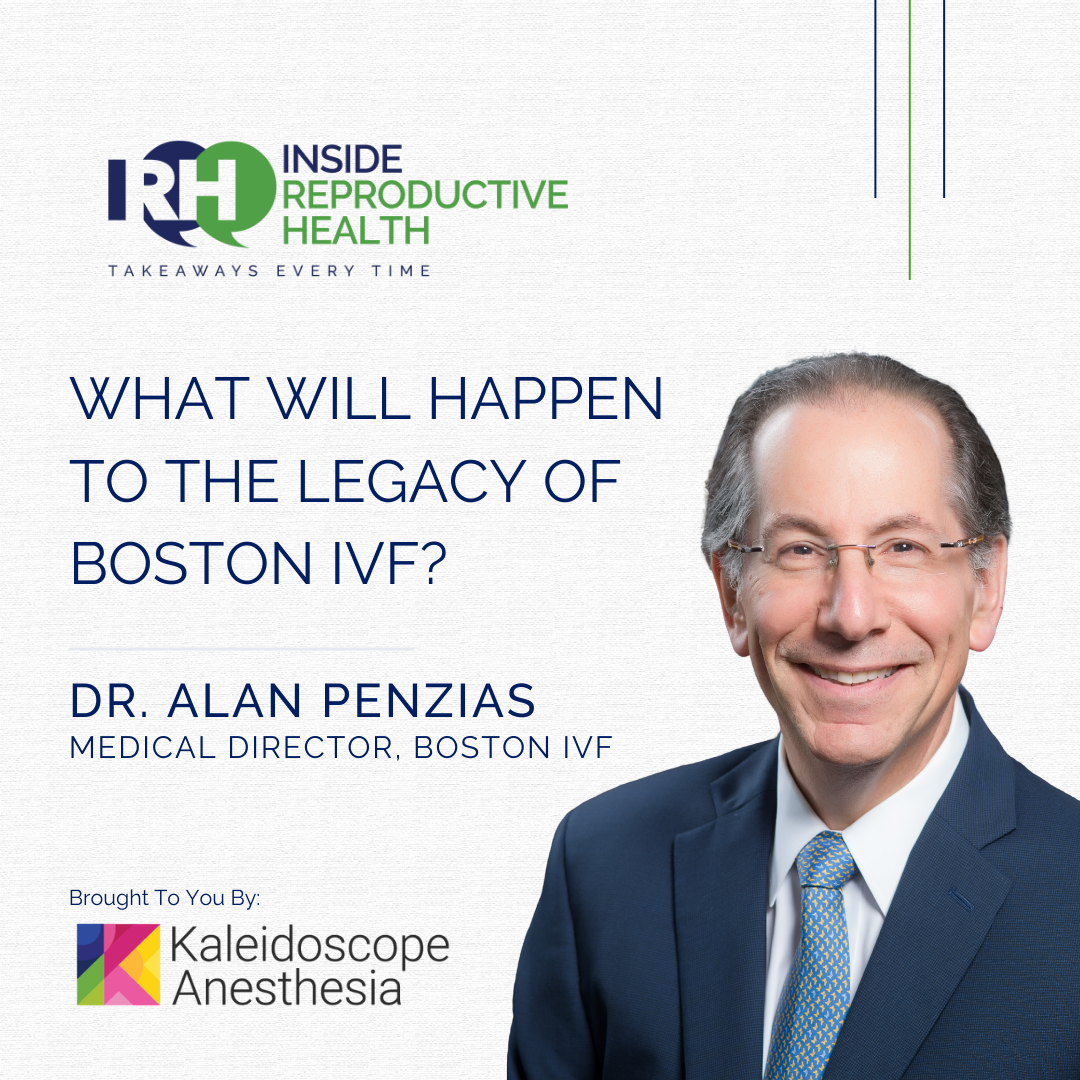
In this episode, Dr. Alan Penzias reflects on Boston IVF’s deep roots and how that heritage continues to influence the organization’s future within the RMA network.
The conversation covers:
Boston IVF’s founding history and the leaders who shaped it
Whether scale threatens (or strengthens) institutional culture
The “buy-versus-build” debate playing out across fertility networks
Dr. Penzias’s perspective on AI and evolving clinical infrastructure
How Boston IVF’s tradition of Grand Rounds has scaled across the network
Serving patients in smaller cities and rural communities (without compromising quality)
Dr. Penzias also shares updates on longtime Boston IVF leaders, including the evolving roles of Drs. Michael Alper and Selwyn Oskowitz, and reflects on how mentorship and tradition continue to drive innovation.
This episode is a thoughtful look at legacy, leadership, and how fertility care evolves without losing its soul.
Improve Patient Experience. Reduce Doctor Burnout.
See Why Other Fertility Doctors Love These CRNAs
Fertility doctors from across the country are getting support from this one anesthesia firm.
Fertility doctors across the US are using Kaleidoscope Anesthesia
Kaleidoscope Anesthesia’s CRNAs are known for clinical excellence, their calm bedside manner, and enhancing patient care experience.
Avoid burnout by offloading this responsibility to professionals you trust.
Scalable, agile staffing, from daily coverage to full perioperative system design.
200+ seasoned CRNAs. Nationwide reach. Fast onboarding.
We’ll show you how other fertility centers are improving patient experience, reducing doctor and staff burnout, reducing cancelations, and improving workflow.
-
Dr. Alan Penzias (00:00)
Boston IVF from the very beginning, the brand was more important than the individuals. Because whereas each of us were three individuals, the entity was bigger than any of us. And that created brand value. And that was a very novel concept to have the brand of the corporation and the company, the service provider, be bigger than the individual. And that is what has been the key to transitioning to a larger organization.
Griffin Jones (00:36)
Is Boston IVF going to go away now that it's part of a much larger organization? Or is its rich history going to influence this now much larger footprint? Dr. Alan Penzias walks us through of that rich history. Maybe I didn't think that he was one of the founders of Boston IVF, but I always kind of had in my head that he was. And that's probably because he's been a partner there for so long. And that brand has such a long and deep history. It's like Eddie Murphy and Bill Murray weren't the founding cast members of SNL, but we still sort of think of them in that class.
Ask Dr. Penzias if he's worried about losing that heritage. Ask him about Boston IVF and RMA's vision for the future. Some of that includes the buy versus build debate happening at networks, and his take on AI. And his view on switching to RMA-ZMR Artemis.
In that history, we talk about some of Boston founders. Dr. Penzias shares that Dr. Michael Alper, now in a consulting role for the group, but doesn't see new patients anymore. We talk about Dr. Selwyn Oskowitz, who certainly made an impression on me as I started working in the field just a year or two before he left. He shares how Boston IVFs tradition of Grand Rounds has evolved, has permeated throughout the network, and some of the innovations and improvements that that's led to specifically. And we talk about serving patient populations in small cities and rural areas because these can be awesome places to live, great places to have a career, and even better places to raise a family. How have they been able to support that?
And I talk a little about Kaleidoscope Anesthesia associates, because fertility centers and networks keep picking them up, and they keep saying much of a difference they've made for them. Enjoy this conversation with Dr. Alan Penzias.
Dr. Alan Penzias (03:14)
It was great when I joined Boston IVF in 1996. I was the second physician who wasn't a founder to be hired and was the first doctor to be put in a satellite office. Prior to that, everything was delivered in a single office in one Brookline place in Brookline, Massachusetts. And so it was really interesting to really experience the growth from the ground up.
first thing that we noticed was, hmm, not all the charts are always here. So fortunately technology started to help with that and instead of having to carry paper, we went electronic. And then we started to scale and we started to grow. And all medical care is local. Every doctor is just sitting in front of one patient. It's just that when you do that at scale, it provides some tremendous advantages and has some challenges too.
Griffin Jones (04:05)
lot of people I think attribute Boston IVF's explosive growth to the mandate in Massachusetts, but that didn't happen until later, am I right? Was the growth explosive long before that?
Dr. Alan Penzias (04:20)
Boston IVF was founded in 1986 and the mandate came in around that time. So they came, this kind of grew up together. And certainly it helped fuel things because it provided the affordability of care and the opportunity to get the care that they needed locally.
Griffin Jones (04:39)
I really I didn't know that. I'm going to make you educate me on that for a little bit. Was the mandate in 1986 similar to what it is today?
Dr. Alan Penzias (04:47)
It's changed a little bit over time, but the large scale component of it was that it required insurers who provided indemnity insurance to include fertility treatment. Didn't specify, but it said to include fertility treatment in their care. It was the second state to do so after Maryland had enacted such a mandate.
Griffin Jones (05:11)
And so you're the second doc hired, you said 1996, the second doc hired that wasn't a founder. So was there six of you at that time?
Dr. Alan Penzias (05:20)
At that time there were six, correct. And then shortly thereafter we added a couple more.
Griffin Jones (05:25)
And then talk to us about what the pace was like over the years. Did it kind of go up linearly or was there certain times where it seemed like you were doing sprints? Like, you know, maybe we went three years without hiring a doc and then this year we're hiring four docs. Was it more even or did there tend to be fits and spurts?
Dr. Alan Penzias (05:45)
It was linear in the beginning. We recognized that providing care in that single location was terrific and convenient for everybody who was providing care there, but it wasn't convenient for the patients. And I think one of the founding principles of Boston IVF, and it's a core belief in EVRMA as well, is that the patient is at the center of everything we do. So we recognized that, okay, if there are patients who live
a little bit of a distance from here and it's inconvenient because of the monitoring and making appointments and coming in, you know, driving into town. Certainly there are people who need the care that we're not serving. So we grew to an outpost in Lexington, Massachusetts was that first office. And then with hiring two new doctors, we opened one a little further north up in Burlington Mass in that area and then south of the city.
Quincy Mass. So we started using, for those who are familiar with Boston, it's on the Eastern seaboard. It's got two C-shaped highways that sort of begin at the sea, arc out toward the suburbs in the west, and then arc back in Route 128. So we said, okay, along that 128 corridor there's a large number of people, so let's go north, let's go south, and then we've covered the central core as well as above and below. And then from there
we continued to expand.
Griffin Jones (07:16)
What was it like transitioning over time founders out of the practice and then having associates become partners and then those partners become more senior partners? I think that to the uninitiated, many of them would have thought that you were one of the, I think people think of you as one of the founders because you've been there 30 years. And so it seems like there was some successful transition there.
But you had some iconic docs that founded it and we've had Dr. Alper on the show, but I'm a big fan of Selwyn Oskowitz. I miss him. I hope he still listens to the program. I know that he tunes in every now and again. Last I talked to him, he was doing charity work in Rwanda. But I started my career at the end of his and I was at the New England Fertility Society meeting and
The tribute to him was so moving. I just thought I want to have a career where people feel similarly about me. So they're not small shoes to fill. What was that like, not just for yourself, but for the partners that came after you?
Dr. Alan Penzias (08:25)
I think that the vision that the initial four partners, Selwyn Oskowitz, Merle Berger, Erwin Thompson, and Michael Alper had was that it was a very special opportunity. Many practices, and I think that we see this not only in our field, but in others, as a practice grows, individual doctors may have the idea that they want to have patients referred to them specifically. So the brand identity of the practice
is tied up in the brand of the individual. Boston IVF from the very beginning, and this was pretty uncommon then and I think was quite prescient, was that the brand was more important than the individuals. So it was very quick that I learned that we were happier when I saw a referral refer to Boston IVF rather than refer to Michael Alper, refer to Alan Penzias, refer to Selwyn Oskowitz. Because whereas each of us
were three individuals, the entity was bigger than any of us. And that created brand value. And that was a very novel concept to have the brand of the corporation and the company, the service provider, be bigger than the individual. And that is what has been the key to transitioning to a larger organization.
Griffin Jones (09:44)
Was that the result of each of your defaults as individuals or was there a collective strategic decision to be that way? Because I've worked with many practices and it's like, that's that doctor's nurse. It's not the practice's nurse is like, that's that doctor's nurse and this doctor's doing things one way and that doctor's doing things a different way. And God forbid a patient be referred to one doctor. And if that doctor has a wait list,
the call center knows to move that, you suggest the other doctor without the wait list to that referee. That's often how it is. So for you all to do something different, was that intentional or did it just sort of happen that way?
Dr. Alan Penzias (10:30)
I think that initially, you know, because at the start I wasn't part of the organization, but as I was a resident in OBGYN in 1986, I was an intern and started doing some collaborative research with the doctors individually. And I think it was just their personalities. They got along well. They recognized that working as a team was going to be something advantageous to each of them. There are benefits to being a part of a team. And that means that there are sacrifices you make to be part of that team.
I think each of them had been in practice with the exception of Michael Alper who had just joined them having finished his fellowship. The other three had been in individual practices and seen what the advantages were to being referred to as an individual and having an individual practice. But the collective added much more, there was much more upside to being part of a group than to just being the individual. And that was where it came from. And then certainly as
Erwin Thompson was the first partner to retire and then Merle Berger and ultimately Selwyn. And Michael Alper has recently stopped seeing patients. He's still with the organization in a consulting capacity. But it was really, think, Michael's vision of this that helped foster those original transitions of younger partners buying out the senior members. And to some extent, while the seniors were still in place, they electively decided
to sell shares to four of us. So I was one of the first, there were four of us who became the first non-founders to enter the partnership. And each of the senior partners who were there decided to sell a portion of their stock to each of the four of us so that we could have an ownership stake and have skin in the game. It was not necessarily purely financially advantageous to them.
because if their income stream was in some way tied to their percentage equity, by giving that up, they were surrendering something. On the other hand, they also recognized that by motivating four new people to be partners and have skin in the game, that we would work as hard at our practice and building the reputation of the company as they did to get it started. So that was the initial step. And then there were some
modifications of the way that shares were sold, but it was always with the idea that in order to keep the lifeblood of the company alive, to keep the brand going, to deliver the best possible patient care, working as a team required, bringing in new doctors and making them feel really invested in the practice. And that is again, philosophically why the union of EVRMA and Boston IVF now into EVRMA North America,
has worked beautifully, it's because their philosophy and ours really aligned tremendously. And I think that speaks well to our network, and perhaps we'll have a chance to explore that a little bit too.
Griffin Jones (13:35)
And I want to explore that and some of the small markets that Boston IVF has entered that aren't terribly far from Boston. After that, you all did a cashless merger, right? There was an RSC at that time in Massachusetts.
Dr. Alan Penzias (13:51)
Yes. So we had started to open up our first independent center up in Portland, Maine, and that was the first offsite location that we had. At that time, Michael Alper and I were traveling from Boston to different OBGYN offices in ⁓ three different cities in Maine to provide consultations, but the patients had to come down to Boston. Reproductive Science Center, which was originally an IntegraMed program, was our
largest in-market competitor. And we recognized that there was mutual alignment on the way we took care of patients and that a merger of the two practices would be beneficial. And we did a cashless merger in 2014.
Griffin Jones (14:37)
were they integra-med or you all were integra-med or?
Dr. Alan Penzias (14:39)
They were integra,
you know, we were independent. They were part of integra med. they, no, not at all. They had actually, their practice had, their integra med contract had expired. So they were able to separate from integra med and in doing so became independent. And then we had a merger.
Griffin Jones (14:43)
Did you all become IntegraMed for a time?
There's shortages of doctors everywhere in small markets and in big markets. There's shortages of embryologists. There's shortages of all kinds of support staff. The anesthesiologist shortage is one that is a growing challenge for fertility practices across the country. Coverage is really difficult to secure. And when it is available, it doesn't always take the burden off physicians and their staff. That's why so many fertility centers are turning to Kaleidoscope Anesthesia.
Their CRNAs are seasoned professionals. They have licensed CRNAs in all 50 states. They're known for clinical excellence. They have fertility experience. You shouldn't hear what people like Dr. Lynn Westfall have to say about them. They provide a calm patient experience. You should read some of their reviews online. And they've got more than 200 CRNAs nationwide. Kaleidoscope can scale to your practice, whether you need daily coverage or you need a complete
perioperative anesthesia program. can build out the entire anesthesia component of your fertility center. They can make it turnkey, scalable, and far less of a burden on your team. Visit kaleidoscopeanesthesia.com. Not easy to spell, but you'll figure it out. Kaleidoscopeanesthesia.com to connect with their team and to discuss your anesthesia needs.
So Portland, Maine is sounds like the first small market that you all entered. When did New Hampshire come about? When did Albany, New York and Syracuse and Rochester and and tell me about that expansion into the rest of New England and Eastern New York state.
Dr. Alan Penzias (16:35)
Absolutely. So the first was New Hampshire. I'm sorry. The first was Portland, Maine. And then the next venture that we entered into was a partnership in Evansville, Indiana with the Women's Hospital of Indiana. And we were introduced by mutual acquaintances to the leadership at the hospital. Michael Alper and I and Steve Bayer, another one of our partners, traveled out there with our executive leadership team and they presented a very interesting opportunity.
They knew that we had multiple locations in the Boston area. They knew that we had academic interests being the REI program ⁓ at our local hospital, Beth Israel Deaconess Medical Center, working with other area teaching facilities and teaching hospitals. And they thought that we would be a good fit for them and their personality in providing good patient care. So we partnered with them and
I have an Indiana medical license and have spent significant time in that wonderful city. It's a beautiful place in southern Indiana, right above the Kentucky border, three hours east of St. Louis, about three hours south of Indianapolis, two hours north of Nashville, Tennessee. And we were working locally and we helped recruit a physician, Dr. Dan Griffin, who is ⁓ magnificent.
and help them build the IVF program that they have today. So we recognize that we could take our expertise for opening offices and now having opened a second laboratory and then help with the setting up, mentoring a new doctor because Dan came out of his fellowship at University of Connecticut, was interested, he was from Indiana, was interested in going back to the state and we were able to help provide the model by which
This young doctor would be able to be in his own independent center, be the lead doctor, become a valued member of the medical community, yet give him the resources that he needed to mentorship on site. He spent some time with us in Boston. We traveled out there very frequently to help mentor him along the way and build a very successful program, which continues to this day. We also then
we're looking more locally and we set up programs in, we next went to Albany, New York. It was an existing IVF program that we had relationship with and occasionally would send patients to us for some specialty care. The doctor there was, ⁓ became ill and presented an opportunity. He was worried about the staff and the continuity of the employees. So we actually made the purchase.
before he untimely passed away so that he knew that the IVF Center was in good hands and that it would continue the legacy of what he built there would go on. And we recruited a doctor ⁓ who had been a resident in Albany who was completing her fellowship in Cleveland. And again, licensed in New York, we have several doctors. Steve Bayer, one of our partners, spent significant time helping nurture and
mentor Sonia Elguero, built out the lab. We provided the expertise from our central lab in Waltham to help train and grow the center and build it out. And that became our next site. We then from there continued on with our expansion and ⁓ went into Syracuse, acquired an interest in the practice in Salt Lake City. And then Syracuse has had
then Rhode Island, New Hampshire, Wilmington, North Carolina, and acquired a practice interest in Newark, Delaware.
Griffin Jones (20:23)
I am a fan of small markets. live in one. I think that small cities are the best buy for quality of life. I don't think a lot of younger REIs seem to see it that way. Most of the ones that I talk to would rather live in Cambridge and practice in Waltham than live in Buffalo, New York or Rochester, New York or Indianapolis. And that's not a slight on those places. I think those places have a lot.
offer and the quality of life is tremendous, especially if you have a young family. But what I see on is that most of the docs are either majority more than half want to go to 10 cities, and then maybe there's another 20 after that that have preference. And then those small cities that I just mentioned, our eyes only go there if they or their spouse is within a few hours of from there. What has the challenge been like?
relative to recruiting for your offices around Boston versus those other practice markets.
Dr. Alan Penzias (21:24)
I remember having a conversation with one of our residents many years ago and she was really on the horns of a dilemma. She was very interested in REI and going into our field, but she also had some very specific ideas about where she wanted to live because of a family situation. And my comment to her was, if you become an REI, you will do what you love and it is the best career. I would do it again in a heartbeat. would
counsel people, you know, I'm a real enthusiast for what we do because I have a stack of cards over in a basket in my left shoulder that I got, you know, from Christmas cards. And there are people, their kids are in college, their kids are having families now, they've been in field long enough, and they still think of me at Christmas and at holidays and send me a card because I was that key in their life. So if you want to have a career that you have that kind of impact on people, which is
profound and incredibly humbling, you can do it. But it may not be that you have an opportunity in every single city. The other thing I think that many doctors feel very entrepreneurial, but also are a little bit afraid of, well, if I go to a smaller market, because if I'm in Boston, if I'm in New York, Los Angeles, you know, pick a major metropolitan area, at least if I'm in a big practice, I'll get the mentorship that I need.
Because we all know that a new medical school grad has a degree, has a license, but has never treated a patient in an unsupervised manner and been responsible for care and has no practical experience. So it's really daunting and that's why residencies exist. But likewise, when you finish residency and you've been, had some super, you know, some ability to treat patients, but with oversight, you're not ready to just completely practice on your own and it's daunting to do so. And same thing with fellowship.
So I think that sometimes people will look at these smaller, the bigger markets thinking it's a great place to live. know I've heard of Los Angeles, I've heard of New York, I've been to Boston, but I haven't been to Albany, New York. I haven't been to ⁓ Evansville, Indiana or Syracuse. Or I may have visited Orlando or Seattle or Houston, but I haven't really considered living there because I want to be in a big place.
and I wanna have a lot of doctors around and I wanna have a lot of technology at my disposal. But on the other hand, there's also that inner kind of desire to run something, to be the big dog, to really be the leader of a team and to run your own IVF center. And I think that these smaller markets present a perfect opportunity for some docs. And we've been able to essentially talk to doctors and talk to them and sort of...
provide that reassurance that they will get the mentorship, that if they are willing to move to this smaller market, they will become a very big fish in a mid-sized pond and they will be a key go-to member of the medical community, as opposed to being one reproductive endocrinologist of 40 in the city of Boston. They will have prominence in their community. They will lead
they will be the person in town that everybody wants to go to because they're the ones who are delivering the care that will get those people pregnant. So I think it's that balance of talking to young docs and showing them that, there are limited numbers of opportunities. Of course, in the major cities, there are jobs that come up periodically, but it's these smaller and mid-size markets that have many more opportunities and present a tremendous opportunity
for any young doctor who wants to be nurtured, wants to be mentored, and run their own IVF center without all the risk associated with it.
Griffin Jones (25:26)
So they're running their own IVF center in these markets, but they are running it the Boston IVF way, right? The RMA way. So talk to me about that because if I want maximum autonomy, I've got to go with my own, but then I'm getting more risk. So what type of autonomy, what type of relationship do they have if they're running their center, but they are running it within a bigger group? Talk to me about that.
Dr. Alan Penzias (25:54)
I think that's one of the bigger misconceptions. And I think that that's where we start to see some differentiation among the different networks. There are some networks that may be top-down management. Here is how we do it the XYZ way. Here's the handbook. This is what you do. Like love it or leave it. That's the way you're going to practice period. Hard stop. We've always viewed Boston IVF, EVRMA. I kind of think of it as like a Camelot where it's like the Knights of the Round Table and our Grand Rounds.
is a perfect example where we have 40 doctors on Zoom from all across the country doing a once a month, we have ⁓ a four hour Grand Ransom on the second Tuesday of every month, but all ideas are equal. People are sharing ideas. People are not intimidated. It's not the loudest voice who can pound the table. People come with ideas and we all share and we all are co-equals. And that's a really big difference. As a network, we provide a backbone.
We provide the tools, we provide a medical record system, we provide the laboratory staff, we provide the expertise in the laboratory, the equipment, all of that kind of stuff. From a treatment standpoint, doing the right thing for the patient is what we want. We have some protocols that we use and we think of them as that's a starting point. And we'll talk about, you know, how do you do a stimulation for a plain vanilla?
routine infertility IVF, 35 year old person. here's, you know, you measure some hormones, here's a guidance, here's some experience, and that's the starting point. And then every doctor is sitting in front of their patient and treating patients in a manner that they feel is evidence-based because we are very big on evidence. I was the former chair of the practice committee at SRM for six years, and I'm a huge advocate of the guidances and guidelines and committee opinions.
And that is again a hallmark of the EVRMA network where evidence-based and doctors are encouraged to do the right thing for patients. And so you're not being told top down, this is how we funnel every single patient. This is how you must practice. It's really a grassroots bottom up. What's the situation the patient is in? Do the right thing for the patient. Here are the tools that you have to work with. And if you run into trouble,
If you have a question, you have teammates in your network that you can call. You can participate in the Grand Rounds and ask a question. We have at our Grand Rounds, we have the first.
Griffin Jones (28:30)
Yeah, tell me more
about that because the grand rounds is something that Boston IVF is known for and I think you've led that or at least.
and tell me about that. Is it intra practice or intra office? Is it something that you do virtually across areas?
Dr. Alan Penzias (28:43)
Yes,
it's a virtual meeting. It used to be in person when we were more limited, but now it's all virtual. And we have all of the legacy Boston IVF practices have been participating in this historically. There are some others from within the EVRMA network who join us selectively to participate. The first hour and a half we call patient care committee. And we have a format that if you have a case that's particularly challenging,
You send it in to the PCC team. We have our second year fellow aggregates the cases and we do a presentation and it's again, it's a stylized presentation and you have 40 doctors and 20 scientists all on the line. The fellow who has studied the case and has access to the record presents it to the entire group. The doctor whose case that is, is listening and participating as needed. And then the fellow makes a recommendation and then you have
all of your colleagues saying, this is interesting. I had another patient like this or hey, have you tried this and that? And at the end of the day, the group comes up with a recommendation that the doctor can then take back, make a decision on and bring to the patient if they want. Said, hey, I had a, you're, we have a second opinion. It's actually 40 second opinions and we're all together. So it could be a case from Dan Griffin in Evansville. It could be a case from Wendy Vitek in Syracuse or Ben Lannan in.
in Portland, Maine, or from me here in Waltham, Massachusetts. And so that's a great opportunity and a great example of the collaboration. And there's no judgment. That's the other great thing about being in part of a network. It's that if I have a question that I really don't know the answer to, I don't have to be embarrassed because I can pick up the phone and call Tom Mullen and say, Tom, you know, I have a question about something. And I think that this is one of your areas of expertise or
⁓ Scott Moran in San Francisco, I was exchanging email with him yesterday because there was something that a patient of mine had asked about in San Francisco for resource. And so I reached out to him. And recently I was looking for somebody in Texas. So I reached out to Nola Hurley in our Houston office. And, you know, because we're all part of the same team, it's in everybody's best interest. We are all thinking of, although we are individual locations,
we're all part of the same team. We're all wearing the same sweatshirt. And so if we can help a patient in our network by using our collective experience to be able to pass a barrier that they can't get past, everybody wins and we're all excited and we all celebrate that. So the grand rounds are just an example.
Griffin Jones (31:18)
Can you think of any specific
examples from ground rounds that ideas, specific ideas that were incubated?
Dr. Alan Penzias (31:25)
Absolutely. So one of the big things that we talked about was mixing medicines and talk about cellulose and oskowitz. In the years when the medications were all intramuscular and they were all supposed to be injected individually, there were people who were taking three intramuscular injections at once in order to be able to achieve their daily dose of medicine. That's a huge barrier to care.
So Selwyn kind of led this discussion and we incubated the idea at Grand Rounds and we talked about it and we did some research and Selwyn went out and worked with the local pharmacy and we decided that it was okay and safe because he did some test runs and you could actually mix the medicines together after they were reconstituted. Now all of sudden it's a single injection. Then from there we said, well, can we go further? Is it possible just based on the physiology we were talking about?
the anatomy, the physiology, these are proteins, could they be absorbed subcutaneously? And before the labeling said that it was okay to give these medicines subcutaneously, did, you we discussed, we looked at the literature, we met as a group, we incubated this idea, and then we decided we're gonna go in subcutaneously, and then it worked. And then ultimately, packaging followed. So that's just one example of something. Another, in the QA, QI,
total quality management. know, Michael Alper actually wrote, brought ISO to the Boston IVF. So we were the first North American IVF center to be ISO certified. ISO is a standard of excellence and quality management, most associated with manufacturing. But there were some European programs that were this way. And again, he brought this to grand rounds that this is something that could help us with.
document control and on the clinical side. The laboratory was always very organized, but being able to deploy this as a systematic way of having quality management was something that we brought to Grand Rands, discussed, incubated, and then deployed. Errors in IVF. If you look out for papers about errors in IVF, there very few. Michael Alpert, Denny Sackis, and Brent Barrett incubated that idea at our Grand Rands and said, what if we look at
you know, serious errors, not serious errors, near misses, and we actually track this. And how about publishing? Everybody was afraid to do that, but we again, talked about the idea we had always talked about things that went on in the field, but, and within our own practice, but what about publishing? It was a radical idea, and they published a paper, and it became a standard. So those are just a handful of the things.
how to stimulate the ovary and what's a good number of eggs that we'll get to be able to have a full family size. So at the time, one of our fellows was working on a project. We brought it. It was called the One and Done and being able to stimulate. So we looked at our data. We talked about it. We then investigated. And again, these are ideas that we batted around at grand rounds and ultimately found out that, you if you have 16 eggs and you're under 35 years old,
there's a greater than 50 % chance that you can have two children complete a family of two with a single egg retrieval. So those are just a handful of things. There's other scientific things if we kind of expand that, you know, in the realm of sort of the genetic testing and the PGT and when to use expanded carrier screening and deploy that and how can we help patients avoid serious diseases. Some of the laboratory techniques that we used. And then also we were able to evaluate some things that we thought might be helpful and then realized that
upon examination and discussion weren't really so helpful. And so we were able to move our clinical practice along. So those are just a few examples off the of my head.
Griffin Jones (35:16)
It's a dependable way of collaborating, securing dependable anesthesia coverage is harder than ever, but Kaleidoscope anesthesia gives fertility practices a better way forward. Their CRNAs bring clinical excellence, professionalism, check out their reviews and you'll see patient-centered care that elevates the entire experience while reducing stress on doctors and their staff. And Kaleidoscope isn't just about filling shifts.
They can build out the entire anesthesia component of your practice. They make it turnkey, scalable, a lot less of a burden on your doctors, on your administrators. The results, fewer cancellations, reduced burnout on your team, improved workflow, a healthier bottom line, a happier patient experience. With more than 200 seasoned CRNAs and nationwide reach, Kaleidoscope is helping fertility practices run more smoothly every day. Learn more at Kaleidoscope Anesthesia.
com. This rich history that you've built and been a part of building at Boston IVF from local practice to bigger group with still those local components. Now, you all are owned by someone else. And, and I've been a I've been becoming ⁓ a somewhat of a fan of the leadership at RMA. I've said that I don't know, Tom Mullen, Arwin Lynn Mason super well, but I've been getting to know them.
a little bit more over the last year or so. And I've liked what I've seen. With that said, there's people above them that I'll probably never meet that fly helicopters to work. And so how do you retain the culture within that? And I'll say, Alan, I remember when David Stern was your CEO, he made a really good argument for
⁓ the local identity that you described in the local branding that Boston IVF has maintained in its different areas and And and I think David made the case really well, I still agree with the way that that's on right and pinnacle have done it which is that is the way that I would do it I would make a unified brand and I would I would be lockstep and maybe I don't know what I'm talking about, but
I would do it for the reasons of rallying all of the states under the identity of a single nation state while maintaining some state identity but having to have that national flag around. Do you worry about Boston IVF being dissolved, losing its identity in that much bigger group that you all are a part of now?
Dr. Alan Penzias (37:53)
No, I don't worry about it at all. And I think it really comes back to alignment of interests. I think that in some networks, as I mentioned when we're talking about top-down, here's what you're going to do and this is how you do it, to doctors. But let's also think about from a business perspective, some large groups have been created that were not necessarily practices that were aligned philosophically, but were financial fiscal entities that were just kind of sewn together.
because they were convenient. And I think that that is a much harder way of putting a group together and has less durability and less identity. And the reason I say that is when we look at, you talk about EVRMA Global and the founding, one of the founders, Antonio Apelethier in ⁓ Valencia, who I happen to know very well, when he was training at Yale with Alan Duterni, I did, philosophically,
He was always about the evidence. He was always about teaching. He was always about research. And the patient, put the patient at the center of everything you do and everything else will follow. So when he started that practice and built a very large network across Europe, South America, ultimately they found a compatriot practice that was based in the U.S. in RMA that they also found philosophically was aligned in the same way, evidence-based medicine.
into research, ran a fellowship program and interested in teaching and kept patients at the center of everything they do. And then we have us with that same core philosophy. And it just so happened that we had a geographic footprint different than the RMA group. So it was a natural alignment, both geographically as well as scientifically, patient care wise, research, fellowship, teaching, of the ducks all lined up.
And that's what makes the network. So that's why I don't worry about what the name of the organization is, if it'll change in the future, if it'll merge. And, you know, there's all sorts of ideas of potentially making some kind of a unified brand. But the truth is that we all practice the same way. Our fellowship, another great example. We had one fellow per year for the three-year fellowship. And one of the first things that I was told when I was in a meeting with Lynn Mason,
and who's our CEO and Tom Mullinara, our chief medical officer was, they said, you know what, you're a big practice, you've got a long track record of success, we want you to increase your fellowship. I said, well, how are we gonna cover that? He don't worry about it, we'll figure out how to pay for it. Go out and apply and get a second fellow. So we put the application together and this year we've matched for two fellows and we're gonna have two fellows per year starting in August. Why? Because the commitment to education, the commitment to research,
philosophically was there. If you have programs that are not aligned that way, it's like, wait a second, I'm not going to be able to take an extra $10 home because we're spending that on research or I'm not going to be able to do something fancy and get paid a little bit more because we're doing some more research. But philosophically, we recognize that advancing the field is something incredibly precious. And it's actually a privilege to be in the position
with all the resources we have to devote some of that to research, to patient care. As an organization, EVRMA Global, and we get this newsletter once a month with what papers, peer-reviewed publications, there have been in the organization. In 2025, I think that the group published 249 peer-reviewed papers. I would say that that's probably bigger than any university that I can think of in this field, and it's all because
we want to be able to contribute to patient care and betterment globally, not just locally. And we have the resources and the data to do it. Teaching, there's fellowship programs in our network now. We have four in EVRMA and we're hopeful that we had a site visit a couple of months ago and we're hoping to get some good news that we'll be starting a brand new fellowship within our network. And we'll have five fellowship programs, training programs.
Griffin Jones (42:06)
Can you share where?
Dr. Alan Penzias (42:08)
I'd rather just keep it quiet because I don't want to jinx anything, but it is in the EV Army North America network. So it'll be very exciting to have that.
Griffin Jones (42:20)
How do you continue to incentivize doctors and make a career path for them when there are other companies, other financiers at the top that own equity, and try to make it similar to the partnership path that you enjoyed? you said earlier in this conversation that the founders had a philosophy of
growing the younger doctors into partners, letting them buy in. But when you have someone else that has a controlling stake or maybe even a large minority stake, don't you eventually run out of equity for other younger doctors to buy into? How do you retain that career path that you enjoyed and helped to foster for this new generation?
Dr. Alan Penzias (43:10)
I think that's a great question. And the answer is that in our network, every doctor, we want doctors to come into our network wanting to be on the partnership track. And there is an opportunity for every doctor to be able to, if it's a good fit, if they work hard, if they meet the correct metrics, if they practice ⁓ in an ethical and evidence-based way and they're an integral part of the team, there's an opportunity to purchase equity.
because the parent company wants doctors to have skin in the game. It is not that the parent company says, want to own 100 % of the equity and just have employed physicians, because they recognize very clearly that it's in their best interest to have doctors motivated to be partners. So there's always equity available that was made available to either through retiring shareholders
or in a pool of shares that the company will sell to doctors to keep them interested.
Griffin Jones (44:13)
What do you think is cutting edge nowadays as you look forward to technology? What do you think has changed maybe if we're in any kind of pivotal moment in the last year, two years? I don't want you to back way far. I don't even want you thinking back five or 10 years ago. What do you think has changed significantly in the last one to two years? What do you think will change in the next one to three years?
Dr. Alan Penzias (44:40)
I think there are, I would break that down into a couple of different areas. I think that in terms of how a doctor practices and the tools that we have are continuing to evolve. Specifically, what I'm talking about is the medical record. So I grew up in an era where everything was paper and illegible handwriting was the rule. There was a lot of opportunity for error because people didn't read or it wasn't available. Somebody didn't have access to the chart.
And largely that got solved with electronic medical records, but on the gain side of that, there was also problems because with electronic records, now you had to document everything in a different way and there was a system and it wasn't all free form notes. So the ease of documentation with all the limitations downstream that were many and problematic went away and you gained some other issues that were more problematic. So
it's been a balance and trade off with the EMRs, but the EMRs have also evolved. And now many of them have a lot of features and particularly, again, one of the nice things in our network is the Artemis program, which I'm a big fan of. You know, we had used another product for many, many years, which we were very happy with. And then the functionality that we find in Artemis is phenomenal. And on the backend, there's a lot of data.
So I have access not only through, because it's connected to Tableau, so I can actually look at in real time and see statistics on all sorts of different things that are sort of scraped from without patient specificity. So it's all HIPAA compliant. So I can look at trends, I can see things. So I can actually have a better understanding of my practice because I'm using this electronic tool.
and the data is coming out in real time that then help direct me to understand what I'm doing. So that's a great advantage and that's an advance. There's other technology and I think a lot of people throw the term AI around very loosely and label anything that nowadays is AI is a common buzzword. But realistically building tools into the electronic record as the
I'm working with some of the developers and they've got some great tools that they're using to help make our documentation easier, to help make patient communication better, to be able to summarize things easier, to make it easier for our nurses to interact with our patients in real time in a rapid manner by having some assist from these large language models that are captive and based on the data that's in front of you inside the record, not
wholesale making things up like going to chat GPT, just to name one source where sometimes people will associate AI. So I think that, please, please.
Griffin Jones (47:34)
If I may interrupt down just to
so I don't lose this thought on AI and tech that the complaint that many of the new AI and tech companies have is that many of the EMRs won't integrate with them and they say they will but they don't really What's that like for you all? I haven't heard what they've said about Artemis specifically, but that's a general view that
many of them hold and it's hard for many of these new technologies to be adopted because of that. Is Artemis any better or are you picky and choosy about which technologies are able to integrate and if so, what's that criteria?
Dr. Alan Penzias (48:15)
they're building tools into Artemis. So they're using it on the back end to process. And I don't know the technical side of it. I just see the front end and I interact with the developers to sort of give feedback on how the tools that they're providing are working. But everything from summarizing electronic records that come in to generating patient portal messages based on a progress note.
So you have your progress note, here's everything that I put together, press a button and it all of a sudden will generate a note to the patient in the portal that you edit of course before you send, but it is in patient friendly language. So it's interpreting my medical ease and my careful documentation that my nurse and my embryologist and my colleagues will understand, but maybe a little bit opaque and inaccessible to a patient.
So by using that tool, I can create a very nice summary. And it's funny, I had a patient in the office the other day and they had a fairly complex history and we were kind of going through things and English wasn't their first language. And we sat there and so I showed them what my note was and I pressed the button and said, I'm gonna make this into a note that you can understand. We're gonna review it together, because I wanna confirm and this was my double check of how good the technology was. I'm gonna.
have you read that note and tell me if you know exactly what you're supposed to do when you get your period and are supposed to call us. So I showed them my note with all of my medical ease and I generated the portal message which has a nice little friendly intro and a little friendly outro at the bottom and then went through the steps and their eyes like lit up like I understand what I'm supposed to do. I know who I'm gonna call. I know how long it's gonna take to get my
cycle approved. I know what the name of the person I need to ask for if I have a question and it was all because that little button up there. and that's the kind of feedback that we give the developers. Say this is working real well and now let's deploy it out. so building those tools into the record I think is one thing that's really super helpful. So that's just one example on that side that I think will be continuing to evolve and that will make
a game changer, I think, going forward for patient experience. And then there are tools, again, with responses to queries that a patient will send in through the patient portal. There is some development of a tool that will have the ability for nurses. It looks at the question and it can suggest some answers. So it'll just speed what the nurse does by giving something, OK, the patient asked this, would you like to respond with that?
and give them a prompt and say, oh yeah, that looks pretty good. Maybe modify it a little bit. So it's not autonomous somebody not watching this, but it's giving an assist. It's kind of like using stilts to get a little higher. It's like being able to have, when you're using a pulley, if you're having to pick something up heavy or a lever, because you're getting an extra assist, it's not just your mechanical effort, you're getting a little power assist that makes your ability to respond accurately.
faster and more personalized. So that's on the medical record side. Technologically, there's other things too.
Griffin Jones (51:38)
I don't know where EVRMA is on the build versus buy spectrum. There are some networks that are more on the buy side of the spectrum. are more that are some that are more on the build side. And it's not like anyone is all one or the other. Where do you stand in that buy versus build? And where do you think that doctors have to have say in in some of that? Because it does seem to me that
that sometimes networks are trying to build things. So I'm like, you're not a tech company. Why are you trying to, it's so hard for even a tech company to do that. That's a distraction. And, and maybe sometimes it's worth it. And sometimes it isn't. Where, where do you stand? And where do you think that doctors really need to have a strong voice?
Dr. Alan Penzias (52:27)
Absolutely. I think that the it really depends on what the application is. So if it's building incubators, we're not in the incubator building business, we're in the incubator using business. So there it's very clear. We're going to get an outside vendor. We're going to be able to purchase something that another company makes and use it with our expertise, which is core. When we're talking about any technology, the question always is outsource, in source.
specifically with AI, think as you're referring to, what tools does the doctor need to know about? You know, and that is where you're using a program and if you're at a hospital, for example, using Epic, what tools does Epic bring in and what do you use externally? I know that our hospital system has adopted a medical AI scribe that they're brought in a vendor and they're going to use integrating it with Epic.
because they decided that Epic didn't have the ability to add that feature and they didn't have the in-house expertise despite being a large hospital network in the greater Boston area. So they brought in another source that they contracted with to bring in that medical expertise. I think individual doctors and individual practices, really it's kind of a little bit of a buyer beware because
depending on what resources you have available to you if you're in a small independent practice, how much time do you have to vet all of the tools? Are they really accurate? Is this the best tool for it? Is it not so good? How do you vet that? And again, being part of a large network where you can have a team of people vetting these kind of things and then reassure you, yes, we've run it through some very high level resources that we have. We've devoted time to thinking. We decided to outsource this because it's
better by doing so, we decided to build this in-house because we have the expertise and we're going to provide it to you as part of a as being part of our network.
Griffin Jones (54:28)
Dr. Penzias, thank you for coming on the program to share a bit about the history and the future vision, but also for standing up for small markets. I'm a proponent of small cities and we can't be serious about the access to care conversation if we're not serious about getting coverage in those smaller cities, which I think are the best places to grow up and raise a family and not have any fricking traffic on your way to work.
Thanks so much for coming on the program, ⁓
Dr. Alan Penzias (55:00)
Thanks Griffin, thanks for having me.
Dr. Alan Penzis
LinkedIn
