
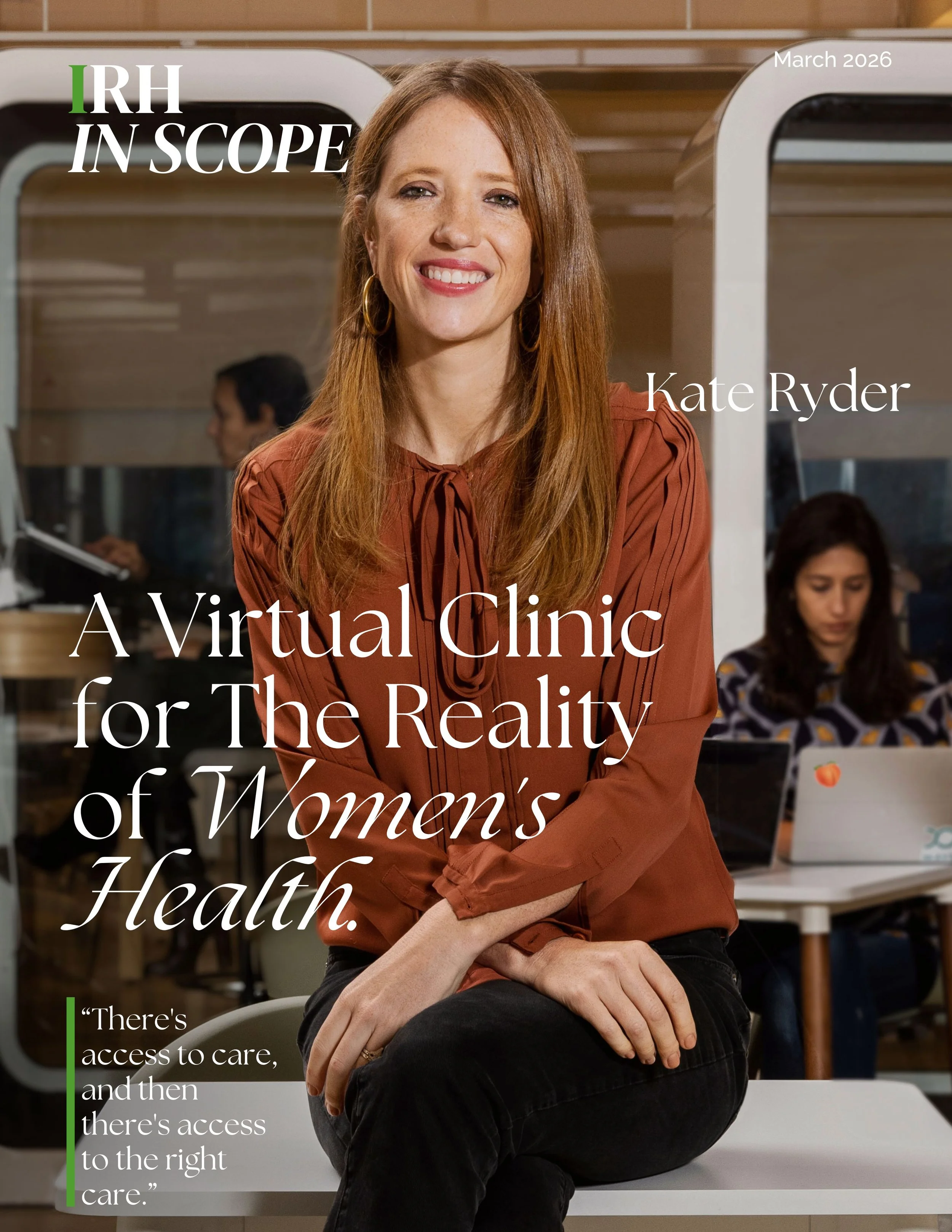

When Kate Ryder launched Maven Clinic in 2014, the premise behind it was both ambitious and practical: women and families deserve healthcare that recognizes the complexity of their lives.
For decades, women's health had been treated as a narrow specialty, often fragmented across fertility clinics, OB-GYN offices, pediatricians, and mental health providers that rarely communicated with one another. Patients were left to assemble the pieces themselves, managing appointments, medical records, prescriptions, and advice from multiple sources while also coping with the emotional weight of fertility struggles, pregnancy, postpartum recovery, or menopause.
Ryder believed there was a better way.
Today, Maven has grown into the world's largest virtual clinic for women's and family health. The platform supports members in 175 countries and partners with more than 2,000 employers and health plans. Through a network of clinicians and specialists, Maven provides care across fertility, pregnancy, postpartum recovery, pediatrics, and menopause.
Yet the idea for Maven did not emerge from a corporate strategy session. It grew from a personal experience that exposed the deep gaps in the healthcare system women rely on every day.
A Personal Experience That Sparked a Company
Ryder began working on Maven at a moment when many of her friends were beginning families. Her own early experience with pregnancy came with loss, and it offered a perspective she had not expected.
"I started Maven around the time my friends were having kids, and my own experience was a miscarriage right when I launched the company," Ryder said. "It allowed me to see the women's health industry from a completely different perspective."
And what she saw was troubling.
The issue was not limited to access to care. The entire system felt disjointed and often failed to center on patients' needs.
"It became clear that the industry wasn't patient-centric," Ryder said. "There were misdiagnoses, missed opportunities for earlier care, and major gaps in how women were supported."
At the same time, a technological shift was underway. Telemedicine was beginning to gain traction, opening the possibility of new ways to deliver care.
"It was an exciting moment in technology," Ryder said. "Telemedicine was just starting to come online, and it felt possible to combine technology with a new care model built around women."
That vision became Maven.
The Fertility Knowledge Gap
One of the most persistent issues Ryder encounters in fertility care is how little reproductive education many patients receive before they begin trying to conceive.
"Oh my gosh, everything," Ryder said when asked what patients struggle with most. "People simply aren't educated about fertility or their own biology."
Through Maven's network of fertility physicians, she has repeatedly heard the same frustration. When she asks doctors what they would change if they could redesign the system, the answer rarely varies.
"They wish women understood their fertility earlier," Ryder said. "They want patients to know what fertility is, how age affects it, and what steps they can take to preserve it."
The consequences of that educational gap often become visible in clinics.
“There's access to care, and then there's access to the right care.”
Keep Patients In-Cycle with Lower Costs and Trusted Support
Medication cost and uncertainty are two of the biggest reasons patients drop off. Mandell’s helps reduce both.
Through its Serono Preferred Pharmacy Partnership, Mandell’s Clinical Pharmacy supports the Fertility Instant Savings Program, helping significantly lower out-of-pocket medication costs so patients are more likely to stay in-cycle.
Mandell’s earns a 4.8-star Google rating and an NPS of 96 by making patient education a priority. Pharmacists are readily available to explain medications and standard fertility procedures, helping patients feel informed.
See how Mandell’s supports patients before and during treatment
"I spoke with one of our fertility clinical advisors recently who said he had a 44-year-old patient who had been trying naturally for two years," Ryder recalled. "His reaction was simple: why were you trying naturally for two years?"
The issue is not a lack of effort on the part of patients. It is a lack of information.

Ryder believes reproductive health education should begin much earlier in adulthood. Understanding menstrual health, ovulation, and conditions such as PCOS or endometriosis could dramatically improve fertility outcomes later.
"If women understood those factors in their twenties," Ryder said, "the outcomes we see in fertility today would look very different."
The Hidden Barriers Patients Face
Even once patients reach a fertility clinic, the journey can remain complicated. Ryder believes the system often overlooks the logistical and emotional barriers that accompany fertility treatment.
"There's access to care, and then there's access to the right care," she said. "Patients need the best doctors and the ability to get second opinions."
Fertility medicine often involves difficult decisions and evolving treatment plans. Maven's virtual network allows patients to consult specialists across multiple disciplines, helping them make informed choices about next steps.
Medication access is another challenge that patients often underestimate until treatment begins.
"There are many patients who don't need IVF," Ryder said. "They may only need medications like Clomid or Letrozole."
Providing prescriptions, education, and monitoring for these medications can sometimes help patients conceive without progressing to more invasive treatments immediately.
For those who do pursue IVF, medication costs quickly become one of the most stressful aspects of care. Fertility drug regimens can cost thousands of dollars per cycle, and patients frequently struggle to navigate pharmacy logistics.
Maven developed MavenRx, a pharmacy coordination service, to help address that challenge, offering competitively priced fertility medication bundles that simplify access to necessary drugs.
Specialty pharmacies also play a vital role in supporting fertility patients. Pharmacies such as Mandell's Clinical Pharmacy have built reputations for quickly and accurately coordinating fertility medications, often helping patients obtain prescriptions within the tight timelines required for treatment cycles.
For Ryder, reducing these logistical hurdles is essential to improving the fertility experience.
"When patients don't have to worry about where their medication is coming from or whether they'll get it on time, it allows them to focus on their health and their goals," she said.
Telehealth's Impact Across the Reproductive Journey
Telehealth has transformed many areas of medicine, but Ryder believes its influence may be especially significant in women's health.
Historically, women's health has received less research funding and fewer specialized services than other areas of medicine.
"When you look across the full reproductive journey, from fertility to pregnancy to menopause, women's health has been underserved," Ryder said.
Through telehealth, patients can access specialists who may not be available locally. Maven connects members with more than 30 types of providers, including fertility educators, doulas, lactation consultants, pelvic floor therapists, and menopause specialists.
Postpartum care illustrates this impact clearly.
Many new mothers struggle to find support for issues such as breastfeeding difficulties or pelvic floor recovery. In some communities, these services may not exist locally.
Telehealth allows patients to connect with specialists who can guide them through these challenges without requiring travel or long wait times.
“We don’t make money because more people have IVF. If someone can get pregnant with medication or IUI instead, that’s what we recommend.”

Ryder has also seen telehealth reshape menopause care.
"There's a certification from the Menopause Society for menopause-trained OB-GYNs," she explained. "Many physicians didn't receive extensive menopause training during residency."
As a result, patients often spend years searching for answers about symptoms such as sleep disruption, hot flashes, or mood changes.
"When patients finally connect with a menopause-trained provider, they often feel enormous relief," Ryder said. "They receive answers and treatment options they may not have heard before."
Expanding Care Across 175 Countries
Scaling a virtual clinic across 175 countries required Maven to adapt to vastly different healthcare systems.
One of the most surprising challenges involved the enormous variation in healthcare costs.
"The biggest surprise was how dramatically prices differ between countries," Ryder said.
Healthcare services that cost thousands of dollars in the United States may cost a fraction of that amount in other parts of the world. Maven adjusted its pricing models accordingly while maintaining consistent access to providers.
In some countries, on-demand care within hours may not be feasible. However, telehealth still offers faster access than many traditional systems.
"In some places, being able to see a provider within a few days is a huge improvement over waiting weeks for an in-person appointment," Ryder said.
These adjustments allowed Maven to build a global care model that accommodates the realities of different healthcare systems.
Building a Company Alongside Life
Ryder often says she has grown alongside the company she created.
"I've grown up with the products," she said.
Her own life experiences mirror the services Maven provides. She has experienced miscarriage, pregnancy, IVF, pediatrics, and parenting while building the company. As she moves into her forties, the next phase of reproductive health is already taking shape in her life.
"Perimenopause is very top of mind," Ryder said.
Each stage reveals new insights about the healthcare system and where improvements are needed.
But one principle remains central: providers must remain engaged with patients throughout their journeys.
Women's health still contains major research gaps, particularly in areas such as menopause. When answers are incomplete, Ryder believes continuity of care matters even more.
"We may not have every answer immediately," she said. "But we can stay with the patient and keep working until she gets the support she needs."
That commitment, to remain present through evolving health experiences, has become a defining part of Maven's philosophy.
An Unexpected Passion Outside the Office
Outside work, Ryder's favorite activity surprises many people.
She is an avid fly fisher.
"People are often surprised that I love fly fishing," she said with a laugh.
The hobby dates back to her childhood spent on the water with her father. Standing in a river and casting a line requires patience, concentration, and a deep appreciation for the natural environment.
"When you're standing in a stream with the current moving around you, casting a line and focusing on the rhythm of it, there's a sense of calm that's hard to find anywhere else," Ryder said.
Over time, she has come to see parallels between fishing and entrepreneurship.
"Catching fish is my metaphor for almost everything," she said. "You keep casting, you get a nibble, and eventually you land something."
Rethinking Incentives in Fertility Care
One of Maven's most distinctive decisions involves how the company structures fertility benefits.
In many systems, revenue increases when patients undergo additional IVF cycles. Ryder saw that incentive structure as problematic.
"We don't make money because more people have IVF," she said.
Instead, Maven operates under a single case rate. The company receives the same payment regardless of whether a patient becomes pregnant through medication, IUI, or IVF.
"If we prescribe Letrozole and someone becomes pregnant naturally, we are paid the same amount as if they went through multiple IVF cycles," Ryder explained.
This structure allows clinicians to recommend the treatment most appropriate for each patient.
The result has been notable. Maven patients pursue IUI at roughly twice the rate of the broader fertility industry while maintaining similar pregnancy outcomes.
"If someone is a better candidate for IUI, that's what we recommend," Ryder said.
A Broader Vision for Women's Healthcare
As Maven continues to grow, Ryder remains focused on the same challenge that inspired the company more than a decade ago: closing the persistent gaps across women's healthcare.
From fertility education to menopause care, many patients still struggle to find coordinated support.
Ryder believes meaningful change requires more than new technology. It requires recognizing that women's health is fundamental to the well-being of families, workplaces, and communities.
When care is designed with that perspective in mind, the experience can shift dramatically.
For Ryder, Maven's role is to ensure that patients are supported through each stage of the reproductive journey, whether they are trying to conceive, navigating pregnancy, recovering postpartum, raising children, or entering menopause.
The mission that began in 2014 remains the same today: changing healthcare for women and families by ensuring that no one has to navigate these moments alone.
Keep Patients In-Cycle with Lower Costs and Trusted Support
Medication cost and uncertainty are two of the biggest reasons patients drop off. Mandell’s helps reduce both.
Through its Serono Preferred Pharmacy Partnership, Mandell’s Clinical Pharmacy supports the Fertility Instant Savings Program, helping significantly lower out-of-pocket medication costs so patients are more likely to stay in-cycle.
Mandell’s earns a 4.8-star Google rating and an NPS of 96 by making patient education a priority. Pharmacists are readily available to explain medications and standard fertility procedures, helping patients feel informed.
See how Mandell’s supports patients before and during treatment
The advertiser does not have full editorial control over the content of this article. As a brought-to-you-by sponsor of IRH In Scope, the advertiser only has editorial control over what is mentioned about their company. Inside Reproductive Health maintains full editorial independence over the remainder of the article. The views and opinions expressed in this article do not necessarily represent the views of the Advertiser or of Inside Reproductive Health.
