
Studies show that automation in IVF can not only improve efficiency but also potentially improve outcomes as demand increases and labor shortages persist.

BY INSIDE REPRODUCTIVE HEALTH
IVF labs are grappling with rising patient volumes, expanded insurance coverage in the US, and a shrinking workforce, putting manual processes under significant strain. To address these challenges, AI, automation, and robotics are emerging as vital solutions, backed by rigorous scientific research published in leading journals including Reproductive BioMedicine Online, Fertility and Sterility, Human Reproduction, and Nature. Studies and data, including work from Conceivable Life Sciences, TMRW Life Sciences, and Columbia University show how automation can standardize critical IVF processes and produce consistent embryologist-level outcomes.
These are just five advances—among numerous others—that show how automation is moving from proof-of-concept to clinical reality, giving a glimpse into a future of IVF that is more consistent across labs while addressing the urgent global need for accessible fertility care.
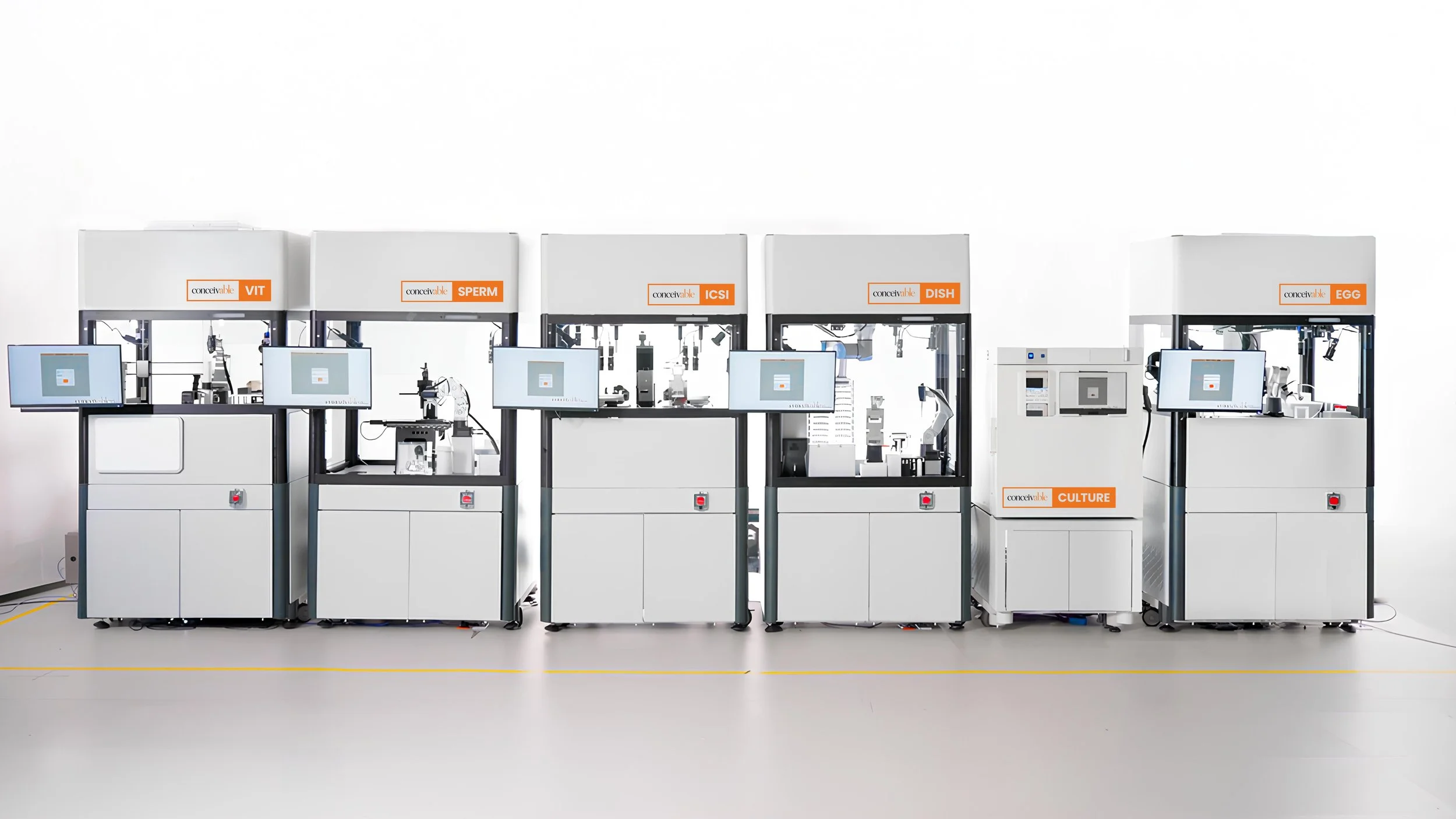
Conceivable's AURA: The world's first AI-powered automated IVF lab
Get Exclusive Updates on the Future of the IVF Lab
Follow Conceivable Life Sciences on LinkedIn to stay ahead of where IVF automation is headed.
Automated dish preparation showed greater than 10-fold improvement in consistency, with human embryos showing 92.4% vs. 82.6% development rates on day 3
Automated single-sperm selection software also shows a 10% increase in blastocyst development rates versus traditional methods
Algorithms are now being integrated into automated lab systems focused on consistency, efficiency, and reliability, with embryologist oversight built in
Be among the first to see new data before it’s widely published that could redefine embryology
The future of embryology is being measured now.
👉 Conceivable Is The Ultimate Family Business, follow on LinkedIn.
1. Automation And An IVF First: Stringing together multiple automated systems to produce live births
For the first time in IVF history, multiple automated systems have worked together to produce live births. In December 2025, a Conceivable proof-of-concept study was published in Human Reproduction demonstrating the feasibility of three integrated robotic systems to perform Day 0 procedures, including egg retrieval, processing and denudation, sperm preparation, and ICSI, with human oversight rather than hands-on manipulation.
In the 11 patients for whom all three systems were utilized, the automated workflow achieved a 64.3% fertilization rate and 42.2% usable blastocyst formation rate, meeting established competency benchmarks. Of twelve single embryo transfers, five resulted in live births—the first reported from sequential automated IVF systems, demonstrating that automation can produce viable embryos and healthy babies. ¹
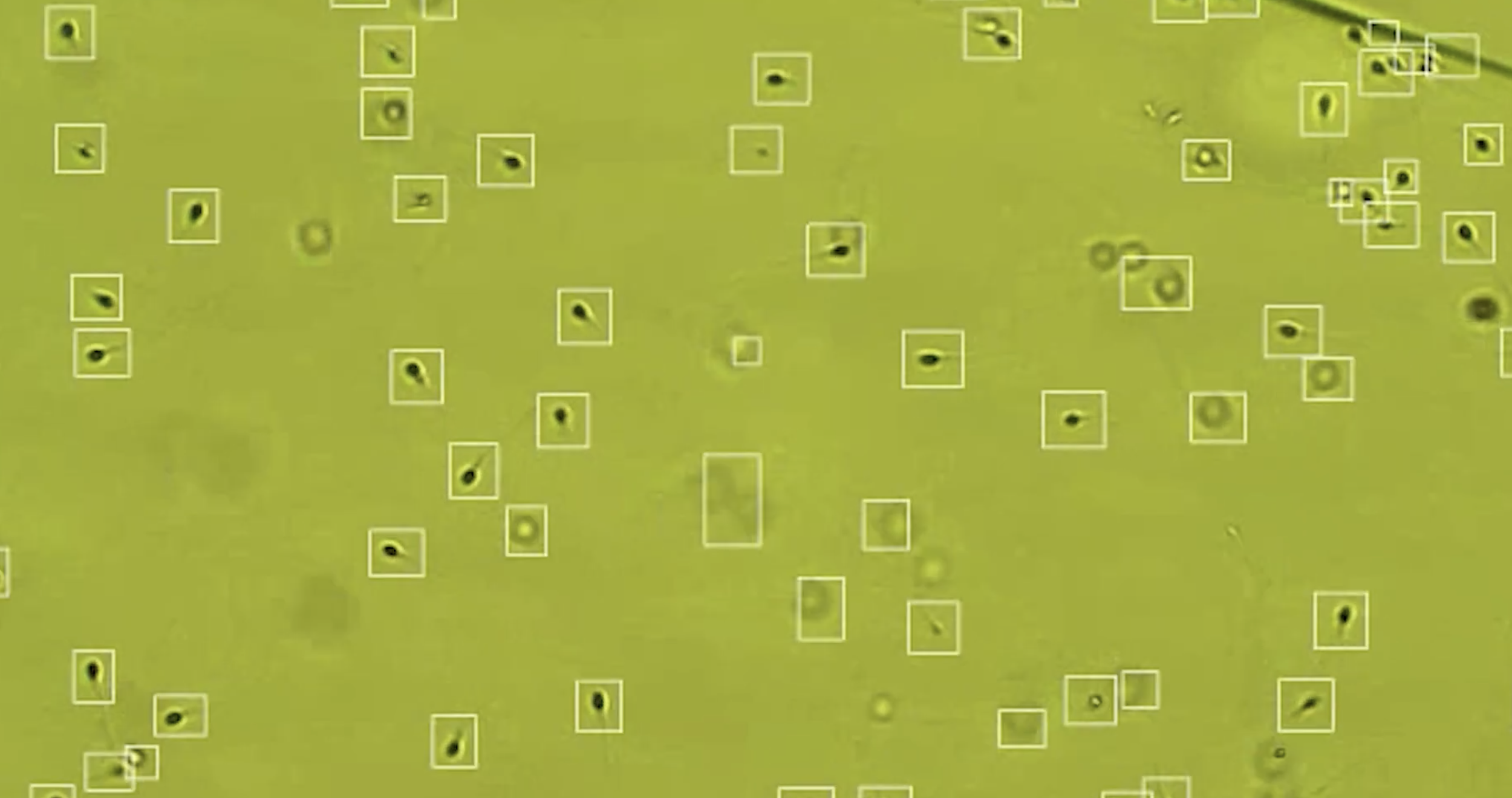
AURA's application of the SiD algorithm for sperm selection
2. Automated Sperm Selection Surpasses Manual Blastocyst Formation Rates
For automation to become standard, it must first match what skilled embryologists already achieve. The data shows that it can.
One clinical study of automated single-sperm selection software developed by IVF2.0 (SiD) for ICSI (published in Human Reproduction) demonstrated that the AI system achieved approximately 10 percent higher blastocyst formation rates (76.7% versus 67.3%) and good-quality blastocyst rates (48.9% versus 38.3%) compared to manual sperm selection methods. ²
This demonstrates that automation can reliably execute the most delicate procedures without compromising outcomes, establishing the foundation for broader adoption.
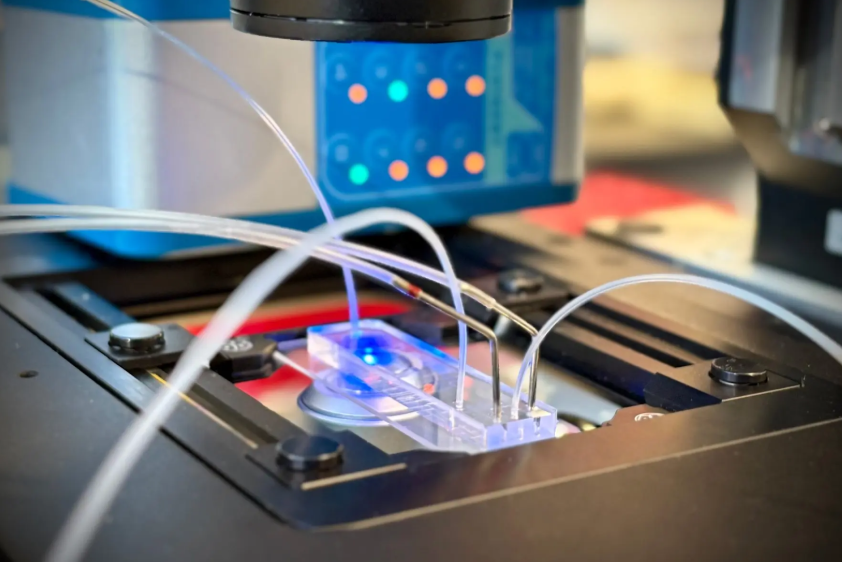
Detail of Columbia University’s STAR technology.
3. Automated Sperm Selection Expands Treatment Possibilities
AI-powered andrology is expanding the boundaries of what's medically achievable, offering hope to patients who previously had no options.
Columbia University's STAR (Sperm Tracking and Recovery) method—named by TIME magazine as an "Idea of the Year" for 2025—uses AI to detect rare sperm in samples from men with azoospermia, a condition affecting about 10% of men with infertility. The technology can scan millions of semen images in hours and gently isolate viable sperm for IVF use—a task that would be prohibitively time-consuming for embryologists to perform manually.
The impact is already being felt: after 20 years of trying to conceive, the first couple to use STAR is expecting their first child. ³ This breakthrough demonstrates how automation isn't just replicating what skilled embryologists can do—it's enabling treatments that were previously impossible, opening new pathways to parenthood for patients facing the most challenging diagnoses.
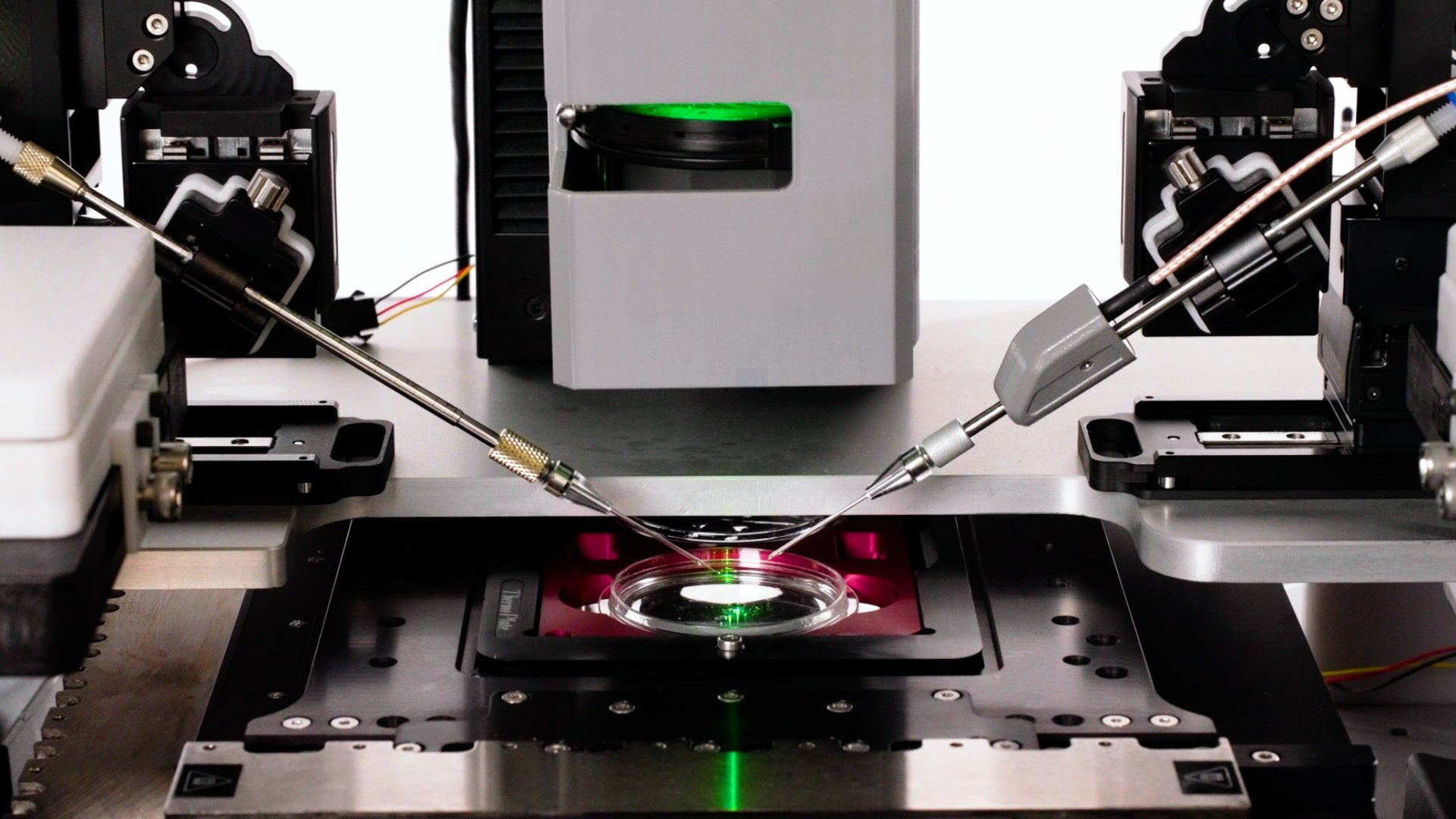
Detail of AURA robotics performing automated ICSI
4. Automation Standardizes 200+ IVF Workflow Steps
Variability is the enemy of consistency. Every manual step introduces the possibility of subtle differences that compound across a treatment cycle. In a 2025 Fertility and Sterility review on the future of embryology by leading embryologists Dr. Catherine Racowsky, Jacques Cohen, Denny Sakkas, and Laura Rienzi, they note that "emerging automation experiments suggest that delicate procedures...may soon be performed with precision equal to or exceeding that of skilled human operators," with these refinements offering "diverse routes to improve stability and reduce interlaboratory variability." ⁵
Automation can transform hundreds of individual IVF tasks into repeatable, standardized processes engineered to reduce variability and human error. Conceivable's AI-powered AURA system is designed to automate more than 200 steps—from dish preparation through ICSI and embryo assessment—enabling consistent execution across all cycles.
This standardization matters because IVF outcomes have historically varied between clinics, individual embryologists, and even by time of day. If 200+ steps are performed identically every time, baseline variability should drop dramatically, leading to more predictable outcomes and the foundation for data-driven optimization.

A healthy baby boy proves remote ICSI is possible. And he’s just made scientific history.
5. Automated Remote ICSI Transcends Geography
Geography has always limited access to fertility care with the best labs and embryologists clustering in major cities. Automation is beginning to change that equation.
A remote-controlled automated ICSI system has achieved a live birth, demonstrating that IVF expertise does not need to be geographically limited. In the first successful remote ICSI procedure, operators in New York and Guadalajara digitally controlled egg and sperm micromanipulation successfully from 3,700 kilometers away, and the procedure led to a healthy baby boy. ⁶
This breakthrough—which became Reproductive BioMedicine Online's most downloaded paper (over 16,000) and won their Robert Edwards award for best original paper of 2025—suggests a future where expertise can be distributed globally, with skilled embryologists able to oversee procedures across multiple sites or provide specialized guidance to labs in underserved regions.
Automation Research Results Point To A New Standard Of Care
These five advances demonstrate that IVF automation has moved beyond theoretical promise. From live births achieved through integrated automated systems to performance that meets or exceeds skilled embryologists, the data shows automation is moving towards—and in some cases ready—for widespread clinical adoption.
References
1. Chavez-Badiola A, Mendizabal-Ruiz G, Flores-Saiffe Farías A, et al. Automated oocyte retrieval, denudation, sperm preparation, and ICSI in the IVF laboratory: a proof-of-concept study and report of the first live births. Hum Reprod. 2026;41(2):214-230. doi:10.1093/humrep/deaf240
2. Nakano S, Okabe M, Fujita M, Takahashi K. A comparative study of ai-based automated sperm selection and embryologists: evaluation of sibling oocyte outcomes in intracytoplasmic sperm injection. Hum Reprod. 2025;40(Supplement_1):deaf097.227. doi:10.1093/humrep/deaf097.227
3. Montjean D, Godin Pagé MH, Pacios C, et al. Automated Single-Sperm Selection Software (SiD) during ICSI: A Prospective Sibling Oocyte Evaluation. Med Sci (Basel). 2024;12(2):19. doi:10.3390/medsci12020019
4. TIME Magazine. Idea of the Year: STAR (Sperm Tracking and Recovery). 2025. https://pubmed.ncbi.nlm.nih.gov/41183539/
5. Racowsky C, Cohen J, Gardner DK, Sakkas D, Rienzi L. Rethinking embryology dogma. Fertil Steril. 2025. doi:10.1016/j.fertnstert.2025.10.030
6 Mendizabal-Ruiz G, Chavez-Badiola A, Hernández-Morales E, et al. A digitally controlled, remotely operated ICSI system: case report of the first live birth. Reprod Biomed Online. 2025. doi:10.1016/j.rbmo.2025.104943
Get Exclusive Updates on the Future of the IVF Lab
Follow Conceivable Life Sciences on LinkedIn to stay ahead of where IVF automation is headed.
Automated dish preparation showed greater than 10-fold improvement in consistency, with human embryos showing 92.4% vs. 82.6% development rates on day 3
Automated single-sperm selection software also shows a 10% increase in blastocyst development rates versus traditional methods
Algorithms are now being integrated into automated lab systems focused on consistency, efficiency, and reliability, with embryologist oversight built in
Be among the first to see new data before it’s widely published that could redefine embryology
The future of embryology is being measured now.
👉 Conceivable Is The Ultimate Family Business, follow on LinkedIn.
This News Digest Story is paid featured content. The advertiser has had editorial input and control over its creation. However, the views and opinions expressed in this article do not necessarily represent the views of Inside Reproductive Health. The sponsorship of this content does not imply an endorsement by Inside Reproductive Health.
