

As success rates rise from single digits to 60%+, Thomas “Rusty” Pool questions what’s being lost inside the lab

Thomas “Rusty” Pool has spent more than four decades inside IVF laboratories, watching the field move from single digit pregnancy rates to over 60% today. His work has shaped how embryologists think about metabolism, lab systems, and embryo development. In this conversation, he challenges where that progress may be masking deeper gaps.
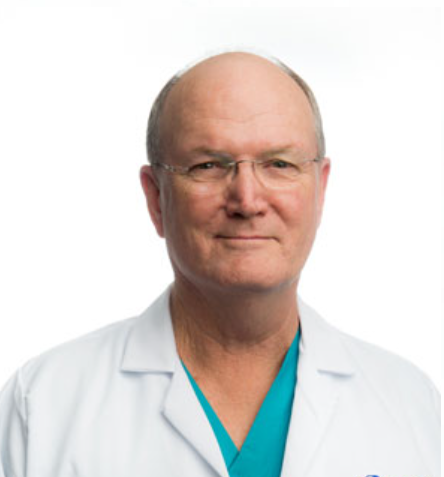
|
If you want to be a good scientist, and a good leader, you have to be able to change your mind when the data tells you to. Don’t hang on to your old ideas. Give them up.
When I came into this field, we really had no idea that embryos had a metabolism completely different from any other cell in the body. We treated embryos the way we treated other cultured cells. I had spent time working with fibroblasts in a cell biology lab, and we assumed embryos would behave similarly.
What we eventually learned is they’re nothing like those cells.
Embryos have a very distinctive metabolism, and it changes dramatically during the early stages of development. The substrates they use for energy change over time, and even the way they use amino acids changes.
Early embryos often use amino acids simply to regulate osmotic pressure rather than to synthesize proteins. Later, those same molecules begin to function as building blocks for growth.
It’s almost like going through metabolic puberty, you start with a very simple system, and then the embryo transitions to something more complex.
More recently, there’s been another surprise. We’ve always focused heavily on nuclear events like the genome, transcription, and gene regulation. Those things are obviously important.
But what we’re learning now is that the cortex of the egg (the outermost region of the cytoplasm) may be just as important in determining developmental competence as the nucleus itself.
That was something I certainly wouldn’t have predicted earlier in my career.
|
One of the things I worry about is that fundamentals have escaped us.
When IVF laboratories first developed, they were very science-driven environments. The people working in those labs had strong backgrounds in cell biology, physiology, and biochemistry.
Today the field has become much more protocol-driven.
Modern embryologists walk into laboratories where there’s a protocol for almost every procedure. In fact, there was a study some years ago showing that embryologists now have to master well over fifty different procedures to be considered broadly competent.
That’s a tremendous amount of technical training.
But if you’re simply following protocols without understanding the science behind them, you can’t troubleshoot.
If something begins to go wrong (i.e., if embryo viability drops or developmental rates change) you may not recognize the underlying cause.
That’s not the fault of young embryologists. It reflects where the emphasis has shifted in the field.
But the laboratory is still governed by biological principles: pH, osmotic balance, cell volume, metabolic environment. If you don’t understand those fundamentals, it’s very difficult to recognize when conditions are moving outside the optimal range.
|
What worries me is when direction begins coming from outside the laboratory about what should happen inside the laboratory.
Of course collaboration between clinicians and embryologists is essential. You have to have open communication between the clinic and the lab.
But when pressures from outside the lab begin dictating how things are done, like how many cycles you should run or how quickly procedures should happen, that can become problematic.
One example I hear all the time is the question: how many incubators should we have for a given number of cycles?
That question is backwards.
The annual cycle volume doesn’t matter nearly as much as what the embryo experiences day-to-day.
If you have too few incubators and you’re opening them constantly to move embryos in and out, you’re creating repeated environmental fluctuations.
You’re changing the conditions the embryo experiences over and over again.
You can’t look at embryology from the perspective of the bottom line. An accountant is a bad person to look at embryology.
You have to look at it from the perspective of the embryo.
|
|
The number of oocytes that you obtain in a retrieval means nothing.
That’s something that drives me crazy. As soon as the patient wakes up someone says, “We got twenty eggs.”
Please don’t even tell them that. It’s not a measure of anything.
It depends on maturity. It depends on developmental competence. It depends on what happens afterward.
Fertilization rate, in my opinion, is also overblown.
Every one of us on this earth started as a fertilized egg, so fertilization is obviously necessary. But does it signal much beyond that? Not really.
The person that won the Kentucky Derby got on a horse. But if you get on a horse, does that mean you win the Kentucky Derby? Absolutely not.
You have to get further down the road.
What I care about are developmental rates for when pronuclei disappear, when embryos divide, how quickly they progress through early stages, and when blastocysts form. Those timing events tell you much more about embryo competence.
INNOVATION DOESN’T STAND STILL, AND NEITHER DO WE.
We’re putting progress back into reproductive pharmaceuticals with a focused mission to expand access, affordability, and choice.
Here’s how we’re doing it:
Advancing three active Phase 3 trials in reproductive health
Reinvesting established revenue streams directly into new R&D
Building partnerships across industry to reignite innovation
Learn More Now - see how Granata Bio is unlocking new possibilities for patients and care teams.
|
I’m not sure it does.
In many networks there’s a push toward uniform technology, uniform media, and uniform procedures across every laboratory.
From a management standpoint that may make sense. It’s efficient, and it may even be economical.
But laboratories develop their own strengths over time. Teams gain experience with certain technologies or approaches, and those strengths can translate into better outcomes.
Trying to replicate one laboratory’s system everywhere may be efficient, but I don’t know that you can clone outcomes that way.
It’s a bit like cooking. You might have a favorite restaurant and a favorite dish, but if someone gives you the recipe and you cook it at home, it doesn’t necessarily taste the same.
Laboratories are similar. Each team develops its own expertise, and I think it’s important to recognize and build on those strengths.
|
Yes, I think we have improved. Implantation and pregnancy rates today are clearly higher than they were when IVF first began.
But it’s been a gradual process.
Morphology remains one of the most powerful tools we have for evaluating embryos. At the end of the day, embryo selection still involves a kind of beauty contest.
We train embryologists to look for specific morphological features, but human observation isn’t perfectly consistent.
Unlike laboratory instruments, we don’t calibrate our eyes.
Different embryologists may look at the same embryo and evaluate it slightly differently. Because of that, laboratories spend a great deal of time retraining their teams to make sure everyone is evaluating embryos in the same way.
|
One of the realities of laboratory work today is that most procedures are manual.
Every embryologist develops a slightly different technical signature.
If you and I sat down with the same embryos and performed the same procedure, say vitrification, we might end up with slightly different outcomes simply because of those small differences in technique.
Automation has the potential to eliminate that variability.
If a process is automated, every embryo experiences exactly the same procedure every time.
Another benefit is that it may help address burnout in the field. A lot of embryology work involves repetitive manual tasks.
Automation won’t eliminate embryologists, but it will change the nature of the work. Embryologists will still be responsible for oversight, quality control, and troubleshooting.
|
The number one thing is a burning desire to do the work.
I’ve had people come through the laboratory with very different backgrounds, and sometimes the best embryologists are the ones who simply want it the most.
One of the very best embryologists I ever worked with started out working in the front office of the clinic. She became fascinated with the laboratory and told the medical director she’d like to work there someday.
He came to me and said, ‘You should talk to her.’ So I did.
I told her the first thing she needed to do was go to college and get the scientific training required to work in embryology. She went to school at night while working part-time and eventually came back with the proper credentials.
When a position opened up in the laboratory, I gave her an opportunity.
She had tremendous drive. I would put her up against any embryologist in the world.
Beyond that drive, I think great embryologists tend to have an organized approach to the work. They look at the day and understand the sequence of tasks that need to happen.
And they communicate well with their teammates. The best laboratory teams I’ve ever seen are the ones where people talk constantly, support one another, and have each other’s backs.
|
Without a doubt, seeing couples who have struggled for years finally become pregnant.
Nothing beats that.
When I first started in IVF, the pregnancy rate was about nine percent.
Patients came into treatment knowing the chances were very small. It was essentially nine percent or nothing.
Today many programs achieve pregnancy rates of sixty percent or higher.
Watching that transformation and seeing couples who would do anything to have a child finally succeed; that’s incredibly rewarding.
There’s nothing quite like it.
INNOVATION DOESN’T STAND STILL, AND NEITHER DO WE.
We’re putting progress back into reproductive pharmaceuticals with a focused mission to expand access, affordability, and choice.
Here’s how we’re doing it:
Advancing three active Phase 3 trials in reproductive health
Reinvesting established revenue streams directly into new R&D
Building partnerships across industry to reignite innovation
Learn More Now - see how Granata Bio is unlocking new possibilities for patients and care teams.