
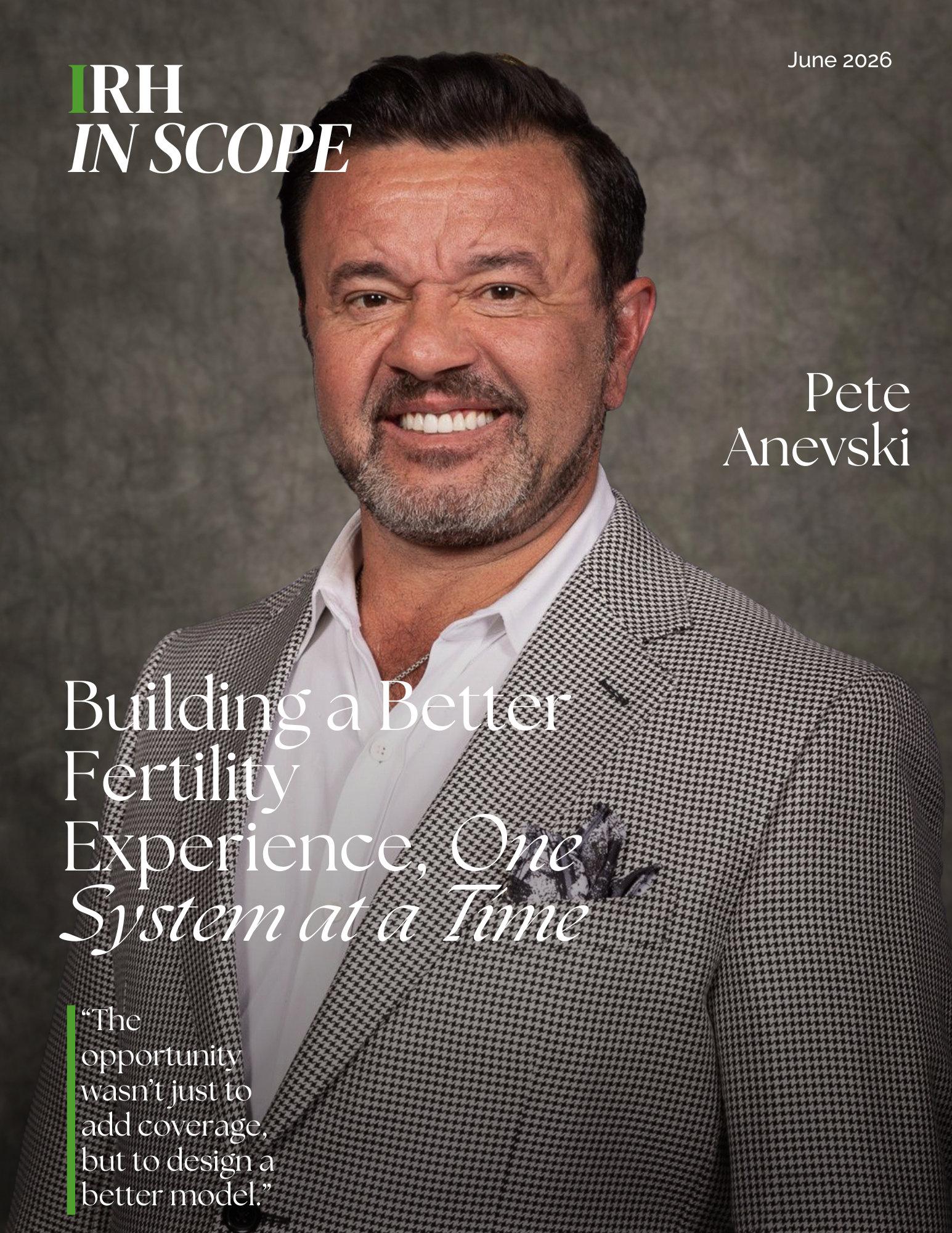

At a time when fertility and women’s health have become major business conversations, Pete Anevski talks about the work in deeply human terms. He talks about patients draining savings accounts. About employers trying to support workers without clear guidance. About families who spent years believing parenthood might never happen.
Then he talks about solutions.
As CEO of Progyny, Anevski has helped build one of the most recognized fertility benefits companies in the country. Yet his path into reproductive health did not begin with fertility treatment itself. It began with identifying a problem hiding in plain sight.
“I didn’t come into this space with a personal background in fertility,” Anevski said. “What drew me in was the scale of the problem and the lack of a real solution. When I learned that one in six people are impacted, and that many were going into debt or draining their savings just to try to have a child, it didn’t make sense. There was a clear gap in the healthcare system, and an opportunity to solve it in a way that could truly change people’s lives.”
That combination of business opportunity and patient impact became the foundation of his long-term commitment to the field. Over time, he said, the stories behind the numbers mattered even more.
“I was at my home in Florida talking with neighbors, and through the conversation learned the husband worked at Google,” Anevski recalled. “They had already had two children through Progyny and were about to have their third. His wife became emotional just talking about what the benefit meant to them. Those are the moments that stay with me. They reinforce that what we’re building isn’t just a business, it’s something that’s changing people’s lives in a very real way.”
“Patients were draining their savings just trying to have a child.”
Keeping Patients on Track with Cost and Clarity
Medication cost and uncertainty are two of the biggest reasons patients drop off. Mandell’s helps reduce both.
Through its Serono Preferred Pharmacy Partnership, Mandell’s Clinical Pharmacy supports the Fertility Instant Savings Program, helping significantly lower out-of-pocket medication costs so patients are more likely to stay in-cycle.
Mandell’s earns a 4.8-star Google rating and an NPS of 96 by making patient education a priority. Pharmacists are readily available to explain medications and standard fertility procedures, helping patients feel informed.
See how Mandell’s supports patients before and during treatment
Seeing the Gaps Patients Were Forced to Fill
Before entering fertility and women’s health, Anevski spent years working across healthcare and technology leadership roles. That background gave him a unique perspective when he first encountered fertility care and the patient experience.
“Coming from other areas of healthcare, I had seen what it looks like when a condition is well understood, openly discussed, and supported through insurance in a structured way,” he said. “Patients know where to go, what their coverage looks like, and how to navigate the system.”
Fertility care looked very different.
“What stood out to me in fertility and women’s health was how different the experience was,” Anevski said. “Despite how common these conditions are, they weren’t talked about in the same way, and the support system just wasn’t there, whether that was coverage, guidance, or even basic awareness.”
That realization shaped how Progyny approached the category from the beginning. Anevski believed the issue extended beyond insurance coverage alone. The patient experience itself needed attention.
“It reinforced for me that this wasn’t just a clinical gap, it was an experience gap,” he said. “Patients were navigating something deeply personal and often complex without the level of support you would expect in other parts of healthcare. That’s what made it clear that the opportunity wasn’t just to add coverage, but to design a better model, one that’s built around the patient experience, with the right clinical support, guidance, and access from the start.”
Building Teams Around Mission and Perspective
As Progyny has grown, Anevski has remained focused on culture and communication inside the organization. He describes his leadership style as mission-driven, yet grounded in collaboration and diverse viewpoints.

“I’d describe my leadership approach as mission-focused, with a strong emphasis on surrounding myself with the right people,” he said. “My role is to ensure there is a clear understanding of our mission and North Star, what we’re trying to achieve, and how each person’s work contributes to it.”
That clarity matters in fertility and women’s health because the work moves quickly while carrying enormous emotional weight for patients.
“In a space that is both fast-moving and deeply personal, I’ve learned that achieving that mission requires teams with diverse perspectives and areas of expertise,” Anevski said. “The best decisions come from strong collaboration, open dialogue, and healthy debate.”
Even as the company has expanded, he has tried to maintain smaller moments of connection with employees. One practice, surprisingly, has remained consistent throughout Progyny’s growth.
“Despite how rapidly we’ve grown, every other month I host small welcome lunches with new employees,” Anevski said. “It’s something I started back when we were a small company, but it’s still incredibly important. It’s a chance to talk about what we’re building, how we operate, and hear directly from them as well.”
For him, those conversations are less about hierarchy and more about shared purpose.
“It’s less about formality and more about making sure people feel connected to the mission and know they can approach me early on,” he said. “As the company grows, I’d argue those touchpoints matter even more.
Why Fertility Medications Became a Major Focus
Medication management remains one of the more stressful parts of fertility treatment for patients. Prescriptions often change quickly during a cycle, costs can escalate unexpectedly, and timing matters tremendously. A delay of even one day can affect treatment.
Anevski saw that friction early.
“Fertility medications are one of the most complex and costly parts of treatment, and historically the system hasn’t been designed around how care actually happens,” he said. “Dosing can change significantly throughout a cycle, but medications are often dispensed in bulk, which leads to waste, higher costs, and added stress for patients.”
That concern helped shape Progyny Rx’s integrated fertility pharmacy model.
“That’s exactly the problem we set out to solve with Progyny Rx,” Anevski explained. “It’s an integrated pharmacy solution built specifically for fertility care. Dispensing medication based on the patient’s treatment in real time, rather than all at once.”
He believes that improved coordination can improve outcomes while also reducing unnecessary financial strain on patients and employers.
“That allows us to reduce waste, lower costs for both the employer and the member, and make sure patients have what they need, when they need it,” he said. “We also provide 24/7 support so patients feel confident managing their medications.”
Pharmacy access remains a critical part of the overall fertility ecosystem. Organizations such as Mandell’s Clinical Pharmacy also play an important role in helping fertility patients obtain medications quickly and safely, particularly when treatment schedules shift unexpectedly or medications need to be delivered urgently during a cycle.
In fertility care, logistics can carry emotional consequences. Patients are often balancing work schedules, monitoring appointments and injections, dealing with financial pressure, and hoping all at once. Delays create stress quickly. Reliable pharmacy coordination can ease part of that burden.
“When you bring that level of coordination into the process, you’re not just improving the experience, you’re driving better outcomes, which is ultimately what matters most,” Anevski said.
“The opportunity wasn’t just to add coverage, but to design a better model.”

Advice That Continues to Shape Him
For someone leading a company through significant growth in a highly scrutinized healthcare category, Anevski still returns to a relatively simple principle.
“One piece of advice that’s stayed with me is the adage: insanity is doing the same thing over and over again and expecting different results,” he said.
He admits the message may sound obvious, but believes its value grows over time.
“It forces you to challenge assumptions, adapt, and continuously improve, whether you’re building a business or leading a team,” Anevski said.
That mindset has become increasingly important in fertility and women’s health, where expectations from patients, employers, providers, and policymakers continue evolving. Employers want measurable outcomes. Patients want access and transparency. Clinics want coordination and efficiency. Meeting those expectations requires constant reassessment.
Creating a Career With Staying Power
Anevski also thinks frequently about what younger leaders entering fertility and women’s health should focus on if they want to build meaningful, sustainable careers.
“I’d say focus on solving real problems that matter to people,” he said. “Early on, we would often get asked what was proprietary about Progyny. People were looking for a specific piece of technology or something tangible they could point to as the differentiator.”
For Anevski, the answer was less flashy than some expected.
“While we’ve built a significant amount of intellectual property into our model, the real answer was simpler: we were delivering real, measurable value,” he said.
That philosophy still guides his thinking today.
“The goal isn’t just to exist in a space, it’s to be the best at what you do,” Anevski said. “For us, that meant building a system that consistently delivers better outcomes for members and real value for employers.”
He also credits strong teams and diverse viewpoints with helping organizations continue to improve over time.
“And just as important, surround yourself with people who challenge you and bring different perspectives,” he said. “That’s how you learn, adapt, and ultimately build something that lasts.”
Finding Space to Reset
Outside work, Anevski tries to stay active and intentional about stepping away periodically, even during demanding stretches.
“Outside of work, I spend a lot of time staying active, working out, playing sports when I can, and I play the drums as a way to decompress,” he said. “I’ve always been into music, and it’s something that helps me reset.”
He also believes brief moments of distance during the day matter more than many leaders realize.
“I try to be intentional about stepping back a few minutes here and there throughout the day,” Anevski said. “This is a space where the work is meaningful but also demanding, so taking time to clear your head is important to show up fully.”
For a field centered on helping people build families, that balance may matter more than ever. Fertility care remains deeply emotional work, even as it grows into a larger business category with increased attention from employers, investors, and healthcare leaders.
Anevski understands both sides of that equation well. He talks comfortably about systems, outcomes, and scale. Yet the stories he remembers most still involve people sitting around kitchen tables talking about children they once feared they might never have.
Keeping Patients on Track with Cost and Clarity
Medication cost and uncertainty are two of the biggest reasons patients drop off. Mandell’s helps reduce both.
Through its Serono Preferred Pharmacy Partnership, Mandell’s Clinical Pharmacy supports the Fertility Instant Savings Program, helping significantly lower out-of-pocket medication costs so patients are more likely to stay in-cycle.
Mandell’s earns a 4.8-star Google rating and an NPS of 96 by making patient education a priority. Pharmacists are readily available to explain medications and standard fertility procedures, helping patients feel informed.
See how Mandell’s supports patients before and during treatment
The advertiser does not have full editorial control over the content of this article. As a brought-to-you-by sponsor of IRH In Scope, the advertiser only has editorial control over what is mentioned about their company. Inside Reproductive Health maintains full editorial independence over the remainder of the article. The views and opinions expressed in this article do not necessarily represent the views of the Advertiser or of Inside Reproductive Health.
