
Across seven U.S. IVF centers, AI-supported embryo assessment achieved a 72.9% clinical pregnancy rate as compared to 68% clinical pregnancy rate with traditional morphology-based selection.

72.9% Clinical Pregnancy in AI Arm; Non-Inferiority Endpoint Met
A prospective, randomized controlled trial conducted across seven U.S. fertility centers found that embryo selection supported by artificial intelligence achieved clinical pregnancy rates non-inferior to traditional morphology-based grading.
The study enrolled 444 patients, with 442 randomized between June 2022 and October 2024 . Eligible participants were women ages 21–43 undergoing autologous IVF with at least eight oocytes retrieved. Patients were randomized 1:1 to embryo selection based solely on conventional morphological assessment or to selection guided by an AI-generated score derived from static images of day 5–7 blastocysts. The AI tool used in the trial was developed by Alife Health. Clinical pregnancy, defined as fetal cardiac activity at 6–8 weeks, served as the primary endpoint.
In the modified intention-to-treat population, clinical pregnancy occurred in 68.0% of patients in the traditional morphology arm and 72.9% in the AI-supported arm. The pre-specified non-inferiority margin was met across all analysis groups, and investigators reported no safety concerns. Although the trial was not powered to demonstrate superiority, the AI arm showed clinical pregnancy rates exceeding 70% across subgroup analyses reported in the abstract table.
This trial represents the first prospective RCT to demonstrate that embryo selection by embryologists supported by AI is non-inferior to selection based solely on traditional morphological grading. The results show the potential for safe and effective integration of AI embryo assessment into clinical practice.
Baseline demographics, treatment protocols, laboratory outcomes, transfer type, and PGT utilization were comparable between the two arms, supporting the integrity of the randomized comparison.
Before You Dismiss AI in the Embryology Lab…See the RCT That Put It to the Test
Most tools claim validation. Alife Health proved it.
In the first prospective randomized controlled trial of its kind, AI-supported embryo selection was shown to be non-inferior to traditional morphological grading—without risking worse outcomes.
What the data shows:
First RCT validating AI-supported embryo selection
Supports safe, real-world clinical integration
Demonstrates the potential for AI to standardize selection without sacrificing performance
👉 See the evidence, review the outcomes, and decide if AI belongs in your lab.
Results With a Big Impact
This is the first prospective RCT to demonstrate that AI-assisted embryo selection is non-inferior to traditional morphological grading, supporting its potential for safe and effective use in clinical practice.
This study shows how AI may be applied in the future. As IVF laboratories assess adoption of AI-driven decision-support tools, the availability of multicenter, prospective randomized data provides clinical context for implementation of discussions within the fertility field.
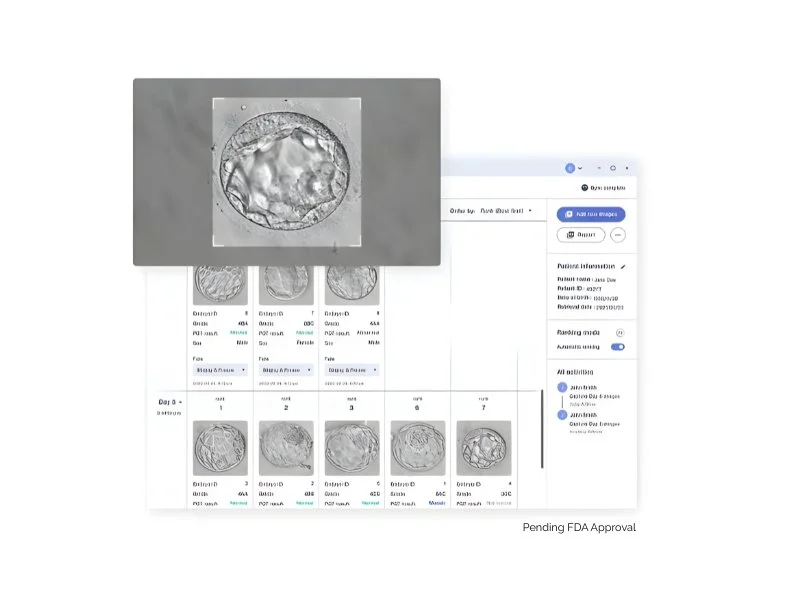
Before You Dismiss AI in the Embryology Lab…See the RCT That Put It to the Test
Most tools claim validation. Alife Health proved it.
In the first prospective randomized controlled trial of its kind, AI-supported embryo selection was shown to be non-inferior to traditional morphological grading—without risking worse outcomes.
What the data shows:
First RCT validating AI-supported embryo selection
Supports safe, real-world clinical integration
Demonstrates the potential for AI to standardize selection without sacrificing performance
👉 See the evidence, review the outcomes, and decide if AI belongs in your lab.